
The science fiction novel "The Three-Body Problem" once told a story: An alien team from the Trisolaran civilization is about to invade. Desperate humans want to escape and must develop a next-generation spacecraft engine within a limited time. At this time, scientists and policymakers are faced with an important choice - whether to choose traditional "refrigerant technology" research and development, or to take risks and challenge more advanced "refrigerant-free technology" - this is exactly similar to the current domestic views on the "Industry 4.0" wave: one group believes that China's manufacturing industry should make steady progress and grasp the rhythm; the other group believes that "the only martial arts in the world is fast" and should take advantage of the east wind of technology and overtake in corners.
At the end of August 2016, the alumni module of the "Peking University Guanghua Global Entrepreneurship" program traveled to Germany to study. They visited the European School of Management and Technology (ESMT), SAP, Osram and other German companies, talked to senior executives, touched the real German industry, and thought about the significance of "Industry 4.0" to China inside and outside the classroom. After the project ended, the academic director of this project, Professor Ma Li from the Department of Organization and Strategic Management of the Guanghua School of Management, Peking University, and his colleague Professor Liu Li from the Department of Finance, shared their gains from the trip. Cutting-edge technology is important, and innovative models are interesting, but the most important thing is to think calmly. "Industry 4.0" is not a myth belonging to Germany. "Made in China 2025" can also have a wonderful future; Chinese companies in the wave of globalization should have enough confidence to deal with it calmly.
The following content is shared by Professor Ma Li from the Department of Organization and Strategic Management and Professor Liu Li from the Department of Finance at Guanghua School of Management, Peking University, and compiled by Yi Ru, Center for Executive Education, Guanghua School of Management, Peking University.
-------
Germany x Industry 4.0: Progressive innovation under national consensus
At the Hannover Industrial Fair in April 2013, Germany officially proposed the concept of "Industry 4.0", the core of which is intelligent manufacturing. The proposal of this concept has gained a high degree of consensus from the German government, scientific associations, trade unions, and enterprises. In a sense, this is a brand building at the national strategic level. This time, conservative Germans have become the driving force behind reforms, which they hope will lead to a dominant position in the market as the world reshapes its manufacturing ecosystem.
How to understand "Industry 4.0"?
Industry 4.0 is not a unified technology, but a combination of intelligent technology and manufacturing. It will have different manifestations in different industries.
Professor Ma Li took the refrigerator as an example to explain: In the Industry 1.0 era, craftsmen relied on craftsmen to manufacture refrigerators individually, and users had to pay a high price, but the reliability was not good; in the 2.0 era, refrigerators were manufactured on assembly lines, with lower prices and higher reliability. However, if there is a fault, you need to ask a maintenance technician to come to your home to inspect, disassemble the refrigerator, and replace it. Accessories; In the 3.0 era, the process of manufacturing refrigerators is more intelligent and can have many different manifestations. If there is a problem, the user can see the fault code directly on the screen; later, in the 4.0 era, the process of manufacturing refrigerators is more intelligent, and the refrigerator is directly connected to the Internet of Things, which is very convenient for users to use.In the event of a malfunction, a report can be sent to the maintenance department, and repair parts and services can be scheduled according to the owner's schedule.
The description of "Industry 4.0" in the market is often very mysterious and "high-end", but after the students experienced it in Germany, they believe that the core point of "Industry 4.0" is to use intelligent technology to solve the problem of efficiency and cost-effectiveness in the manufacturing industry. In other words, in the transformation to "Industry 4.0", rational managers do not transform for the sake of transformation, but to improve the company's capabilities and produce and serve more efficiently.
In this German course, Professor Boyaci from ESMT shared with the "Global Entrepreneur" students how Industry 4.0 technology affects the entire value creation process and improves efficiency. In order to make the most efficient use of sunlight, a German blind manufacturing company installed smart chips on the blades to automatically adjust the blades according to temperature and light intensity in different seasons. This simple technology can improve the utilization of sunlight. With smart technology, both "scale production" and "tailor-made products" can be taken into consideration. In the past August, the Chinese clothing company Baoxiniao and the German company SAP shook hands and cooperated. Baoxiniao will use SAP's technology to intelligentize and simplify the production process and communication links to meet the needs of customized process routes, obtain production process and quality analysis reports in real time, and respond flexibly to the changing market demands of the fashion industry with better efficiency - Professor Liu Li calls it "allowing personalized products to be produced through the assembly line."
Is this a groundbreaking revolution? Not so. Dr. Weinmann from ESMT pointedly pointed out that compared with the first three industrial revolutions (steam technology, electric power technology, and information technology), "Industry 4.0" is more like an exploratory incremental innovation. In the first three industrial revolutions, the use of technology made a huge difference. As for the so-called fourth industrial revolution, there is no standard answer or indispensable technology.
China x Industry 4.0: The nine-story platform starts from the base
Facing the wave of "Industry 4.0", where should Chinese enterprises go?
Professor Ma Li’s suggestion is not to blindly pursue 4.0, but to do the first three steps well first. The foundation of intelligent manufacturing is "manufacturing". Without a solid product foundation, it is impossible to truly win customers. If we become intelligent for the sake of intelligence, we will put the cart before the horse. For many Chinese companies, as long as they do 2.0 and 3.0 well, they can become "hidden champions" in the industry.
In Germany, the students of "Global Entrepreneurship" visited a pacemaker manufacturing company called BIOTRONIC. This company does not use Industry 4.0 related technologies, but this does not prevent it from becoming a "hidden champion."
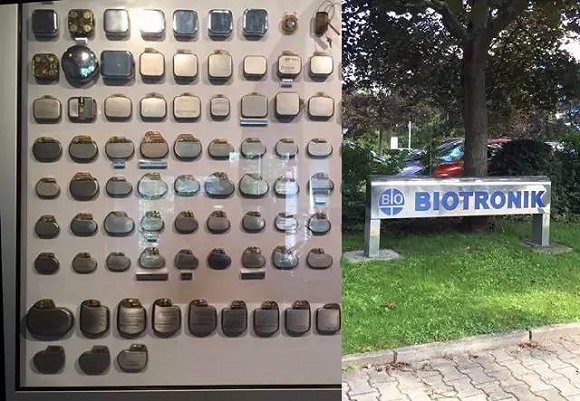
Chinese people are now keen on buying foreign products, such as milk powder, knives, etc. However, most of these products do not require high R&D technology; for the same product, the gap between Chinese and German companies may not lie in the level of technology, but in the quality of product design and failure rate. Product design, quality, brand building... For the vast majority of Chinese companies, there are still many areas that need to work hard. This year's hot word "supply-side reform" is to reduce ineffective and low-end supply and expand effective and mid-to-high-end supply. It also emphasizes efforts from a product perspective to improve quality.
Talking about "hidden champions", Professor Liu Li shared that many of Germany's "hidden champions" are often not listed companies, because for these companies, "doing things better" is more important than "making more money", and capital is often aimed at short-term profits. In the process of development, Chinese companies also need to be wary of the profit-seeking mentality of some financial investors and resist the temptation of "high valuations."
A bird’s eye view of the future: moving forward together, neither humble nor arrogant
In the process of moving towards Industry 4.0, Chinese entrepreneurs are working hard to innovate. On the road to globalization, many outstanding Chinese companies have taken the lead in the world in certain fields, keeping pace with German companies. Mr. Duan Wei from the China Chamber of Commerce in Germany said that in recent years, Chinese companies have completed many mergers and acquisitions in the European market, and German technology companies have increasingly become the focus of Chinese companies. This year alone, Osram, one of the most prestigious lighting brands in the German business community, sold its lighting business to a consortium led by Chinese LED manufacturer MLS for more than 400 million euros; Beijing Enterprises acquired German waste energy company EEW for 1.44 billion euros; ChemChina agreed to acquire German machinery manufacturer KraussMaffei for 925 million euros.
At the same time, China, which is developing rapidly, is also facing the "arrogance" and "prejudice" of some Western media.
A Financial Times report in August this year mentioned that Midea Group encountered “doubts” when it acquired Kuka Robotics. Some "elites" in Germany believe that Chinese companies' ownership of KUKA "could be a problem for customers who want to enter the cloud." “If KUKA’s owners become Chinese, some customers will be concerned about the security of sensitive industrial and corporate data. In this regard, Professor Ma Li believes that this concern comes from Western society's lack of understanding of China. The "China threat theory" of some Western media has aggravated the cognitive gap, hurting Chinese companies and themselves. "Those who persist in prejudice will eventually have to pay for their prejudice." What we can do is through various forms of civil diplomacy,Professional negotiations and high-quality entrepreneurial behavior resolve Western society's concerns about China. Professor Ma Li also pointed out that in the process of overseas acquisitions, Chinese companies need to pay special attention to the core interests of the other party, pay attention to executive incentives and employee communication and management, and reduce the potential risks and costs of mergers and acquisitions.
American writer Jared Diamond once mentioned in the book "Guns, Germs, and Steel" that "the gap in power and technology in human society does not come from cultural or racial differences." No nation is inherently better than another. Using Germany as a mirror and looking back at ourselves, Chinese entrepreneurs should not only think calmly about how to make up for their shortcomings and strive for progress while maintaining stability; they should also realize that we are not lagging behind in this technological wave, build on our strengths, and confidently embrace the future.
