When soldiers from the U.S. Army's 11th Armored Cavalry Regiment appear on the battlefield at the U.S. National Training Center in California, their mission is usually to play the enemy in military exercises.
In order to make them look more like them, this force is equipped with a large number of tanks and other armored vehicles that resemble Russian-made equipment.
Like the militaries of many other countries around the world, the US military has long insisted on making training as close to reality as possible so that its troops can operate with ease in war. Specially trained "enemy troops" like the 11th Armored Cavalry Regiment ensure that the training session is not just about two US military units fighting each other using the same tactics.
The exercise troops "will encounter many complex and difficult challenges here," U.S. Army Lieutenant Colonel Jimmy Kimbrough, deputy regimental commander, told reporters in 2013. "They will make mistakes, but it is better to make mistakes here than on the real battlefield."
After World War II, ground combat troops began to carefully form simulated enemy teams to help soldiers practice how to deal with real enemies. After witnessing Israel's 1973 war with its Arab neighbors, the entire Pentagon was concerned that the U.S. military was not ready for a major land war with the Soviet Union or its allies.
In 1979, in response to these concerns, the U.S. Army opened an Army National Training Center at Fort Irwin, about 100 miles northeast of Los Angeles. The vast desert here provides an environment for the troops to use tanks, howitzers and other heavy weapons for large-scale conventional warfare training.
To enhance these trainings, the center used a number of vehicles captured from the Soviet army, including at least one MT-LB armored personnel carrier and one BTR-60 wheeled armored vehicle. But it is obvious that these few real weapons alone are not enough to form a large-scale virtual enemy force.
As a result, the US military began to build "Visually Modified" tanks and armored vehicles, often called "VISMOD".
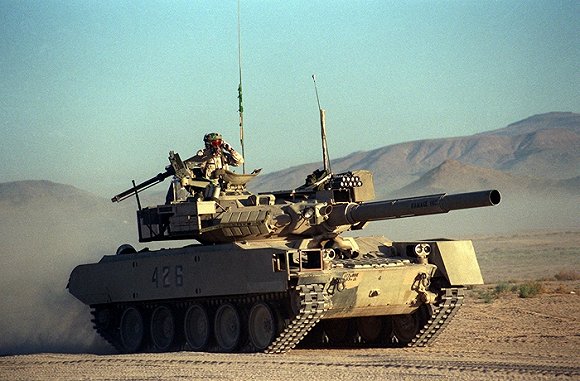
Ground Combat Forces established the first such force using the older M-551 "Sheridan" light tank. Since this tank was originally designed to serve airborne troops and reconnaissance troops, these small tanks are very light in weight, but are equipped with a 152mm compound gun and missile launcher that are a headache for the enemy.
In the early 1980s, the U.S. military replaced almost all the vehicles of the 82nd Airborne Division with new "Bradley" fighting vehicles or Humvees at a very fast speed, leaving only one battalion of Sheridan light tanks.
But in California, those small tanks that were replaced are being repurposedAfter the interview, you were given a new lease of life, playing the role of a Soviet T-80 tank and BMP-1 personnel carrier. Technicians also copied other vehicles into 2S3 self-propelled howitzers and ZSU-23-4 mobile anti-aircraft guns. In addition, some modified UH-1 "Huey" helicopters played the role of the Soviet Union's iconic MiG-24 gunships.
On the top of the imitation Soviet armored vehicle, the US military installed a special scoring system. Laser transmitters and receivers, as well as improved laser tags, have been tuned so that only proportionate weapons have a chance of "killing" tanks and troops.
"(This training method) is more realistic than the effects of referees adjudicating firefights," Lt. Col. John Warsinske of the U.S. Army Heritage and Education Center said in a review of the center.
Unfortunately, due to the end of production and widespread retirement of Sheldon tanks, the U.S. military has had difficulty keeping VISMOD operational. In 1998, the U.S. Army launched the first batch of new "Opposing Forces Surrogate Vehicles (OSV)".
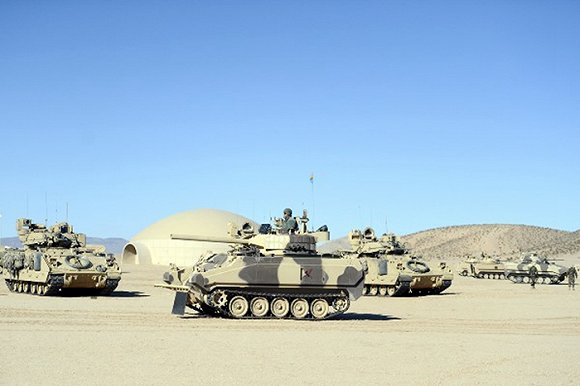
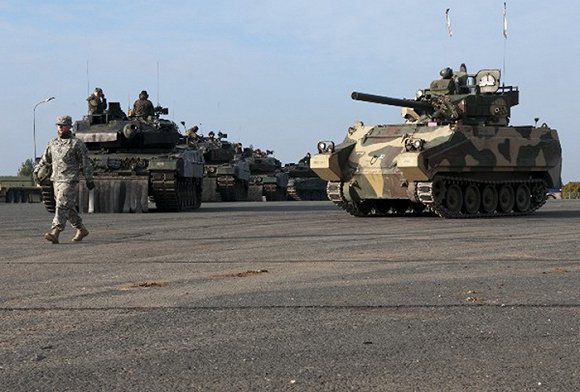
Based on the M-113A3 armored personnel carrier, this batch of replacements first imitates the BMP-2 infantry fighting vehicle. Subsequently, the US Army built additional models to simulate T-80, T-90 tanks and other types of armored vehicles.
"The cost of operating and maintaining an OSV is approximately 50% less than the M-551 Sheridan," said the 1998 edition of the U.S. Army's Combat Training Center Quarterly. "Based on fast-paced training operations... each vehicle will travel nearly 3,000 miles in 10 rotations per year, which will save the U.S. Army significant costs in the next few years."
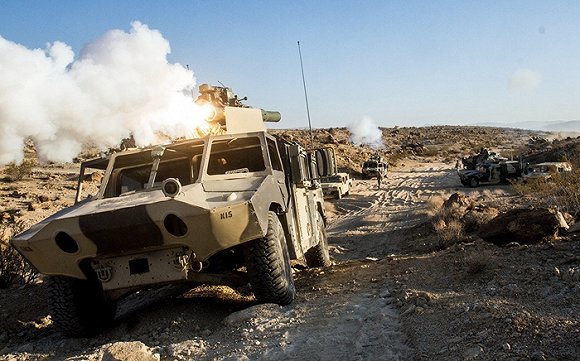
Not only that, the Army also modified a batch of Humvees to look like BRDM-2 armored vehicles. The National Training Center outfitted a genuine Soviet-era car with a Dow missile launcher so it couldEasier access to laser training devices.
Ground combat forces will eventually field more than 100 OSVs to replace the old M-551s. At the U.S. Army's Joint Multinational Training Center in Germany, training facilities there have been given some unique vehicles to equip simulated enemy forces.
Similar to the U.S. 11th Armored Cavalry Regiment, the 1st Battalion, 41st Infantry Regiment regularly uses these vehicles to conduct simulated combat exercises with NATO member states and other U.S. allies. But unlike the sand-brown vehicles at the National Training Center, the VISMOD in Germany has a slightly more colorful appearance.
After the 9/11 terrorist attacks, the U.S. National Training Center and other training institutions began to pay more attention to teaching soldiers how to fight rebels in some countries, and those militants often seized heavy weapons in battles with government forces.
Since 2014, ISIS terrorists have seized tanks, armored personnel carriers and other vehicles in Iraq and Syria, using them for specific purposes on the battlefield and turning them into mobile suicide bombs.
So, the Army's fake tanks (or newer models) will be important tools for the foreseeable future, whether soldiers are training to fight traditional enemies or terrorists.
(Translator: Li Yuanzhe Liu Yuanhao Editor: Zeng Yu)