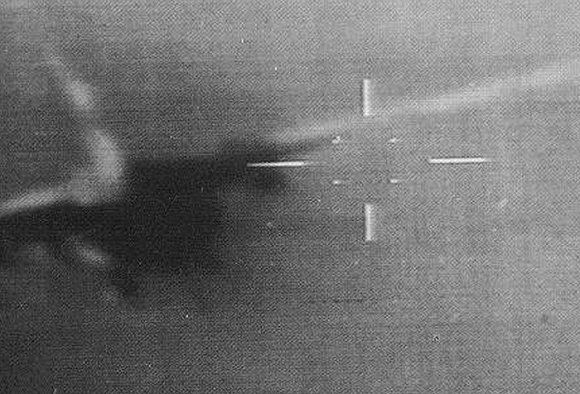
In March 1986, US military pilots chased and intercepted the Libyan Arab Air Force, and Libya finally gave up sending interceptor aircraft over the Gulf of Sidra.
The result of this decision is that the Libyan government had to give up its airspace protection in the relevant Mediterranean area. Equally devastating, the lack of air cover made it easier for the U.S. military to launch attacks on Libya.
You can attribute the American victory to superior training and tactics, but you cannot ignore another potentially important factor: espionage.
In the mid-1980s, the U.S. military obtained a large amount of critical intelligence about Soviet weapons, especially aircraft and related systems. The source of this information was Adolf Georgievich Tolkachev, a disgruntled Soviet engineer.
It can be said that Tolkachev was the man who destroyed the entire Soviet fighter industry.
Recall the process by which the Americans completely defeated the Libyan army.
On March 24, 1986, after clearing the skies over the Gulf of Sidra, U.S. Navy fighter jets easily destroyed a Libyan SA-5 "Gammoun" air defense missile system deployed in the Gulf of Sidra and sank several Libyan Navy fast missile ships.
Just one month later, U.S. Air Force F-111F fighter jets bombed three targets in Tripoli, while U.S. Navy A-6E Aggressor attack aircraft also hit two targets in Benghazi. Despite fierce resistance from Libyan air defenses, the United States lost only one fighter-bomber.
To make Libya's situation worse, in January 1989, two U.S. Navy F-14A "Tomcat" fighter jets shot down two Libyan Air Force MiG-23MF interceptor aircraft.
This victorious situation in the United States lasted until the 1990s.
In 1991, U.S. air power completely suppressed the Iraqi Air Force in just three days. After completing just a few defensive missions, the Iraqi air force - a force well-equipped with experience gained during eight years of intense war with Iran - stayed on the ground, and Iraq has since moved its most prized warplanes to Iran.
Except for a few cases, the ground-based air defense system that Iraq has invested heavily in developing and carefully deploying in the past two decades has not posed any major obstacles to the US military.
The above four examples are just a few of the dozens of cases in which U.S. airpower has suppressed competitors over the past three decades. Some people may question, as mentioned aboveThe opponents they encountered were no match for the United States: their armies were poorly trained, poorly commanded, and inexperienced, and they used lower-level export-made Soviet aircraft and equipment.
In other words, there is a huge gap between these military forces compared to the Soviet Union or later Russia behind them. But Iraqis and Libyans with knowledge of the situation refute this statement, insisting that their air forces are equipped with modern equipment and that their pilots and officers are well-trained.
Some might say that in 1995 and 1999, Serbia's air force and ground-based air defense systems performed much better against U.S.-led NATO airpower. Others would emphasize that in the late 1990s, Iraq's air defense system was in dilapidated condition, and its senior leaders would issue all kinds of ridiculous instructions. Therefore, compared with its opponents, Iraq's biggest enemy was actually itself.
However, regardless of the background factors regarding aircraft, equipment, training, tactics, strategy, politics and other factors, there is one thing in common behind all these military operations: the US military’s understanding of the Soviet-made and Russian-made weapons systems used in Libya, Iraq and Serbia is quite astonishing.
For example, on the night of March 24, 1986, when launching an attack on Libya's SA-5 "Gammon" anti-aircraft missile site near the Gulf of Sidra, the pilots of the U.S. Navy's A-7E "Corsair II" knew the performance of this system in advance.
Similarly, the crew members on the two F-14A Tomcats that shot down two Libyan MiG-23MFs also had a deep understanding of the MiG-23. From 1991 to 2002, U.S. Air Force pilots chasing MiG fighters over Iraq knew exactly the level of their opponents' aircraft, avionics and weaponry.
Facts have proven that excellent intelligence work is the key to the success of the US military.
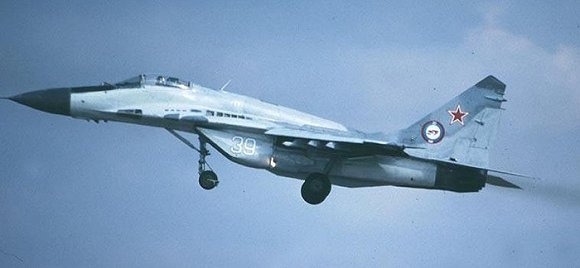
The tactical manual issued by the U.S. Air Force Fighter Weapons School in the late 1980s detailed the MiG-29 fighter jets, Su-27 fighter jets, SA-10 "Thunder" anti-aircraft missiles, SA-11 "Gadfly" anti-aircraft missiles and other most advanced Soviet equipment at the time.
And Tolkachev provided a lot of valuable information recorded in the manual.
From the 1970s to the 1980s, Tolkachev was an electronic engineer at the Soviet Radar Scientific Research Institute, which is better known as the Faztron Radar Design Bureau - the main research and development unit for Soviet military radar and avionics equipment.
Under Stalin, Tolkachev's wife's parents were persecuted, and Tolkachev himself became disillusioned with the Soviet government. After that, Tolkachev established contact with the CIA in Moscow and began to transfer intelligence agencies from 1979 onwards.A batch of highly confidential and extremely sensitive information related to the most important avionics equipment, radars and weapons installed on Soviet-made fighter aircraft.
The amount of material obtained from "The Donald" (Tolkachev's code name at the CIA) was so vast that American translators could not keep up. Until the 1990s, they were busy translating and studying the information provided by Tolkachev.
As early as December 1979, based on information provided by Tolkachev, the US Department of Defense completely reconfigured the electronic equipment of the latest US fighter jets.
In an internal review in March 1980, the CIA praised the information provided by Tolkachev on the latest generation of Soviet surface-to-air missiles. "Previously, we could only obtain detailed information about such systems after they had been in use for many years," the CIA said.
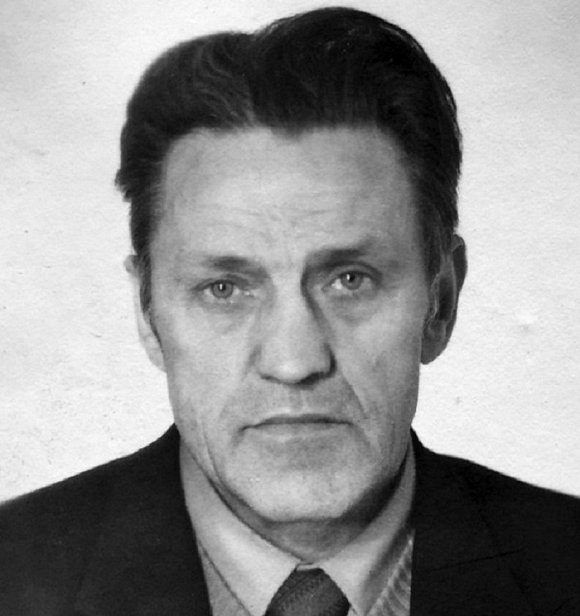
In April 1980, another internal CIA memo rated the information provided by Tolkachev on anti-jamming tests of Soviet fighter radar systems as "unique." Apparently, Tolkachev provided information that the CIA had no way of obtaining on its own.
Just a few months later, Tolkachev was said to have "provided exclusive information on new Soviet fighter aircraft and also provided information on several new airborne missile systems."
A U.S. Department of Defense memo from September 1980 praised Tolkachev's report as having "infinitely enhanced the effectiveness of U.S. military systems." Tolkachev's leaks "potentially saved the lives of U.S. soldiers and weapons and equipment" and "contributed to billions of dollars in U.S. investment in research and development."
It is difficult to summarize in a few sentences the extent of the blow Tolkachev caused to the Soviet Union.
The CIA has disclosed very little information about its cooperation with Tolkachev, but from this limited information it can be seen that Tolkachev may have caused irreparable losses to the Soviet military aviation and air defense industry.
What is certain is that Tolkachev provided the Americans with detailed information on modern Soviet-made aircraft, such as the MiG-29, MiG-31, Su-27, and air-to-air missiles, allowing American scientists and engineers to quickly develop systems to compete with these systems.
Possibly more importantly, the Tolkachev affair hit the Soviet Union hard at a time of turmoil. Unfortunately, Tolkachev's espionage was exposed in 1985 by a Soviet spy lurking in the United States. In 1986, Tolkachev was executed by the Soviet government.
The Soviet Union was on the verge of collapse at the time, and eventually disintegrated in 1991. For much of the 1990s, the remaining RussianSri Lanka's military aviation industry has fallen into a trough. Important upgrades to the latest fighter jets and various air defense systems - all of which were urgently needed due to Tolkachev's betrayal - took decades to achieve.
In the words of an engineer from the Russian aircraft manufacturer Sukhoi Airlines, simply raising the original Su-27 to the Su-27SM standard "took more than twenty years and carried out more than 10,000 updates and upgrades" to "make up for some of the losses" caused by Tolkachev.
Although the CIA may not let the public know all the information Tolkachev disclosed in recent years, there is no doubt that he provided a large amount of information to the United States. The most important thing is that an entire generation of Soviet fighter jets, air-to-air missiles and even surface-to-air missiles were affected, making these equipment obsolete when they were first put into use. Tolkachev's influence can still be felt in Russia today.
(Translator: Li Yuanzhe Editor: An Jing)