
Huxiu Note: Taking stock of the development history of smartphones, you can find many clues, such as from PDAs to adding phone functions, or from mobile phones with only phone functions, to feature phones with fixed functions and semi-smartphones with Java expansion capabilities, and now - why were the machines of those years eliminated, and how many features have current mobile phones inherited from their predecessors? These are other interesting questions.
In 2016, as natural as eating and sleeping, we use mobile devices to shop, chat, pay, share photos, and video conference. I don’t know if anyone still remembers those of us who were skeptical about shopping on Taobao, thinking “Who will use it, and I don’t know if the money will be stolen”; even a mobile phone? Isn't it just for making phone calls?
"Will artificial intelligence be developed to the point where it can communicate with humans without any barriers soon?"
"Who knows, in this era of rapid change, what else is impossible."
In this era, we know that nothing is impossible, and past experience seems to be no longer so instructive.
It’s just that today, I want to remember the past and see how everyone today has a smartphone step by step.
Smartphone predecessors, in addition to “Big Brother”, also have PDAs
Newton (introduced August 1993; Apple Inc.)
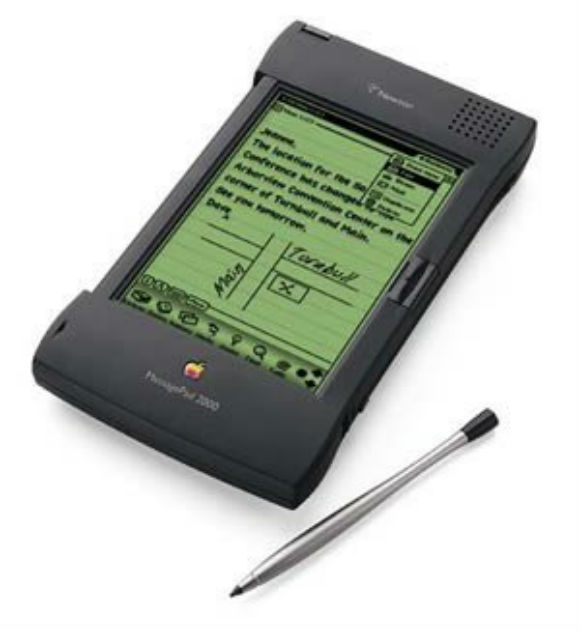
Also affectionately known as the "Maverick", it was the first practical handheld computer (PDA). Equipped with the Newton OS system, the official name of the model is "MessagePad", but now when Newton is mentioned, it refers to both the system and the machine itself. When Newton first came out, it used ARM 610 RISC CPU, no keyboard, and used handwriting input and touch screen. Newton had built-in applications such as Notes, names, and dates, and later added functions such as file processing, email acceptance, and browsers. However, due to the immaturity of the market and products in the early stage, it was difficult to survive alone. It finally stopped production in 1997 and sadly withdrew from the mobile terminal market.
PalmPilot (first model launched in 1996; Palm Computing Company)
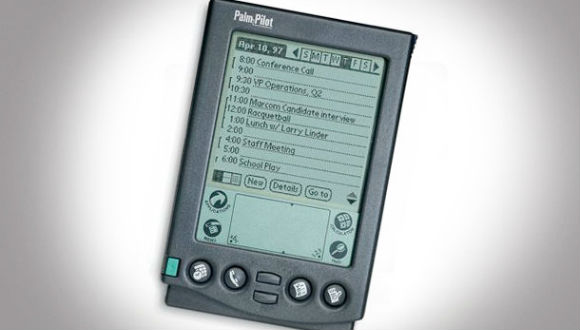
Before launching Palmpilot, Palm also launched a PDA "Zoomer" in 1993. Like other similar companies, it was the first time to test the water, and the market was silent. Afterwards, Palm summarized the lessons learned from this failure and formulated two principles:: First, create a new input method to simplify the recognition burden of handwriting systems; second, keep the size small and be satisfied if it can be put into a shirt pocket. After three years of painstaking research and improvement, Palmpilot was launched in 1996. It received good market response upon its launch and sold 1 million units in 18 months, becoming the first best-selling PDA product. After that, it got out of hand and launched a variety of series of products.
Palm OS also opened up its application development platform for the first time, allowing programmers to put their own products on the platform. There were once more than 10,000 applications on the Palm platform. From the beginning, Palm has firmly believed that the future personal computer system must be a mobile computer system.
Palm OS is a 32-bit embedded operating system. Its excellent performance not only supports PDAs, but is also widely used in other mobile terminals. The Treo series is a series of mobile phones that exclusively use Palm OS, and thus began the integration of PDAs into smartphones. Treo's functions include a personal digital assistant, voice communication, email, web browsing, and later a camera function.
From Treo650 to Treo650, all use palm OS operating system, and Windows Mobile system has been added since 700. Treo 700w is the first model to use WindowsMobile operating system.
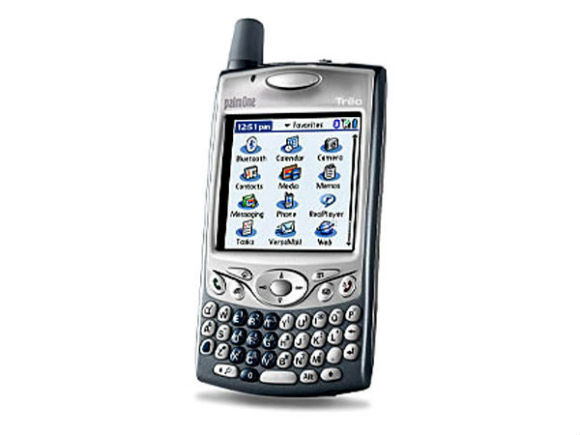
On February 11, 2009, Palm announced that it would focus on WebOS and Windows Mobile smart devices in the future, and would no longer launch "Palm OS" smart devices.
Do you still miss it - Nokia and Symbian
I don’t know whether someone discovered why PDA can’t add a phone call function first, or whether someone discovered why mobile phones can’t be equipped with PDA functions? In short, they came together as expected, and then they had the crystallization of love - Smartphone. Yes, if the communication equipment is made smarter, we can also use it to look up words and chat on QQ.
In 1998, Ericsson, Nokia, Motorola, and Psion jointly established Symbian Company. After that, they began to develop an operating system specifically for mobile phones, and finally developed Symbian, which uses a pure 32-bit operating system. The system has low power consumption and small memory, and is especially suitable for mobile devices such as mobile phones.
As a result, the first mobile phone using the Symbian system in 2000: Ericsson R380 appeared on the market. In 2002, Nokia launched the 7650, which became the first true smartphone. Since then, Nokia has continued the myth of occupying the first market share since 1996 until it was surpassed by Apple and Samsung in the second quarter of 2011.
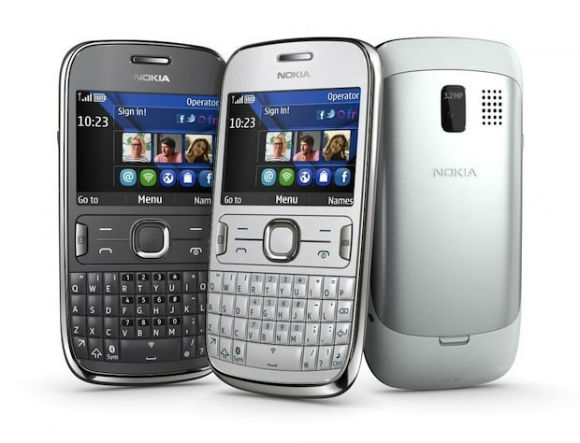
However, reality always catches people off guard. On January 24, 2013, Nokia announced that it would no longer release Symbian mobile phones; in 2014, Nokia gave up its mobile phone business and sold it to Microsoft. It only takes 4 short years for a myth to come to an end. Who can be proud?
Microsoft’s hard work——Windows mobile
From the first day of making mobile terminals, Microsoft has had a dream - to unify the PC world and the mobile world, allowing users to experience computer-like operations on their mobile phones. Therefore, similar interfaces, similar applications, similar operating systems, or rigid copying that is not suitable. But perhaps, what users need is not another smaller version of the computer, but a better mobile operation experience.
In April 2000, Microsoft released the first version of Windows Mobile-Pocket PC2000, which only had a system and no devices. The first smartphone equipped with Pocket 2002 was released in October 2001. In 2005, after updating to Mobile 5.0, office was allowed to run, and GPS and WIFI were added. Windows Mobile 6.0 was released in February 2007. The system operation is similar to Windows Vista. Microsoft hopes that WM will allow users to experience computer-like operations on their mobile phones. Then, it lost the opportunity to toss, because 2007 came, and Jobs took the Apple mobile phone to tell the world: This is not how games are played.
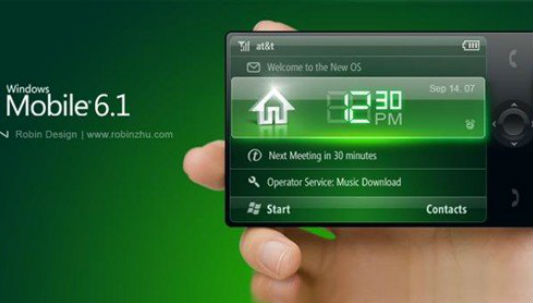
In October 2010, Microsoft announced that it would terminate all technical support and development for Windows Mobile and Windows Phone would take over.
Master Qiao reshuffles the cards - IPHONE
In 2007, at the Apple Worldwide Developers Conference, Jobs introduced the iPhone to the world for the first time. Apple, which has existed for 31 years, has ushered in its own era. It is no exaggeration to say that Steve Jobs redefined the smartphone.
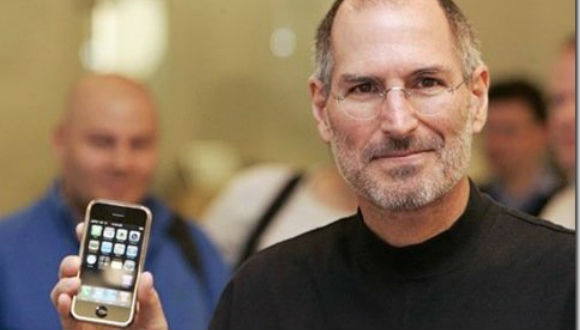
Jobs emphasized design and user experience, and almost paranoidly reduced all operations to a home button. The use of thermal touch screen greatly facilitates user operations. More importantly, the establishment of an APP store provides a convenient and efficient platform for third-party software designers to meet users' unlimited personalized needs for applications.
iPhone is equipped with IOS system, which optimizes functions and interface through continuous updates. As for how it succeeded, I think it goes without saying.
Persistence is victory - Android
Android is now the only mobile system that can compete with IOS.
The Android system is developed based on Linux. It was originally produced by Andy Rubin to support mobile phones. It was acquired by Google in 2005. Afterwards, it was improved and gradually expanded to tablet computers and other fields. Subsequently, Google released the source code of Android. In September 2008, Google officially released the Android 1.0 system. Currently, with the exception of Iphone, most mobile phones are powered by Android.
When programmers develop applications, they usually release both IOS and Android versions. Generally speaking, IOS users are slightly earlier than Android users. Now, more and more computers using Intel and AMD processors are also running Android systems.
Portable Smart——Apple Watch
The debut of “Google Glass” in 2012 marked the beginning of smart devices becoming wearable. After warm-up in 2013, all major brands launched wearable smart devices in 2014, which are mainly divided into watch categories, including PS-500 smart watch, PS-100 smart bracelet, Apple watch, gear s2, shoes category: Nike, Adidas smart sports shoes, and glasses category: Google Glass. In addition, smart devices can also be added to underwear, socks, and clothes.
In 2015, Apple watches shipped 3.9 million units, and the smart bracelet Fitbit surpassed Apple watch to capture the largest market share in the smart wear field.
As a part of body image, wearable products have equally high requirements for function and appearance. It is required that the function be perfectly integrated into the product without affecting the beauty of the product. Apple watch is a product that combines fashion and technology, so it is favored by many people, especially young users.
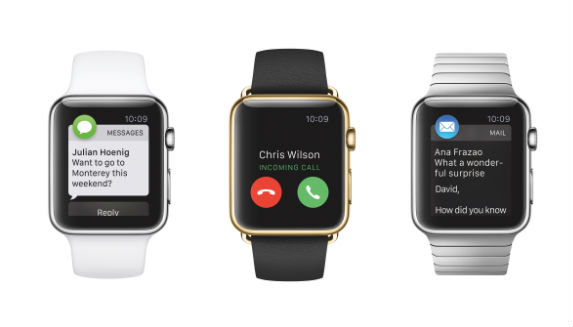
The area of wearable products limits the diversity of functions, and the limited control area also reduces the audience for this type of product. In this regard, in addition to traditional screen controls, some companies have also developed motion controls, or one-button multi-purpose. However, the biggest bug of wearable devices is its dependence on other devices. Many smart watches must be equipped with a smartphone to be used. It is understood that Apple watch 2 will be replaced with a new generation processor and provide LET network functions. If that is the case, it is possible to get rid of the mobile phone and become a truly independent smart device.
At present, the wearable smart device industry is still in the early stages of development. Should the functions be simplified or diversified? In addition to conventional wearable products, where else can smart devices be involved? All remain to be further explored.
VR – opportunity or challenge?
2016 is considered the first year of VR. Oculus, a pioneer in the field of VR, exceeded 120,000 sales in three days after launching Rift. HTC's Vive pre-sold 15,000 units in ten minutes. Sony is expected to launch VR in October that relies on PS and has tens of millions of users, because of its low price, it may have the best sales. However, for smartphones, it is still unclear whether this is an opportunity or a challenge.
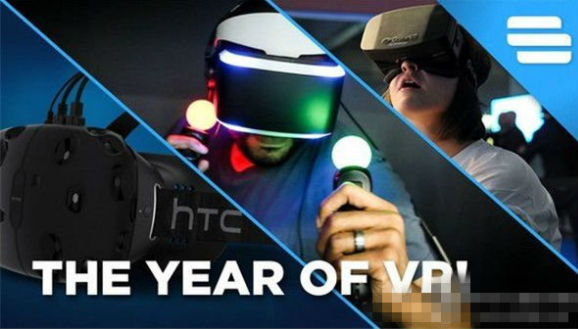
The founder of Oculus said in an interview with the Financial Times that in another ten years, virtual devices can replace smartphones as the next computing platform. Current VR devices are still a bit bulky and relatively expensive. Buyers are mainly technology fans and high-end gamers. Since the development of VR technology is not yet complete and mature, problems such as dizziness and nausea caused by VR experience cannot be solved, so film shooting is still in the exploratory stage.
Let us wait and see where VR will take us in the future.
