
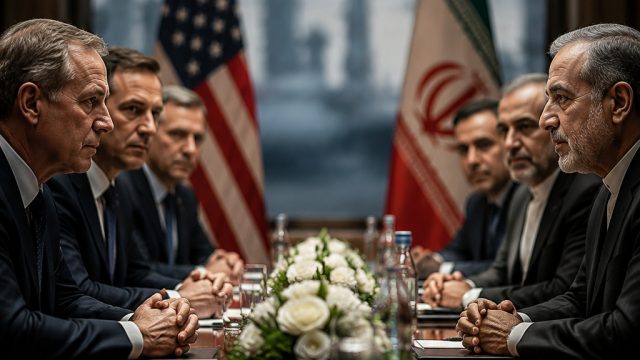
In an increasingly complex geopolitical landscape, the ongoing negotiations surrounding Iran's nuclear program have taken a new turn, as the United States and Iran present starkly different accounts of their latest discussions. This divergence not only complicates diplomatic efforts but also heightens tensions in an already volatile region. Understanding these contrasting narratives is crucial as they have significant implications for global security and international relations.
Contrasting Accounts of Nuclear Negotiations
Recent communications from U.S. and Iranian officials reveal a dissonance that could further strain diplomatic ties. The U.S. maintains that discussions are progressing towards a consensus, aiming for a framework that ensures greater oversight of Iran’s nuclear activities. Conversely, Iranian sources claim that the U.S. is imposing unreasonable conditions that hinder meaningful dialogue.
The U.S. Perspective
From the American standpoint, the emphasis is on achieving a robust agreement that not only addresses Iran's nuclear ambitions but also curtails its regional influence. The U.S. argues that they are committed to finding a diplomatic solution, citing recent engagements as evidence of ongoing cooperation.
- Focus on transparency and accountability in nuclear activities.
- Emphasis on regional stability and security.
- Concerns over Iran’s support for militant groups in the Middle East.
The Iranian Position
In contrast, Iran portrays itself as the aggrieved party, asserting that U.S. demands are overly stringent and disrespectful of its sovereignty. Iranian officials assert their right to develop nuclear technology for peaceful purposes and argue that the U.S. withdrawal from the 2015 nuclear deal remains a significant impediment to progress.
- Call for respect of Iran's rights under international law.
- Accusation of U.S. double standards in foreign policy.
- Desire for sanctions relief to facilitate negotiations.
Implications for Global Security
The conflicting narratives surrounding the U.S.-Iran nuclear talks have far-reaching consequences. As both nations prepare for future discussions, the potential for misinterpretation and escalation of tensions looms large. This situation underscores the fragile nature of international diplomacy, where the stakes include not just regional but global security.
The Role of International Observers
International observers and organizations play a pivotal role in mediating between the U.S. and Iran. Their involvement is essential to ensure that both sides adhere to the principles of transparency and mutual understanding.
- Monitoring compliance with nuclear agreements.
- Facilitating dialogue to bridge gaps in understanding.
- Providing unbiased assessments of each nation’s commitments.
The Path Forward: Opportunities for Constructive Engagement
While the current landscape of U.S.-Iran negotiations appears fraught with challenges, there remain avenues for constructive engagement. Both countries must recognize the shared benefits of stability and peace in the region. A commitment to open dialogue, devoid of preconditions, could pave the way for renewed trust and cooperation.
Strategies for Effective Diplomacy
To move forward effectively, both nations should consider the following strategies:
- Engagement without preconditions to foster goodwill.
- Involvement of neutral third-party mediators to facilitate discussions.
- Building confidence through incremental agreements.
Conclusion: The Urgency of Resolution
The diverging accounts of the U.S. and Iran regarding their nuclear discussions highlight the complexities of international diplomacy. As both nations navigate this intricate situation, the global community watches closely. The need for a resolution is urgent, as persistent tensions could lead to destabilization not just in the Middle East, but worldwide. Therefore, fostering understanding and collaboration is more crucial than ever in this high-stakes environment.
