
Word-of-mouth and celebrity effect have made Visvim a favorite among connoisseurs. Now, it seems to be starting to get rid of its low profile in the past and appears in shopping malls and stores around the world.
This may be a precursor to the kitsch of Visvimu, but it may also be the beginning of a magical miracle. On a warm summer morning in Florence, Italy, the air is filled with the fragrance of blooming camellias. Guests at Florence Men, the menswear trade fair, wandered through a tunnel of manicured greenery in the Renaissance Boboli Gardens to the fashion show of Japanese designer Hiroki Nakamura.
They first stopped in front of the Porta Romana and put on herringbone-patterned kimono jackets—custom-made by Mr. Nakamura, now 45, from a traditional Kyoto craftsman. After getting dressed, they moved to the "Lemon House" designed by the famous Italian architect Rosso in the 18th century. The scene looked like the diplomatic missions visiting the Medici court in the woodblock prints of Japanese printmaker Hiroshige. In fact, they are just some buyers, media and fashion people. However, fashion without a story can only be regarded as sewing. It is this thorough understanding of ritual norms that allowed Mr. Nakamura’s brand, Visvimu, to grow from an independent design company in Tokyo to a fashion company with sales of over 100 million US dollars.
“The reason why Visvi wood has such a powerful energy is that it awakens something inside you,” said singer John Mayer, who wears Visvi wood from daily life to stage. “My whole wardrobe is filled with Visvi wood, and I bought almost every style of Madras check design.”
Mair is a representative of Mr. Nakamura’s elite fan base, which also includes Pharrell Williams, Eric Clapton and ASAP Rocky. Although the brand is still somewhat unfamiliar to ordinary people, in the past 15 years, the secret of this connoisseur has been revealed - currently, Visvimu has 7 independent stores in Japan and 135 international retailers.
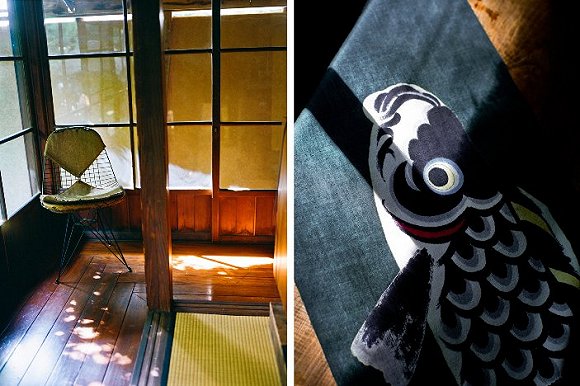
“When I first started my business, I asked myself what do I want beyond that, and I found that what I wanted was a product that would make me happy,” he said in an interview. “I alsoWe hope to create a brand with eternal value and no national boundaries. ”
Century Nakamura decided to achieve this goal in a way that seemed whimsical at the time - word-of-mouth publicity. Visvimu never advertises, and Mr. Nakamura remains only moderately active on social media.
The last news about new Visvi wood products was spread like espionage work - consumers reported the current situation to each other on Instagram. For example, Mel half-hiddenly shared a newly acquired Visvi wood product - a pair of half-moccasin and half-canvas shoes priced at US$750.
In other words, there is a price but no market. Even Kanye West is still waiting in line.
Nakamura and his American wife Kelsi flew from Los Angeles to Florence to spend half a year with their 11-year-old daughter from a previous relationship. The rest of the time is spent in Tokyo, in an old wooden house with a lush garden.
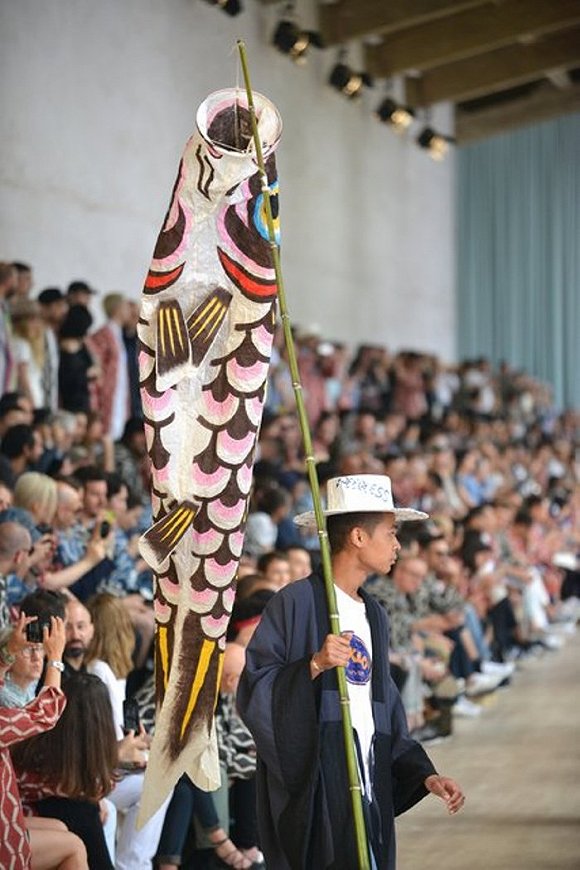
A few weeks before the opening of the Florence menswear show, I interviewed Mr. Nakamura in that wooden house. There, we can better understand the creations of a man who put as much effort into his collections as he did into his designs, and who worked tirelessly to learn about everything from tribal fabrics to rockabilly hairstyles to classic cars.
“I’ve been collecting since I was fourteen years old,” Nakamura said, “and I still can’t stop. ”
That morning, he had just returned home from Narita Airport in a 1964 navy blue Rolls-Royce Silver Cloud 3. The week before, he had been traveling around: flying from Tokyo to London, then to Hong Kong, Los Angeles, Florence and finally home.
Seki Nakamura, a tall, handsome and scruffy man, wore a short jacket, a ripped shirt and jeans, and walked barefoot on the Edo-era floor of his home. He plucked James Taylor's first edition of "Sweet Baby James" from his collection and put it into huge, pristine, brand-new JBL Paragon D44000 speakers from the 1980s.
All these seemingly artificial things—hippie folk songs, old-fashioned sound systems, and thick, airy old buildings—are truly the fundamental way Nakamura sees the world, and are the best expression of Wabi-sabi (a Zen aesthetic concept in which incompleteness is beauty).
For half of the year, Nakamura and his wife live in their home in Tokyo, surrounded by a lush garden.
Mr. NakamuraA chest of drawers (a type of storage cupboard) was opened. There are many fabrics stacked inside - kanth cloth from Calcutta, India, Teknospas cloth from the Navajo Indian Reservation, silk embroidery samples from Herat, Afghanistan, and several sections of Nepalese woolen fabric dyed with carmine - all sealed and stored in ziplock bags to prevent damage by mold and insects.
“A lot of my inspiration comes from vintage fabrics, those beautiful things that were made in the past,” Nakamura said. As a teenager, Nakamura scoured grocery stores for World War II surplus items, such as denim workwear from the 1950s and the jackets of Buddhist pilgrims.
“I always hope to create works that are as powerful as those old things that deeply attract me.” Nakamura said.
When asked why some old objects have "energy" while others do not, Mr. Nakamura smiled and shrugged.
The answer to this question may be related to Japanese philosophy. Some craftsmanship, or "crafts," are said to emerge as the inevitable result of a lifetime of honing skills by specially trained masters.
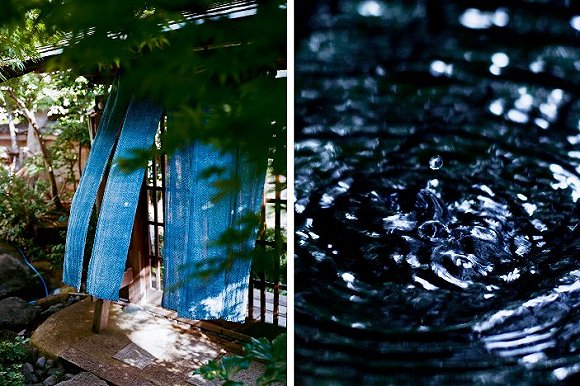
The process of constantly improving one's skills is like a samurai polishing his sword - what is pursued is not only the result itself, but the process of constantly shaping the breadth of life. Every beautiful thing will have an attraction if you think about the hands behind its creation.
Mr. Nakamura is fond of telling a story about how he acquired a Nepalese robe. The fabric of the robe is the deepest carmine.
"It has a power, but I don't know where it comes from," Nakamura said. "So I will discuss with my team how to recreate a piece of cloth with such power."
That piece of "fabric" is actually dyed with substances extracted from cochineal insects. Cochineal is a parasite of the American cactus, and this staining is documented in ancient Aztec manuscripts. Nakamura is not the first person to be fascinated by dyes that date back to the first century B.C. Before the widespread use of chemical dyeing, this dyeing method became the largest export business in colonial Mexico after silverware.
The beauty of cochineal-dyed fabrics is that they change over time, just like madder, indigo, or earth dyes.
"Machine products are so perfect that they lose their original purpose," said Mr. Nakamura. "In the modern world, products are all the same and monotonous. In my opinion, this is too boring. I like things that are natural and have subtle differences, and the human differences in handmade products also fascinate me."
How this preference satisfies the rapid expansion of dystopian plots in modern Tokyo? The answer may not be clear enough, but it is not difficult to find: There is an obvious gap between the highly industrialized consciousness of the 21st century and the deep-rooted cultural aesthetic consciousness in people's hearts.
For Gianluca Cantaro, editor-in-chief of Italy's L'officiel Hommes magazine, it was this disagreement that made Nakamura Century's once-obscure brand such a success.
"They are like an island, an island that never changes," Cantaro said. "No matter what influence the outside world has on them - the life and imagination of the United States and California have given them endless inspiration - the United States in their eyes has never been the real America. They are not quoting. They are not replicating."

Nakamura once tried his hand at the "most American" brand, Vermont-based Buerton Snowboards, where he learned to work with high-tech materials. He drives a limited-edition 1979 Jeep Wagoneer in Los Angeles and rides a 1948 Indian Chief cruiser into the California desert. He would decorate himself with old Navajo silver or hang a tattered American flag on the wall of his Tokyo house.
Yet, like countless of his compatriots who embraced the traditional American style, Nakamura remained, as Cantaro puts it, "a Japanese through and through."
And this is also the consensus of the confused guests at the Florence Men's Wear Show. Wearing kimonos and walking through French Baroque buildings, they found themselves watching a performance by dancers wearing sailor uniforms and American sailor hats. The dancers twirled their partners or swung their canes, performing old-fashioned dance moves, and the soundtrack was early rock and roll, the kind you'd drink in nostalgia.Songs that can be requested on the old jukebox in the store.
The show carried on themes that looked very American: ranches and cowboys, gas workers and overalls, vintage denim and gurneys, Marlon Brando and James Dean. But if you look at this fashion show again, you will find the Japanese-style lapel hidden in the top and the fish flag pattern designed by Kyoto's traditional fish flag craftsman.
Almost none of the fabrics, craftsmanship, and techniques that contribute to the American image of Visvi wood were born in the United States. The United States' own manufacturing traditions are now largely a thing of the past. There is no deliberate imitation, no obedient tribute, and no superficial irony in Weisweimu's fashion show. What is presented is something more complex and unforgettable. It was a traveler's description of a place that he might have had a brief look at, or perhaps it was just a fantasy that he had never set foot in: America, it was a mirage.
Translation: Zhou Yifan
