
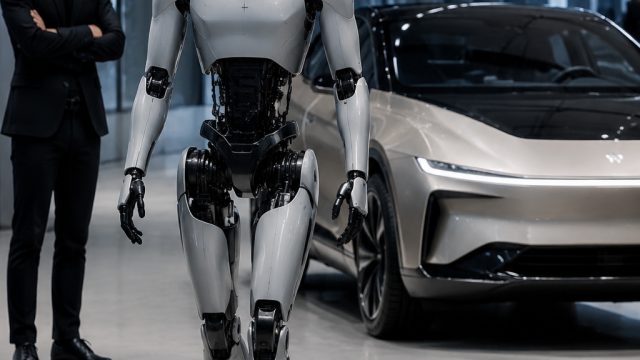
As industries worldwide navigate the complexities of modernization and automation, Faraday Future (FFAI) has made headlines with the unveiling of its latest innovations: a new range of humanoid robots, aptly named Futurist and Faber. In an era where artificial intelligence and robotics are becoming integral to productivity, these developments could reshape workforce dynamics and operational efficiency.
The Futurist Humanoid: A Leap Towards Intelligent Automation
The Futurist humanoid robot is designed with a focus on versatility and adaptability, aimed at enhancing workplace efficiency in various sectors. Equipped with advanced artificial intelligence capabilities, the Futurist can perform a multitude of tasks, from assisting in logistics to engaging directly with customers in retail environments.
Key Features of the Futurist Robot
- AI Integration: The robot utilizes cutting-edge algorithms to learn and adapt to its surroundings, ensuring optimal performance.
- Human Interaction: Designed to communicate effectively, the Futurist can understand and respond to customer inquiries, enhancing service delivery.
- Mobility: Its agile design allows it to navigate diverse environments, making it suitable for various applications within industries.
Faber Industrial Robot: Revolutionizing Manufacturing Processes
Complementing the Futurist is the Faber industrial robot, which focuses specifically on manufacturing and production lines. This robot aims to streamline operations, reducing the time and labor required for repetitive tasks. As companies continue to seek solutions to optimize production, the Faber's capabilities could not come at a better time.
Advantages of Implementing Faber Robots in Manufacturing
- Increased Efficiency: Faber can operate continuously, leading to higher output with minimal downtime.
- Safety Enhancements: With precision engineering, Faber reduces human risk in hazardous working conditions.
- Cost-Effectiveness: By automating routine tasks, companies can significantly lower operational costs over time.
Why This Matters Now: The Shift Towards Robotics
The announcement of these robots comes at a crucial juncture as businesses face unprecedented challenges in labor shortages and operational efficiencies. The introduction of humanoid robots such as the Futurist and Faber can play a pivotal role in transforming traditional workspaces into smart, automated environments.
Industry Implications
1. Job Transformation: While there are concerns about robots replacing human jobs, the reality is that these technologies will create new roles requiring higher skill levels, which can lead to job evolution rather than redundancy.
2. Economic Impact: By increasing productivity and reducing costs, companies using these robots can enhance their competitiveness in the global market.
3. Future Innovations: The successful integration of humanoid robots can pave the way for future advancements, potentially leading to smarter machines that further optimize various industry functions.
Conclusion: A New Era of Robotics
Faraday Future's unveiling of the Futurist and Faber robots marks a significant step towards integrating advanced robotics into everyday business operations. As industries adapt to these cutting-edge technologies, we may witness a paradigm shift in how work is conducted. The capabilities of these humanoid robots could empower businesses to elevate their service standards, improve efficiency, and ultimately thrive in a competitive marketplace. As we look ahead, the role of robotics in shaping the future of work appears not only promising but essential.
