
Glass Gem corn is an exotic variety of corn that comes in a rainbow of colors. In 2012, the colorful crop took the online world by storm after users uploaded photos to Facebook.
Soon after, Native Seeds/SEARCH, the company that sells the rare corn seeds, began ramping up production to meet strong demand. The Arizona-based company still sells Glass Gem corn seeds on its website.
Meanwhile, someone created a Facebook page dedicated to Glass Gem Corn, where growers can share photos of their corn.
The story behind the glass gem is also very exciting. The story begins with Carl Barnes, an Indian who wants to find his Native American roots.
When rainbow corn became popular across the United States in 2012, Greg Schoen, a descendant of Barnes, told the history of this corn. We excerpted the best parts of the story.
The story of rainbow corn begins with an Oklahoma farmer named Carl Barnes. Now in his 80s, Barnes is half Cherokee Indian. As a young man, he began growing older varieties of corn as a way to reconnect with his Indian heritage.
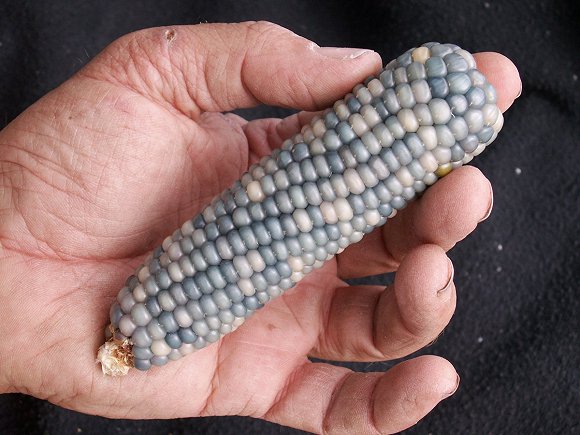
In the process of growing these ancient corn varieties, Barnes isolated corn varieties grown by the Native Americans' ancestors that were lost when the Indians were forced to move to what is now Oklahoma in the 19th century. He traveled all over the United States exchanging ancient varieties of corn seeds with people and became friends with many of them.
Barnes began sorting, storing, and growing again those particularly brightly colored corns. Over time, he developed rainbow-colored corn.
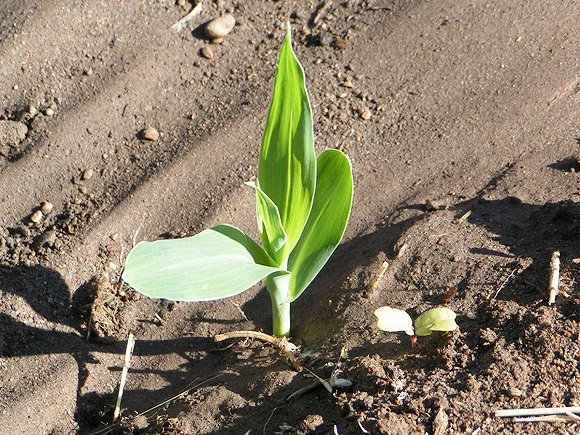
Greg Schoen, also a farmer, met Barnes at a 1994 native plant show in Oklahoma. The latter was exhibiting his rainbow-colored corn. Schon was stunned.
The next year, Barnes gave Schon some rainbow corn seeds. Schön planted the first batch that summer.
Schön and Barnes became close friends, and over the years Schoen received more samples of rainbow corn seeds.
In the beginning, Schon only grew small amounts of colored corn in New Mexico. He moved there in 1999.
In 2005, in Santa Clara, the stateNear the Philippine city, in addition to planting traditional corn varieties, Schon also began to plant rainbow corn on a large scale.
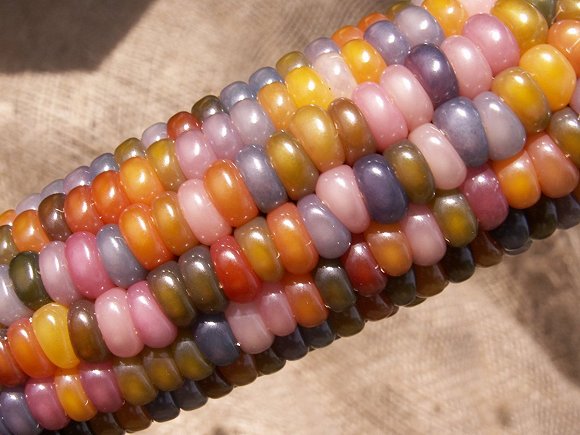
New varieties of rainbow corn are created by mixing them with traditional varieties. Planted for many years, corn will reveal brighter colors and more distinctive flower patterns each year.
According to Schoen, Barnes told him that rainbow corn seeds were originally derived from a cross between "Deernie Tribe baby corn and Osage Tribe red pink corn, and another Osage Tribe 'Gray Horse' variety."
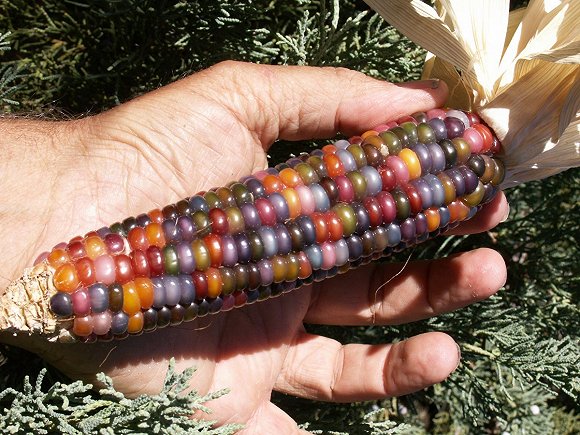
Schön named various colors and pattern types that appeared, such as "Circus Colors", "True Rainbow", "Dark Blue", etc.
The picture below is Glass Gem, which is the name Schon gave to the variety he planted in 2007. This corn includes colors such as blue-green and pink-purple. This is the picture that went viral in 2012, making the uniquely colored glass gem a hot spot on the Internet.
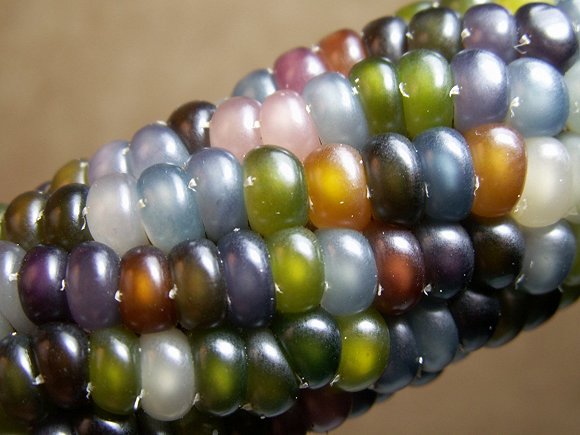
In 2009, Schoen gave some seeds of a rainbow corn variety to businessman Bill McDorman, who owns a seed company in Arizona called Seed Trust.
McDormand is now the executive director of Native Seeds/SEARCH, a conservation nonprofit. He brought the seeds of the Glass Gem to the organization, which are now available for purchase online.
Schon is not associated with the company and still lives in New Mexico raising corn. This was said in 2013 by Stephen Thomas, who worked as a development assistant at Native Seeds/SEARCH.
On the Native Seeds/SEARCH website, a box of seeds sells for $7.95. There are instructions on the back of the box.
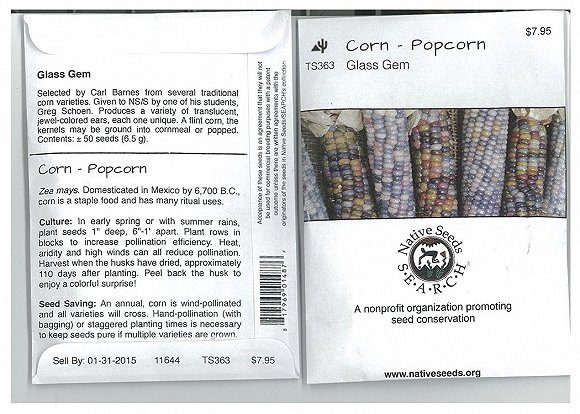
Corn does not like frost and can grow in any area with a warm climate and sufficient sunshine. Planting is usually started in late spring after the last frost.
When planting corn seeds, bury them 1 inch (2.54 cm) deep, space each seed 6 inches (15.24 cm) apart, and plant at least 3 longs (rather than a long single long) to facilitate pollination.
Each box contains approximately 50 seeds. Thomas said each corn plant will produce two to three corns, so you can expect to harvest 100 to 150 corns from a box of seeds.
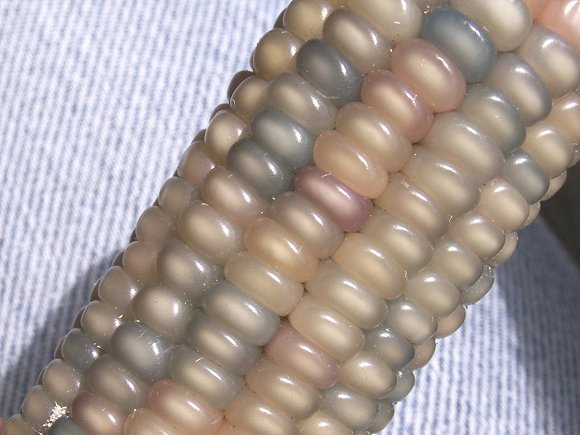
So what does it taste like? Unlike sweet corn, glass gemstones are generally not eaten directly.
Glass rainbows are called flint corn because the kernels have a very hard outer shell.
Most people grind this corn finely to make tortillas or into a coarse meal because it is rich in starch.
This corn can also be made into popcorn (but the popcorn is not in a rainbow of colors). To make popcorn, corn should be harvested when it is dry and yellow. Corn kernels require very low moisture so they will pop when heated. You can also peel off the husks and dry them further until the kernels start to fall off the cob.

Obviously, glass gemstones also make great decorative crops.
Most growers are amazed by the color of corn.
Growers can also try growing a specific color by collecting corn seeds that display the desired color and planting again next year.
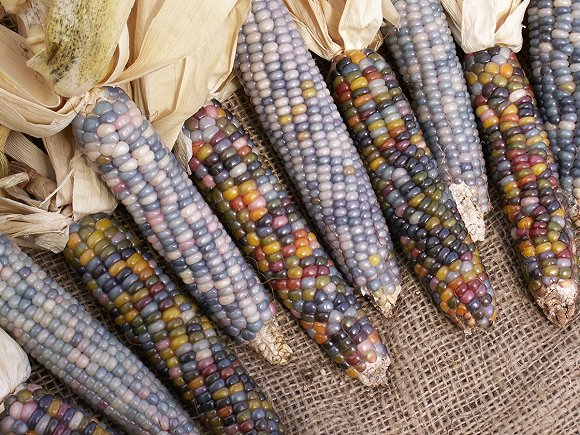
For example, if you want lavender corn, you can plant purple corn seeds again.
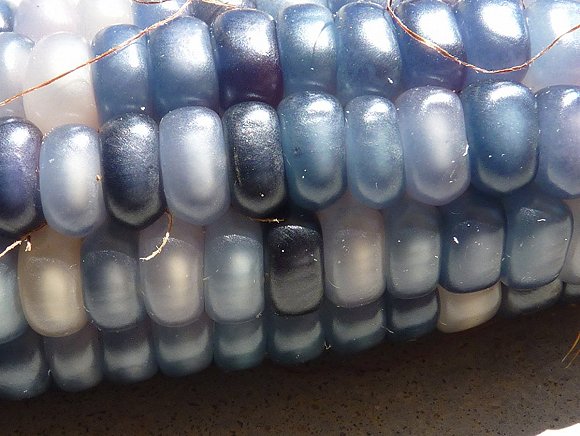
The Glass Gem Facebook page is filled with photos from people who have grown and harvested their own Glass Gem corn.
(Translator: Li Menglin; Editor: Chen Shenglong)

