
It’s a cliché that Britain is on the verge of an “obesity epidemic”. It is estimated that by 2035, 75% of the British population will be overweight. In the future, we may see the emergence of a national diet control culture. Obese people have replaced smokers and become a major drain on the national economy and a new group of social outcasts. Body mass index (BMI) has become an indicator of human value. To paraphrase health policy, our bodies have increasingly become public property, directly valued by governments and the media.
Nowadays, more and more "koshers" (people who only consume natural, additive-free, highly nutritious and healthy foods) and "health experts" have become regulars on prime-time TV shows and vigorously promote the benefits of the original diet, while obese people are still portrayed as a lazy, funny group that lacks willpower. We can see scenes like this in the show: unsuspecting passers-by walking on the street, with heavy belly and tight clothes; a man in a shirt on a bench cannot hide his buttons that are about to be torn, so he has to hang his head to avoid being recognized by others. "Fattertainment" has become a common program routine in recent years. Nutritionist Gillian McKeith will scorn the excrement of obese people in every episode. "The Biggest Loser" directly uses strict weight loss plans for obese people and weekly weight comparisons as its selling point. Shows such as "Lose Weight For Love," "Fat Families" and "Secret Eaters" have already adopted this "constructive fat-shaming" approach.
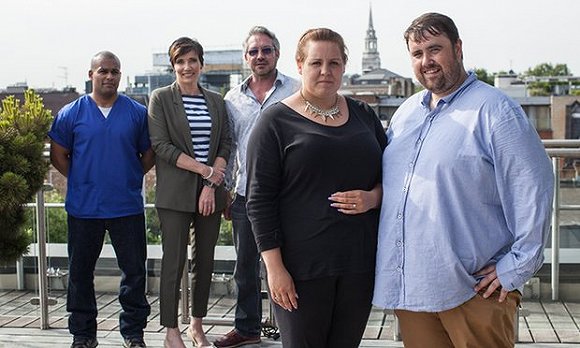
BBC3's educational documentary "Obesity: The Post Mortem" was broadcast against this background. Although we already intuitively understand obesity based on its appearance, the producers argue that we know almost nothing about its internal manifestations and the damage it causes to the body.
In 2002, anatomist Professor Gunther von Hagens (Gunther von Hagens) performed a real autopsy on a late-night Channel 4 program. Hagens, then head of ethics at the British Medical Association, criticized the practice, saying it was "both shameful and disrespectful". Since all BBC3 programs are broadcast online, the channel has continued to launch some thought-provoking and sensitive documentaries - which also makes "Obesity:The broadcast of "The Post Mortem" attracted wider attention.
In the documentary, a pathologist performs an autopsy on a female corpse that does not reveal much information. This female corpse represents a difficult problem that requires pathologist Dr. Mike Osborn (Mike Osborn) and anatomical pathology expert Carla Valentine (Carla Valentine) to jointly solve. The deceased voluntarily donated her body for medical research, but she may not have known that it was in such an extreme way as a televised autopsy.
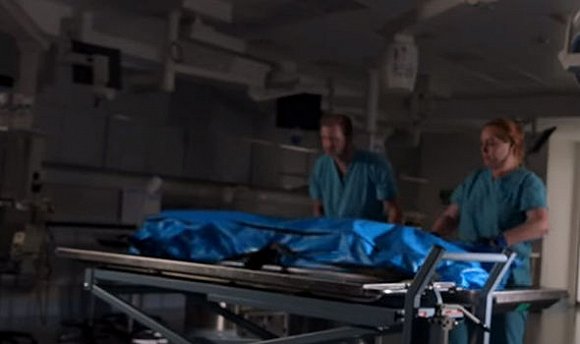
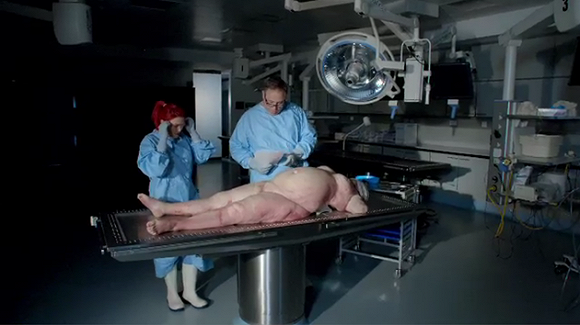
The deceased lived in Long Beach, California. After her death, one of her arms was left to her family for cremation. The remaining parts were packaged and transported to this side of the Atlantic for dissection experiments - but the program still did not explain why a British corpse was not used. The deceased was about sixty years old, 5.5 feet tall (approximately 168cm), and weighed as much as "17 stones (British and American weight unit, one stone is about 14 pounds, that is, the deceased weighed about 238 pounds, 108 kilograms)." The deceased died of heart disease, not obesity itself, but obesity "increased the risk of disease...causing death".
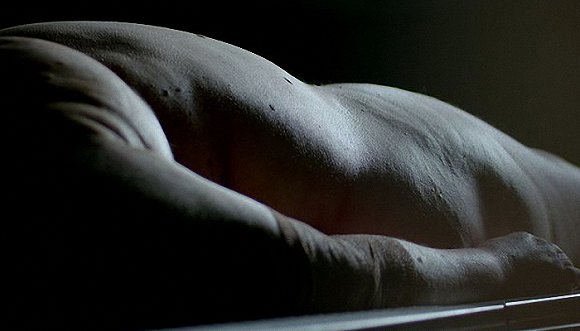
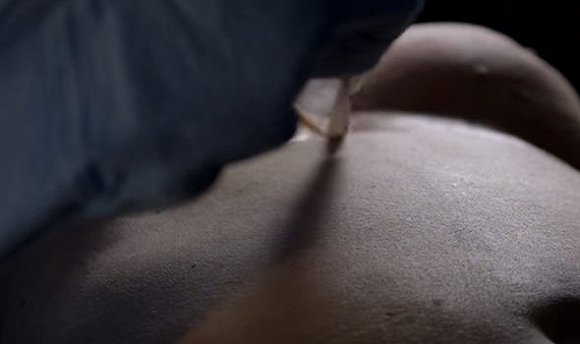
Before the autopsy began, the camera shot back and forth around the naked body of the deceased. A pale, muscular body with blisters came into view of the audience. The only thing covered was her face - haphazardly covered by a piece of cloth. Only two details of the entire anatomy are more humane: the traces of breast augmentation and the coral-colored nail polish that remains on the surface of the toenails. When anatomical pathology expert Fan Lunting cut open the deceased's abdomen, she exclaimed, "This is so much fat!" Even the scalpel became a little slippery. “It feels very similar to butter,” she said. On the screen, a chunk of bright yellow fat appeared in front of us.
The entire autopsy process is interspersed with interviews with obese people, which is intended to help the audience understand the cause of death. In front of the camera, they talked about their experiences of gaining weight - disease treatment, eating disorders, anxiety and low self-esteem were all factors. The cheap and easy availability of high-calorie foods made them gain weight even more. They also shared the many inconveniences that obesity has brought to themselves, such as not being able to enjoy national medical services due to excessive obesity, and even falling into an endless cycle of overeating in order to appease their emotions when they lacked self-confidence. "If you are fat, you will be marginalized by society," said the only intervieweeThe male interviewer, 22-year-old Nick, said.
In addition to interspersed interviews, the program also added a lot of text descriptions, almost subconsciously hinting to the audience: Compared with normal people, obese people have relatively low productivity, personal abilities and intelligence. But the show doesn't offer any explanation for the hint, and we just see Osbourne pick up the dead man's liver and say it was "like a ball of liver paste." "This is really bad news for this woman," he said. But at this stage, how bad can she get?
This practice of telling the unique stories and experiences of the deceased through autopsy only implies that obesity is a defect of the deceased, but does not take factors such as income, class, genes, medicine, and psychology into consideration at all. It is a dehumanizing approach. This unfair portrayal will only worsen the pathological prejudice that is already deeply ingrained in the minds of more and more people. "Obesity: The Post Mortem" is indeed wonderful, but if it reveals anything, it can only be this: even if they have become a corpse, obese people still cannot escape the dilemma of being laughed at for no reason.
Obesity: The Post Mortem is currently airing on BBC3.
(Translation: Pan Jinhua)
