
The suicide of Yang Gailan, a woman from Kangle County, Gansu Province, after her son's murder triggered huge discussions. Why would a rural woman act in such a violent and desperate manner? Why completely extinguish the hope of survival for the next generation? Why did he say to his grandmother who came to persuade him before he died, "I'm going to live my life, and you live yours... forcing me to... you don't understand, and I won't tell you"? As the understanding of the incident deepened, in addition to discovering the economic situation of Yang Gailan's family who "had not received subsistence allowance for three years", people also began to pay attention to the special family structure of Yang Gailan's family where "the husband stepped in and the grandmother was in charge of the family" and the conflict between the grandmother Yang Lanfang and her grandson-in-law.
From the fierce "last words" that Yang Gailan said to her grandmother, it may be believed that the murder of her son was just a part of her suicide - she could not bear it anymore and wanted to destroy her small family, so at the moment before her death, she killed her next generation of family members, said goodbye to the previous generation of family members, and finally left all human relations and family behind. This was the most extreme form of suicide for a rural woman. Her "suicide" was truly completed when her husband took pesticide a few days later.
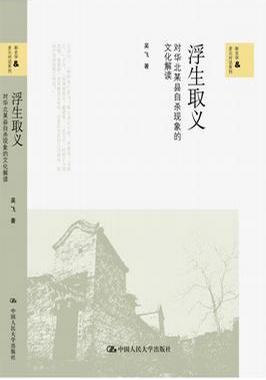
While lamenting the tragic fate of this woman, her husband, four children, and this family, we may be able to draw attention to the impact of family structure and power relations on individuals through Peking University professor Wu Fei’s research on the phenomenon of suicide in rural China. In his book "Floating Life", Wu Fei started from the study of family relationships and classified a situation of suicide in rural China as "private wrongedness". He pointed out that the family is not only a place full of love and affection, but also a place for power games. "Living in life requires not only dealing with the relationships between people, but also managing the economy." In a family, one must not only respect each other with relatives, but also respect each other and maintain a certain balance of power. Precisely because in the family, politics will inevitably be entangled with emotions, and people cannot completely handle various interactions and disputes between relatives according to general political logic."
In this book, Wu Fei analyzed the suicides of the rural boy Luo Sheng and the young woman Qiongzhi, and concluded - "In this series of family power games, we can understand grievances as frustrations in the power games; suicide can be seen as a form of revenge or correction for this grievance."
In the absence of investigation, of course we cannot simply classify Yang Gailan's suicide as a "complaint suicide", but awareness of the damage that "family power struggle" can do to personal dignity and "life" may be an important aspect to pay attention to when paying attention to this tragedy.
Reasons for suicide: Resistance to family grievances
Understanding“After the basic concepts of "living a life" and "being a human being", we can return to the specific issue of suicide. As we have seen above, suicide is often caused by injustice such as "grievance".
However, when it comes to family politics, people often think that it will not be a big deal: "How big of a deal can a couple live together? “Stumbling and making noises are commonplace, and the past is over. "Conflicts in the family are not a big deal. On the one hand, it is difficult to avoid quarrels of all sizes in any family, so it is not a big deal; on the other hand, the quarrels in the family do not really come from hostility, but can always be offset by a loving family life. It may even be the quarrels that make the family life rich and colorful. For example, quarrels between husband and wife are often difficult to distinguish from coquettishness. Therefore, the existence of quarrels in the family is often not regarded as a great misfortune and is not considered to be deliberately avoided.
Combining these two seemingly contradictory aspects, family life should be both crucial and very delicate. To understand the grievances that lead to suicide, we need to further understand the place of family in Chinese culture. When I emphasized the importance of family earlier, I almost used the word "sacred" to describe it. Even if a normal Chinese person does not care about the country, even if he is blasphemous, it is difficult for him to deny his ancestors and family. Even if people are dissatisfied with the lifestyle or a certain family member in their own home, it is difficult to deny their own home as a whole. If someone really abandons his parents, wife and children and becomes a complete libertine, he is similar to a lunatic or a fool. In the eyes of the most ordinary people, he will not be treated as a normal person. In this sense, family is a sacred concept. However, the "sacred" place of family is different from the so-called sacred concept in Chinese and Western religions, because it is precisely the place that can best tolerate bad things. Although it is difficult for someone not to value family, most people do not treat it with the same vigilance and fear as they treat gods. Instead, they hide a lot of privacy within it. Many things that cannot be made public or disclosed to the public can happen and be hidden at home. The family, the most sacred place, is also the most secular place; and the sanctity of the family is often reflected in its secularity - as Confucius said, "The father hides for the son, and the son hides for the father." Not only will it not destroy the sanctity of the family, but it is also required by family life. We still regard family life as the core place of "living" and "being a human being" according to our understanding in daily life, that is: family cannot be measured by external value standards (such as sacred, secular, moral, legal), because it itself is the original standard. A person with a happy family has both the backbone of his life and basic personality values. He can start from family life to interact with outsiders and achieve career success; in turn, career success should nourish life and personality by further promoting family life.
Due to this central position of the family, the attitude of "the father is hidden from the son, and the son is hidden from the father" seems to beThe real meaning of condoning adultery is that it starts from basic human feelings and does not mean that the family must confront the law. As mentioned above, the law and the state cannot be used as a measure of family life. Renqing is the fundamental starting point and ultimate destination that enables the family to realize the value of life and personality. It is the core meaning of "emotion" that makes the family the most "sacred" and the most "secular" at the same time: the reason why the family is sacred is to cultivate gentle emotions at home; the reason why the family is secular is because this emotion should be all-encompassing. Again, it is this core meaning that makes family politics both vital and less rigid. That is to say: it is precisely because of the love in the family that people entrust their most fundamental life and personality to the family; it is also because of the love in the family that no matter how big the noise is, it should be resolved and offset.
But the reason why family politics is important is that "emotion" is not the only dimension in the family. Relying solely on emotions cannot truly resolve the inevitable differences and conflicts between people. Although family life comes from and belongs to love, it cannot rely on love. Family members must rely on another set of rules to live and behave. "Living a life" requires not only dealing with relationships between people, but also managing economic income and expenditure; being a good person in a family requires not only mutual respect and love for relatives, but also mutual respect and maintaining a certain balance of power. These aspects are all politics. Since it is politics, of course there will be issues of fairness, so there will be issues of "grievance".
On the other hand, precisely because it is in the family, politics will inevitably be entangled with emotions, and people cannot completely follow general political logic to handle various interactions and entanglements between relatives. This is not only because it is difficult to avoid emotional considerations when dealing with family matters, but also because the expectations among relatives are inherently different from those in public politics. We can use two other examples to see what is special about the injustice of "grievance".
Luo Sheng is a 21-year-old young man. Once, when his grandfather's house was empty, he entered the house alone and ate a few bananas placed inside. Who knows, when the old man returned home, he found that 800 yuan was missing. His grandfather thought it was Luo Sheng who took the 800 yuan. Luo Sheng's father used to dote on Luo Sheng very much, but suddenly he heard that his son had stolen his grandfather's money. He felt very humiliated and gave Luo Sheng a severe punishment. Luo Sheng felt wronged and angrily ran to the train track, threw himself on the track and committed suicide.
Another example is Qiongzhi, a young woman who has just been married for two years. She and her husband are very loving and almost never quarrel. Among her dowry was a tape recorder. One day there was a break-in at home and the tape recorder was stolen by the thief. Qiongzhi was at home at the time, but did not see the thief come in. When Qiongzhi's husband found out, he scolded Qiongzhi severely and blamed her for not keeping strict supervision. Qiongzhi felt very aggrieved because her husband had never treated her like this, so she drank a bottle of pesticide and died.
Among the suicide stories I have investigated, quite a few are tragedies caused by very small disputes and quarrels. After suicide occurs, people first have two thoughts:a reaction. First, the deceased must have been wronged. For example, Luo Sheng, his suicide ending shows that he must not have stolen money. Qiongzhi's situation will be different because there is no fault or misunderstanding here, but her husband's criticism must be far from what she expected. Second, people will feel very sorry. This is not only because the cause of suicide is too small, but also because, before this "grievance" occurred, these families were living a good life. Luo Sheng had such a good relationship with his father, so why couldn't he tolerate a little criticism? Although Luo Sheng was wrongly accused, does this deserve death? In Qiongzhi's story, there is no such misunderstanding and misunderstanding. Qiongzhi was obviously at home, but the tape recorder was stolen. She was not to blame. If she suffered any injustice, it was because her husband spoke too harshly. Would this loving couple end up like this just because of a harsh word?
If the same thing happens outside the family, such as such misunderstandings or harsh criticism among colleagues or friends, it will certainly be considered unjust. However, generally, people do not commit suicide because of this. Not only will they not commit suicide because of this, but if someone does commit suicide because of this, people will not think that the deceased was wronged. Instead, they may suspect that he was indeed at fault, and there may even be a bigger mistake than this. Otherwise, how could he commit suicide out of fear of crime? The important difference between injustice and grievance is that once an aggrieved person like Luo Sheng commits suicide, people will immediately know that he must not have stolen money; but conversely, if a person with similar charges commits suicide in public life, people will often think that he is not innocent. For example, in 1996, Kuang Jianxiong, the township party secretary of Jiuhe Township, hanged himself due to work pressure and power struggle. People found it very strange. Many people speculated that he must have committed some unspeakable mistake, so he committed suicide out of fear of crime. People don't quite believe that he would hang himself just because of work pressure.
It can be seen that people use very different logics to understand justice in family life and public life. The different attitudes of the public security organs towards Haopeng and Zhonglu are just one example. So, where does this difference manifest itself?
As mentioned above, family life is first and foremost a mixture of emotion and politics. On the one hand, there is a close emotional dependence between family members; on the other hand, family life is also a political life. And these two aspects cannot be separated from each other. No one wants family members to interact with each other like strangers, nor does they want the family to be as business-like as a work unit. Justice in the family, then, always takes intimacy as its starting point. The "intimate relationship" we are talking about does not necessarily exist only in families with good relationships, but exists in all families. It is necessary for life and is an interdependent relationship that connects individual lives with family members.
We can understand justice in the family into two levels.
First of all, it is a kind of formal justice, that is, the institutional framework for living. There must be a certain power structure and respective obligations in the family. Parents should love and care for their children, and children should respect their parents; between husband and wife, the male should take the lead outside, and the woman should take the inside. On top of this power structure, there will be a basic relationship of mutual respect and equality. For example, there must be a certain balance of power between husband and wife, including mutual respect for each other, as well as the respective statuses of the husband's family and the natal family.and strength; for another example, brothers and sisters should treat each other equally and have roughly equal rights and obligations, etc. Everyone can get on with their lives if they get their due share in a family and live according to their own roles. Anyone who does not receive such fair treatment will suffer injustice.
Secondly, it is fair communication based on formal justice, that is, implementing the principles of mutual respect and equality in formal justice into daily interactions. In a family where formal justice is basically established, family members should interact with each other intimately, respectfully, and equally in accordance with established names and principles. Fathers should be strict, mothers should be kind, children should be filial, brothers should be jealous, and husbands and wives should be loving. However, this is much more complicated than formal justice. Because every family situation is different, people have their own understanding of how to grasp the degree of fair communication. For example, if some fathers often criticize their sons, then criticism will be regarded as a normal relationship between father and son; for another example, if there are often small conflicts and frictions between husband and wife, then quarreling with each other will not be a big problem. But between Luosheng and his son, the father rarely reprimanded his son, and once he did, it would be regarded as an unbearable grievance; between Qiongzhi and his wife, because they were originally very affectionate, the husband's few words of criticism were unexpected.
Most of the suicides caused by trivial matters are because this kind of fair communication is threatened. It can be seen that grievances in family politics often do not mean that the general principles of justice or fairness have been challenged, but that a certain mutual relationship relied on and expected has not been achieved. Here, the so-called fairness refers to a relationship of intimacy and respect. Ultimately, politics in the family is meaningless if it does not start from and have intimacy as its end.
However, emotion and politics are two different things after all, and they follow different laws. Although the two are united in their starting point and end point, we still cannot confuse them. The most important intimate relationship in the family provides the basic premise and ultimate goal for family politics, but it cannot replace politics itself. We can say that the relationship between Luo Sheng and his son was originally a doting intimacy. In Luo Sheng's view, this kind of intimacy should still be maintained; but because he failed to achieve this kind of intimacy, he committed suicide. There was a kind of closeness between Qiongzhi and his wife. Qiongzhi also wanted to achieve this kind of intimacy, but because the relationship was destroyed, she committed suicide. "Grief" actually comes from the tension between emotion and family politics. Family politics takes emotion as the starting point and purpose, but cannot completely develop according to the logic of emotion.
This basic tension between emotion and politics has become the key to distinguishing family politics from public politics. Public politics, with modern bureaucracy as its basic feature, neither starts from nor aims at intimacy, but operates according to political logic from beginning to end. Wrongs in the public sphere are injustices in a purely political sense and are challenges to general distributive justice or communicative justice. If a political struggle breaks out in the public sphere, its ultimate goal is to defeat the enemy and preserve oneself.
Because its starting point and purpose are intimate relationships, strictly speaking, there are no real enemies in family politics. In other words, this special kind of politics should never be based on the principle of destroying enemies and preserving oneself. Even if you defeat the opponent in a specific situation, it is to maintain a form of intimacy.A close relationship is for the family to live the way they want. If the opponent's vitality is completely eliminated as in public politics, the result will not be beneficial to oneself.
Thus, for the convenience of discussion, we can understand family politics as a series of power games. The concept of "Game of Thrones" was influenced by Mr. Huang Guangguo, but it is not the same as him. This kind of power game starts from and ends with an intimate relationship, so it is not a life-and-death power "struggle". However, there are still some basic characteristics of political struggle, which we can understand from these aspects:
1. Regarding certain events in family life, people hope that they have a greater say, or at least get more respect. The power game is about this. Living a good life together is still the ultimate goal, but exerting greater power in living a life can also become a secondary goal.
2. Although the ultimate goal of the power game is to maintain an intimate relationship, the power relationship will also seep into the understanding of this intimate relationship. For example, if one party does not receive the respect and treatment expected, it will also feel that its rights have been violated. Grievance can be understood as not achieving the expected intimacy, but also as not achieving the expected dignity and power.
3. Although it is a power game, this game is not over once played. Instead, a game may bring about the redistribution of moral capital, thus affecting future games. Therefore, family politics is often a series of interlocking power games.
4. Based on such a power game, we can understand formal justice in family politics as a normal balance of power. And justice in relationships is one power game after another. The process of achieving fairness and justice in the family through family politics is the process of constantly maintaining this balance of power. Family politics is a dynamic balance of power.
5. Since the interests of the whole family are the recognized purpose, in such a power game, the outcome is determined not only by strength, but also by moral capital. “Moral capital” refers to words, deeds, or status within a family that are recognized as beneficial to the entire family. This kind of capital will give people an upper hand in power games; and the results of one power game will prepare moral capital for the next power game.
In this series of power games, we can understand grievances as frustrations in the power games; suicide can be seen as a form of revenge or correction for this grievances. Luo Sheng was wronged, but could not prove his innocence, which meant that he failed in the power game with his father. In order to correct this failure, he committed suicide by lying on the train. Although he is dead, his parents will immediately understand that he must not have stolen the money. He was wronged before, so he got it back in a new round of power game. Qiongzhi's story is a little different from Luosheng's, because she has nothing to defend. However, after she commits suicide, her husband will regret that he should not have been so rough to her, which can be regarded as a kind of revenge from Qiongzhi. People who commit suicide often say: "Let's see what you will do when I die."&ld"You will regret it if I die." "When the results they expect cannot be obtained, Luosheng and Qiongzhi will take extreme measures in order to gain more respect and power in the family. Although they clearly know that the purpose of family politics is intimacy, not hostility, they have forgotten that if they die, this victory is of no value.
If we only understand family life as a struggle for power, we cannot say that the suicides of Luosheng and Qiongzhi are completely meaningless; and the reason why people feel sorry for them is that they regard the power game in the family as a real power struggle, and they do not hesitate to sacrifice their own lives to win, and they regard victory in the power game as more important than life itself.
At this point, we involve a question that is often encountered in suicide research: How to view the relationship between suicide attempts and successful suicides? Neither Luo Sheng nor Qiong Zhi planned their deaths carefully. Instead, when the quarrel reached a certain level, they suddenly thought of committing suicide. If they are rescued in time, their goal can still be achieved, and they have truly won the power game. Therefore, some people will think that their suicide is actually just a show, not really to die; it is just because of some accidental factors that they could not be saved. Therefore, their deaths were described as "failed suicide attempts." This statement is not unreasonable. However, the distinction between suicide and attempted suicide in traditional suicidology is based on quite different understandings of human nature and life. We cannot simply regard these suicides in China as failed suicide attempts. I asked some people who had not died whether they really wanted to die, and many people had somewhat contradictory opinions: "There were so many people here, but I couldn't die anyway, so I took the medicine." "But what if you really die? "If you die, you will die. Just give it your all. ""Risk it out" is the main motivation for these people to fight to the death. They are neither determined to die, nor do they want to die at all, but are somewhere in between. It would be better to save them, but it doesn't matter if they die. "Give it your life" means to use your life as a bargaining chip. If you win, you will have the upper hand in family politics; if you lose, you will prove your innocence after all.
Psychology of suicide: anger, loss of face, difficulty in thinking
In Western concepts, suicide is often caused by despair and self-denial, and despair is a main feature of depression. I do not deny that there are also patients with depression in China whose main characteristics are despair and self-denial, and these patients may choose to commit suicide. Especially among students, there are more and more suicides. But overall, this represents only a small proportion; and even among these people, a significant number do not commit suicide as a result of illness. Most suicides in rural areas have the main purpose of fighting for justice. As for the psychological process of their suicide, it is best not to apply mechanically the concepts of psychiatric medicine.
For people they consider to be suicidal, local farmers have some everyday concepts to describe their mental state. Among them, there are three most important ones: anger, embarrassment, and confusion. Part Three of the Book, the analysis will focus on these three concepts.
Being angry is indeed a wayward and rash approach, but it can also be regarded as a sign of bravery and backbone. Someone commented: "Only strong people will commit suicide out of anger. There is no way a weakling would be so angry. No matter how much he suffers, he is still willing to live." To understand suicide caused by anger, we must return to the concept of personality.
We mentioned earlier that a person in the full sense is an individual who has grown up, has his own family, is respected, and enjoys a considerable status among the crowd. The strong people mentioned here refer to people who particularly value their own personality and hope to be respected by others. A "softhead" is a person who doesn't value his own personality and lets others bully and mistreat him as he pleases. Social outcasts such as madmen and fools who are not treated as normal people do so because of their external flaws, which allow others to bully and ridicule them at will; "softheads" do not respect themselves, so others do not treat them as normal people. Fang Lin's story embodies these meanings of the concept of personality very concentratedly. Fang Lin's family was poor and he had no money to marry a wife. As a bachelor, he was somewhat inferior to others. He was afraid that his sister would be bullied because she came from such a family, so he tried his best to make up for it in other ways. When her sister was quarreling with her husband, Fang Lin and her father went to help out to show that her family would not tolerate bullying. When the two sides were in a stalemate, he told his sister to show her dignity and not give in easily. When these efforts failed, Fang Lin felt that he and his entire family had been insulted, so he committed suicide out of anger.
The concept of anger helps us see that behind the so-called sense of grievance, there is often a frustration of personality value. In this story, strictly speaking, Fang Lin did not suffer any injustice. Neither his brother-in-law nor his sister intentionally hurt him, but the reason why he wanted to fight to the death was because he felt that his own personality and that of his whole family had been greatly humiliated. The reason why many people commit suicide because of a small dispute is that the sense of personal value behind the grievance is more important than the cause of the grievance. A thing that is generally considered not to cause great injustice may seem like a huge injustice to some people because these things touch their sensitivity to the value of personality. In family politics, the reason why many trivial matters can lead to suicide is because people pay more attention to personality in family life.
Therefore, the justice issue reflected in suicide is fundamentally a personality issue. The "righteousness" that people strive for means that everyone's personality is fully realized and they can live with dignity, fun and energy.
"Shame" and "lose face" also involve the value of personality. The concept of face has been widely discussed among Chinese and foreign scholars. But the author rarely sees relevant analysis of "shame". Except for Hu Xianjin's brief mention of the concept of "shame", most scholars have not analyzed it. Another way of saying “shameful”, “losing face”, and “losing face”, and in the author’s opinion, it reveals more deeply about the concept of “people&r” behind the concept of face.dquo;Understanding. Face is still a reflection of personality. The essence of losing face is to lose your personality and lose the respect you deserve. Shame can be the loss of personality caused by one's own inappropriate behavior, or it can be the insult caused by other people's words and deeds. The Bu Ju we talked about before was because the Red Guards gave him a lot of humiliating punishments, so he felt that others might not regard him as a normal person, so he came up with the idea of hanging himself. Later, he discovered that his personality was still there, that is, others still regarded him as a person and greeted him warmly, so he gave up the idea of committing suicide. Similarly, Fang Lin also felt that his sister's behavior had lost the dignity of the Fang family, which was not very strong, so he committed suicide by drinking pesticide. As for Granny Shi Lan, she was not respected by her children because she was not good at life, so she always did some embarrassing things. People say: "Nice-faced people tend to commit suicide out of anger." "Strong people love to commit suicide." The meaning is very close to that of "strong people like to complain about anger." A strong person is also a person who values his own personality and is often a person with good face. A person who has no face at all is a zombie and not a person worthy of respect.
The last concept I want to examine is "can't think clearly." "Can't think about it" is the most common psychological reason for suicide. If "anger" and "shame" both explain the connection between suicide and personality concepts from a positive perspective, "can't think about it" negatively criticizes the ways in which the suicide does not conform to the wisdom of life and life. When a suicidal person faces a negative event that harms his or her personality, he may fight to the death to protect his dignity and integrity; but in the delicate process of family life and personality improvement, this is regarded as an unthinkable and unwise move. From a life point of view, being willful and willful with family members will harm yourself and the whole family. Even if you win empty respect, no one can actually live a happy life; from a life point of view, a person who commits suicide will not achieve a more perfect personality after death because of his temporary ambition. "Thinking openly" means thoroughly understanding the principles of living, and understanding that only by handling family conflicts rationally, integrating family relationships according to etiquette, and making the whole family not only fair, but also harmonious, happy, and energetic to maintain and develop the common family, can one's own personality value be finally achieved.
Living life and being a human being represent two aspects of the basic living conditions of Chinese people. Both involve an issue of "righteousness". In family life, it is just if no one is wronged and everyone gets what he deserves; for everyone, it is "righteousness" to show off one's personality and be a dignified person. Suicide is a resistance to the grievances in family life and an expression of personality value, so its core is "righteousness". However, can extreme behavior such as suicide really win back justice and dignity? By linking the three aspects of anger, shame, and incomprehension, we can see more comprehensively that the main problem with suicidal behavior is not that it is pathological, but that it is not the way to win justice. Although all three may cause the symptoms of depression to a certain extent, we cannot just bury the souls of those who committed suicide in the hospital bed, but must lead to the right path.Only by commemorating them on the road of righteousness and happiness can we help people see clearly the traps and hopes on this road at the same time.
(The above book is excerpted from Wu Fei's "Floating Life", China Renmin University Press 2011)
