
You might not like some of what I'm going to say about the multiverse. But don't worry, you have your revenge now - if there are really countless parallel times and spaces, there will be many horrible dictatorships, where life will be extremely difficult for those who like to write articles. Here, all short articles similar to this one in this society will have a mini and inconspicuous button: press it and the writer will be electrocuted instantly.
Or maybe your hatred is deeper in your bones. You already know that I will die one day, but you want to witness it happen with your own eyes. You want to see me struggling on the ground. This can all happen if you want it to. You can take off in a spaceship from the solar system, keep moving forward, and travel through galaxies until time and space meet. Don't forget your purpose. Eventually, you find yourself in another universe, in front of a field of damp lawns and dilapidated buildings, on a swamp, with an unattended city looming in the rising fog. Here, you will see a creature similar to yourself, picking up anything from the ground and beating me to death.
In all possible worlds, you're bouncing around on a luxury yacht while I'm tied up in ropes, hunched over in terror, struggling in the water. Or alternatively, your brothers set my village on fire and you use my skull as a chalice to toast the gods. You can do whatever you want, there's no need to feel guilty: it can happen, so it happens, that's all.
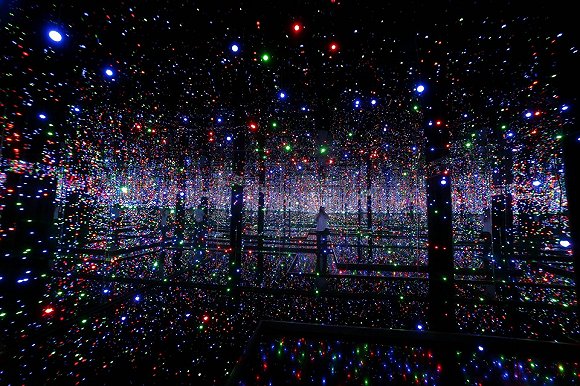
Most interpretations of quantum physics tend to leave little room for cultural interpretation. They're unfamiliar, complex, formulaic; just not sexy anyway. For most mediocre people, all you need to know is to accept this theory; for devout mystics, all you need to know is that you can get anything you want if you specifically desire it. There are many explanations for the multiverse. It's everywhere; it keeps popping up like pop culture because the theory is so close to something fundamental.
Unlike some other physical knowledge, the way we understand the multiverse is not by contacting a large group of active quanta, but as naturally as contacting human beings. Everyone has regrets, things they have done that they wish had never happened, and everyone has imagined what would have happened if things had gone the other way. The multiverse explanation gives us comfort and a place to hide. Everything is indeed going in the other direction. You can really have fun. But that is not the case here and now; the direction of the present never changes.
This is probably true. I'm really not a fan of the multiverse theory given its impact on our understanding of other people, but it helps us see a problem: the wave function is broken. At the quantum level, particles do not exist as solids in space, but use probability waves to describe the possible locations of matter. The famous double-slit experiment once proved this principle: turn on a beam of laser light, let it shine through a metal plate with two slits, and see where they will land on the detection screen. If each electron passes through two slits, you will see two straight streaks of light; otherwise, you will see a ripple of light. Interference zone——If there is more than one particle, there will be two ripples. Electrons will pass through both slits at the same time. But if you set up a recorder to observe the slit itself, the wave function still works: all you see is an electron passing through a slit.
The underlying question is: What determines which slit?
Which scenario is more likely? A possibly infinite useless parallel universe, or an extremely mediocre god?
The German scholar Karl Heim published the book "Christian Faith and Natural Science" in 1951, providing us with an effective answer: This is decided by God. This Almighty God, with infinite love, carefully controls the waveform of every particle, creating a better life for mankind at the smallest level in the world.
Haim's theory has had a huge impact in the theological community, but for some reason, the scientific community has generally dismissed it. Instead, thousands of scientists, including industry luminaries like Stephen Hawking (who says Heim's theory is extremely unlikely to be true), Brian Greene, and Neil deGrasse Tyson, have remained tight-lipped about the multiverse explanation: given the situation, the scientific explanation might be that the particle still passed through two gaps, one in the current space-time and one in the other space-time. This certainly sounds more scientific than Heim's theory, which was after all Heim's attempt to bring Bronze Age concepts back to an increasingly indifferent modern age. But the reality hurdle is that there isn't much difference between the two. We cannot conduct experiments to test the theory of multiverses in the current world, because our universe cannot contain other space-times. This is an article about faith, and it is not a very safe one. So, which scenario is closer to reality? A possibly infinite useless parallel universe, or an extremely mediocre god?
Belief is not sinful, but it would be difficult to understand if the monster suddenly starts to move before we understand what it is, and it is not in the distant reality, but right here and now. Religion without moral principles would not be complete, but how do you survive in the ethereal real world, a world that cannot be observed under a microscope, but is closely related to decisions at critical moments? In 2014, "New Scientist" magazine published an article called "Multiple Me". The magazine wrote that many empty scientific researchers fantasize about another life where they are living a variety of emotional pleasures and happy lives, instead of stumbling alone in infinite stupid high-order equations.
They are not jealous, they just want to provide the best for themselves in another time and space. They want a happy life. Can you bear it? The given answer is just a cop-out: scientists decide to go on living as if the multiverse does not exist (‘multiverse’ means we should act in a way that assesses risks based on the probabilities of the classical universe), and if it does exist, the ambiguities are terrifying. Now, there are countless of you struggling in various horrific environments. Regardless of whether you are lazily answering questions from the New Scientist reporter in reality, it is precisely because you have done this that you will receive that kind of treatment in parallel time and space. Their suffering increases every second you live. If you gave up jumping while standing on the edge of a cliff, in how many parallel universes would you end up shattered to pieces? Jump and let them live.
ButJust thinking about these theories makes me think that these calculations are all wrong, and people who believe in the multiverse theory will not change; simply create another universe in which you are not wrong, and you will never make mistakes again. Believers in the multiverse are a fringe community, but tens of thousands of people have experienced the "Mandela Effect," a phenomenon previously known for "holding the wrong impression of things." The Mandela Effect has just a new name. This theory assumes that small quantum wave functions allow people to pass through the gaps in the universe and reach a time and space where the situation is similar at the moment, and the people in that time and space are not their friends. They didn't notice reality until something big happened—like Nelson Mandela's funeral. Didn’t Mandela die in the 1980s? Of course I'm not going to make a mistake on this one. There is of course a simpler answer. I am an adventurer from another world. Don't laugh, it's probably you too. What color is olive green? Red, right? wrong. In this time and space, it is green and you are still far, far away from home.
The Mandela Effect is silly, but it has philosophical roots in the multiverse theory. What at first glance looks like a door of opportunity turns out to be an organized attack of unreality: an exquisite network of lies, boundless counterintuitiveness and imagination. This goes back to Leibniz, who got analytic philosophers talking about contingency around "possible worlds" for centuries, and indeed goes back to Democritus 25 centuries ago, but there is no purer example than David Lewis's "modal realism." In a series of books, the Princeton philosopher argues that counterfactual statements describe situations that are simply unintelligible unless that is indeed a state of being (for example, in another possible world, olive green is a shade of red, and if the button to murder journalists really existed, I would be dead now). If the button to murder journalists doesn't exist in reality, it must exist in another universe. This means that the human imagination of another world is simply not what it is. It's just a replica of reality, and your hopes and dreams are as ordinary as a sack of potatoes. How about writing a science fiction novel? Want to build a better life? Don't bother. Everything that can happen has happened, and nothing can be changed.
The multiverse is just an excuse, a way to explain things we can't explain. When you stand in a room full of mirrors, the impact of each reflection asserting its own primacy so that you appear so small, it's hoped to induce a wave of Copernican vertigo, but in fact it's a strangely comfortable dogma. Back to the double slit experiment. One thing both "God's determinism" and the multiverse explanation do is to cut off all the uncomfortable sources of confusion in life. Chance is nothing more than "it did happen" on the other side of "could have happened." If there is a hand of God that can choose or split the universe that produces the same result, then thisThere must be some order in the universe. The multiverse provides excuses for all kinds of injustice, and there is always something good happening somewhere, in invalid possible worlds. Leibniz was right when he said that we live in the best of all possible worlds; his only mistake was that there is only one best world. Apart from this, his theodicy is simply assent to repetition. We live in the best of all multiverses, because by definition none of the other multiverses exist.
All mistakes will be smoothed out in the end, and everything has a cause and effect: we live in a perceptible world, not a wild world, a meaningful rather than stupid world. But look around you, what a strange world you happen to be in if your life or death is decided by readers or capricious kings, or if you are in a damp enclosed tent mixed with blood. But is this all true?
(Translation: Li Ruiyi)
