
In Jonathan Franzen's 2001 novel "The Corrections," the protagonist Chip Lambert clears out his library to pay off his debts. He sold the complete works of the Frankfurt School, and of course "his feminism, formalism, structuralism, poststructuralism, Freudian theory and queer theory" just to raise money to please his new girlfriend.
Although dispersing the Frankfurt School's collection of books was a painful business, "He did not look directly at the spines of the books that seemed to condemn him. He remembered how in the bookstore, these books issued a radical critique of post-capitalist society. But Jürgen Habermas did not have Julia's long and cool arms, Theodor Adorno did not have Julia's body as refreshing as grapes, and Fred Jameson did not have Julia's artistic voice."
The Frankfurt School seems to have nothing to do with Franzen's hero in the new millennium. This school of thought grew out of organizations founded by German Jews, most of whom have since died, during the Weimar Republic, the Third Reich, and the Cold War. Criticism of capitalist society was developed by Walter Benjamin, Max Horkheimer, Adorno, Herbert Marcuse, Eric Fromm and other seemingly outdated but immature scholars.
As a lecturer specializing in sexual dysfunction in Tudor drama, Lambert had to accept the fact that the library, worth $4,000, could only be sold for $65. He bought a "Norwegian wild-caught salmon" for $78.40 in a high-end shopping mall called "Consumer Nightmare." This was the 1990s, and Franzen seemed to be suggesting that consumerism was so shameless that it would actually be a smart thing for upscale grocers to gently laugh at capitalism's critiques of its name.
This decade was also the time when the Frankfurt School’s nightmare came true. As Thatcher predicted, there is no alternative. There is no substitute for capitalism, the "one-dimensional society" in Marcuse's words, or liberal democracy.
In explaining this issue, Francis Fukuyama, an American political scientist in the 1990s, decided to erase a question mark. In 1989, he published "The End of History?" The article "The End of History?" states that there will be no new stage outside of liberal democracy, because only liberal democracy is the institutional setting that ensures individuals to realize themselves to the greatest extent. Three years later, when Fukuyama published The End of History and Last Man, the question mark he had previously placed had disappeared. He may have laced his post-ideological thesis with neoconservative swag, but Fukuyama argued that it was indisputable that the ideological war between East and West was over and that Western liberal democracy had triumphed.
And all that remains seems to be a boring-sounding eternity: "The end of history will be a tragic one.""The days of hurt," Fukuyama wrote. "The struggle for self-actualization, the willingness to devote one's life to the achievement of an abstract goal, the worldwide ideological struggle known as fearlessness, courage, imagination and idealism will all be replaced by economic calculation and the satisfaction of exquisite consumer needs." Perhaps the boring prospect that Fukuyama mocked will restart history.
The hero Lambert written by Franzen is also a person in the boring era. He "no longer expects to live in a different world, he just wants to live a dignified life in the current world." But the dignity Bert pursues is only the dirty kind. Indeed, if dignity is all about a fat bank account and being seduced by the illusion of late capitalism, is it worth pursuing? Lambert's dignity appears to be a deliberate self-choice; but, perhaps, as Adorno, one of the greatest thinkers of the Frankfurt School, said in Minima Moralia: Reflections from Damaged Life, "the only way to diagnose healthy pathologies, in order to successfully adapt to the inescapable practical framework of peace of mind, is through the asymmetry between their rational existence and the course they may be assigned."
But the era that Fukuyama assumed would last indefinitely ushered in intermediation, not because of weariness at the prospect of perpetual boredom, or because of personal dignity that could only be expressed through shopping choices, but because of the crisis of old-fashioned capitalism.
"What's going on now? ” asked the French Maoist philosopher Alain Badiou in his 2012 book The Rebirth of History. “The continuity of a tired world that will continue no matter what?” The world's benign crisis, attacked by its own triumphal expansion? The end of the world? Or is it the arrival of another world? Badiou writes about the unintended consequences of the global financial crisis since 2008, especially Occupy Wall Street and Syria. He might also add the US's failure to "democratize" Afghanistan and Iraq, and the resurgence of socialism in Bolivia. Through these movements, people pursue something unobtainable in neoliberal capitalism - recognition, or what Lambert calls "dignity."
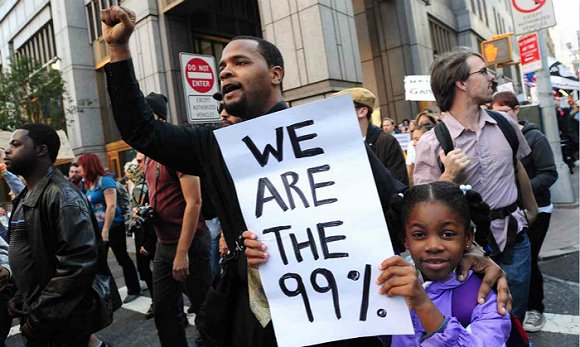
Hence the slogan devised by Occupy Wall Street activist and anthropologist David Garibald: "We are the 99%." Therefore, Occupy Wall Street is also "an experiment in post-bureaucratic society". They want to convey more anarchism in the current system. The current system ostensibly enhances the possibility of people seeing self-action as a universal and dignified expression of personal autonomy, but in fact it is just the opposite. "What we want to prove is that I"We can do everything that social service providers can do without endless bureaucracy," Garibault told me. Because the system refused to recognize individuals, the anarchists in Zuccotti Park found that they gained a sense of solidarity in self-organization.
American Marxist philosopher Frederick Jameson stated in his 2009 new book "The Valence of Dialectics" that when historical worries enter people's lives, it is realized through the sense of belonging to a specific generation: "The experience of intergenerationality is a special collective perception of the present: this marks the expansion of the present of personal existence into the collective and historical process." Here Jameson reveals one of the most remarkable intellectual achievements of the Frankfurt School. Benjamin dreamed of exploring the continuity of history, and Jameson's description of experience is Benjamin's dream come true. Benjamin associated homogeneous and empty time with the ever-advancing capitalism and positivism, and then time stopped, albeit briefly, to be quickly replaced by the experimental, richer alternative concept of nonlinear time. At least that's the lesson Jameson learned from the people who occupied Wall Street.
In the history of rebirth written by Badiou, Marxism also appears again. As in Frankfurt School style critical theory. Perhaps if Lambert had kept his library until 2010, he would have gotten at least two salmon in exchange. But the thirst for books actually criticizes the continuation of capitalism.
The nightmare of consumption is like, in the gift shop at Tate Modern, a big part of it is critical theory. Here, the Frankfurt School is no longer just a term—Critical Theory encompasses a variety of books from Lambert's library. Critical theory books have also become popular on a small scale, and graphic guides, dictionaries, and biographies have appeared one after another. These are one of the consequences of the global capitalist crisis, and they are also a self-renewal of critical sociology based on the ideological legacy of the Frankfurt School.
The world today is ridiculous. “Every train car is staring at a small glowing device, which is simply a poor representation of the current hellish world,” said Eileen Glaeser, author of the book Get Real: How to See Through the Hype, Spin and Lies of Modern Life. “In my opinion, technology, along with the help of capitalism, hastened the demise of culture and the environment. Digital consumerism makes people so passive that they can’t even resist, let alone save the world.
If Adorno were still alive, he might say that the death of culture has already happened, but we are just not critical enough to detect it. His worries and fears had come true. “The hegemony of pop culture has taken over our lives, dominating the media and producing tycoons in the economy,” New Yorker critic Alex Ross wrote. “They spend their entire time living in a vast fantasy world, but hiding behind a normal facade, eating pizza at the Oscars and cheering on the team in the VIP box. Opera, dance, poetry and literary fiction are still 'elitist'uo;, although the real power of the world is not of great use in these areas. The artistic heritage of Yangchun Baixue and Lower Riba People has become a fake: pop culture is the ruling party."
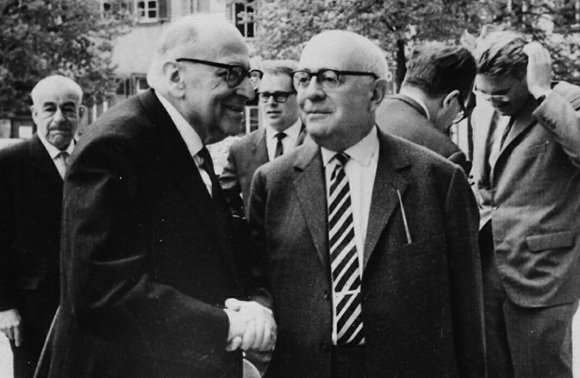
Adorno and Horkheimer, the leading figures of the Frankfurt School, did not have social media profiles during their lifetimes, but they foresaw what the Internet could provide. In their eyes, the "free choice" allowed by the cultural industry is always the same. "The culture looks more monolithic than ever, with a few giant companies - Google, Apple, Facebook and Amazon - creating unprecedented monopolies," Ross said. "The rhetoric of the Internet has become tighter and more restrictive."
In the 1990s, as arts editor of The Guardian, I wrote about the dangers of bespoke culture. Customizing culture is tailoring cultural products to suit your taste, the kind of "if you like that, you must like this" thing. I was thinking, rather than pleasing your taste, isn’t the point of art to interrupt the continuity of one’s taste? John Rhys, the first director of the BBC, once said that good radio programs provide people with things they don't know. When my article was finished, some of my colleagues said: Why is customization so bad? Isn’t it a good thing that we get more of the things we love? But, I can only sigh, good radio and great art offer an unexpected surprise that expands your horizons rather than trapping you in an infinite feedback loop.
Now I realize that the customization culture, which has not changed much today, is nothing more than a variation of the object of criticism in Adorno and Horkheimer's classic work "Dialect of Enlightenment" seventy years ago. Their argument is that the free choice advocated by Western advanced capitalist societies is actually an illusion. Not only are the things we can choose freely, but also personal personality has been corroded by a false consciousness. We mistakenly believe that there is nothing worth naming anymore. “Personality,” they wrote, “can hardly express anything other than shining white teeth, the freedom of body odor, and emotion.” Human beings have been transformed into a desirable, exchangeable commodity, and our remaining choice is to know that we are being manipulated. "In the cultural industry, the victory of advertising is when consumers feel the urge to buy and use the products, even if they do not need the products." The Frankfurt School is relevant to our lives because these critiques of society are more true today than they were in their own time.
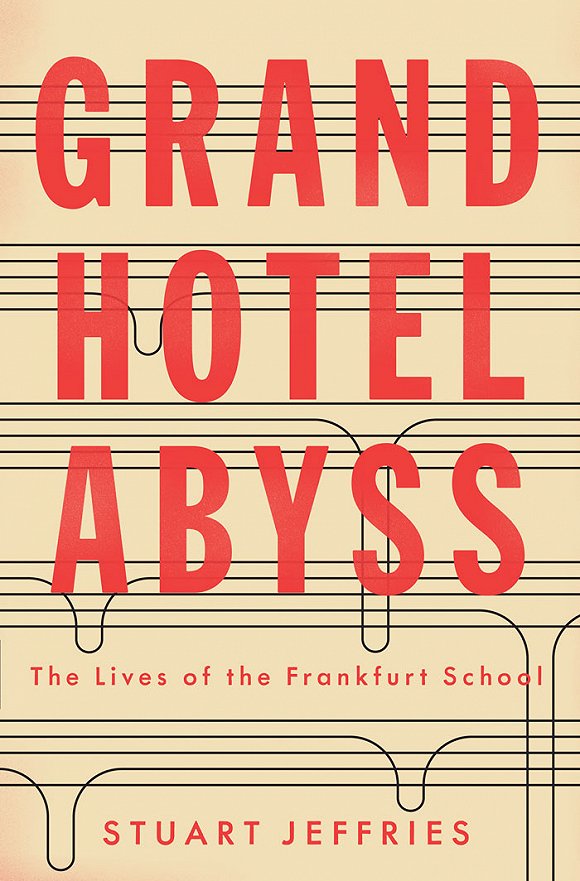
Stuart Jeffrey, new book "Grand Hotel Abyss: The Lives of the Frankfurt School"l)" is published this month. There will be a conversation with Sarah Bakewell, author of "Existentialist Cafe", at the London Review Bookstore on September 27th.
(Translation: Li Ruiyi)
