
Nixon's 1972 trip to China would become one of the key narratives of the 20th century. Although there were unpleasant episodes in the process, by the end of the Shanghai talks, everyone realized that the goals of the Chinese and Americans had basically been achieved.
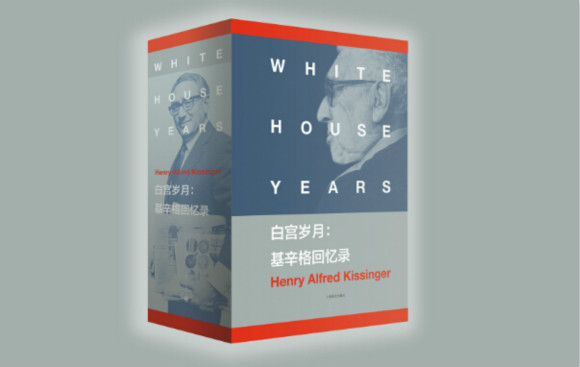
Kissinger was obviously one of the most important witnesses of this incident. In his memoir "The White House Years", which reviewed his first four years as the president's national security assistant, he described in detail the last banquet held in Shanghai: the previous tensions disappeared, people drank Moutai happily, and Nixon was satisfied with everything. After delivering his impromptu toast, he even almost proposed that the United States provide military protection for China.
At three o'clock in the morning one night before, Kissinger and White House Chief of Staff Haldeman were called to Nixon's room. Kissinger wrote about the scene at that time: "Outside the window is the huge city of Shanghai, with a few sparse lights flashing, making it almost impossible to remember that there are nearly 11 million people living here. Everything else is immersed in darkness. The land of China stretches in front of us, boundless, but blurry and invisible."
As two of Nixon's closest aides listened to the lonely, unsteady president ramble on about the tensions, worries and excitement of the period, Kissinger felt a subtle sense of sympathy. The president was just another pathetic man hoping for glory, but he was able to convince himself in an instant that Nixon had indeed achieved something historic, a man who had taken domestic political risks to advance and complete his plan to contact China.
In a sense, "The White House Years" is to Henry Kissinger what "Memoirs of World War II" is to Winston Churchill. These two voluminous works are not only similar in narrative time span, but also full of wonderful and great historical facts and profound insights from the author who is at the core of the political arena.
Slightly different from Churchill, who often looked down on his opponents and partners from a arrogant perspective, Kissinger assisted the US president in handling world crises from the perspective of a state affairs expert, and at the same time observed the people at the core of American power.
Among those observed was Lyndon Johnson, the self-made politician who inherited the presidency following the sudden assassination of his predecessor, John F. Kennedy. He then went to great lengths to ensure that he would be remembered in history, such as proposing the familiar "Great Society" plan. But the most power-playing president in American history faced a tragic fact—his presidential career was hijacked by the expansion of the Vietnam War that he personally planned.
According to Kissinger's observation, Johnson was domineering and seemed unstoppable, but in fact he lacked independent opinions and could not withstand blows. His style appears too tough to liberals and indecisive to conservatives. In the end, Johnson was separated from all voters and lost the opportunity to prove himself again in the political arena. Many years later, the American TV series "House of Cards" based on Johnson became popular all over the world. Curious people must also want to hear Kissinger's views on President Underwood played by Kevin Spacey.
As for Nelson Rockefeller, who coveted the presidential throne in 1968, Kissinger expressed unlimited sympathy. Among all the celebrities Kissinger met, Rockefeller possessed huge wealth, extraordinary wisdom and high-spirited optimism, which were all purely American styles. KissingerI am convinced that Rockefeller became a great president because he fully possessed the qualities of a leader such as decisiveness, courage, and foresight.
But Rockefeller lost to the aging Nixon in the Republican Party. Where did this puzzling defeat come from? "Looking deeply, Rockefeller suffered the disadvantages that rich people are naturally unable to bear in a society with equal power. He wanted to prove that he had transcended what was originally confusing: his career relied on his ability, not his wealth."
A few years later, Nelson Rockefeller passed away. Kissinger explained his life as follows, "Some people say that although he was a member of the Rockefeller family, he failed to become president. This sentence should actually be reversed. The main reason why he failed to become president was because he was a member of the Rockefeller family."
Compared with U.S. foreign relations during the Cold War era, Kissinger's own observations on history occupy equal weight in this book. As a influential figure in the Nixon era, Kissinger undoubtedly possessed an outstanding mind and extraordinary courage. His memoirs showed a sharpness and vitriol rarely shown in diplomatic situations. Chinese readers had learned about this trait from another American, Stilwell.
He once expressed vividly the image of Soviet Foreign Minister Gromyko enduring humiliation: "Once, Khrushchev boasted in front of foreign visitors that if Gromyko was asked to take off his pants and sit on the ice, he would do it without hesitation until he was ordered to stand up."
As for the Soviet Union, which was regarded as a monster by the free world during the Cold War era, Kissinger had a more practical view: "Some people always try to attribute various Soviet actions to a big plan. Kremlinology tends to regard each action as part of a carefully composed orchestral score. Experience shows that if there is such a situation, it is rare. From the Cuban missile crisis, through the Arab-Israeli war, to the invasion of Czechoslovakia, there are a lot of improvisational elements in Soviet policy."
And Kissinger’s Mao Zedong is even more lifelike: “(Mao Zedong) has sharp eyes and a sarcastic smile. His whole demeanor seems to be warning that he is an expert in seeing through people’s weaknesses and hypocrisy, and it is futile to try to deceive him. Perhaps except for de Gaulle, I have never met a person with such a highly concentrated and undisguised willpower.”
Kissinger saw first-hand the absolute power of the Chinese style when Mao Zedong expressed an interest in meeting his wife Nancy, saying, "Nancy was in the store buying something at the time, but that was not a problem for our Chinese hosts, who seemed to know exactly where she was. Bin officials immediately pulled her out of a store and brought her to Mao Zedong. The State Department security personnel who accompanied her lost their protection and were left there to express their shock to a salesperson who did not understand English. "
For his own employer, "The White House Years" provides many interesting anecdotes. For example, during his trip to China in 1972, Nixon saw the charm of Maotai liquor. Kissinger recorded Nixon’s return to Washington.After a while, he demonstrated the power of liquor to his daughter Tricia: "Nixon poured a bottle of Maotai into a bowl and lit it on fire. Unexpectedly, the flame did not go out, but the bowl exploded, and the Maotai with flames flowed all over the table. Nixon was shocked, and then led the first family of the United States to put out the disaster."
As a pragmatist, Kissinger's attitude did not affect his thinking about ideology. In his memoirs, he believed that one of the travesties of history on mankind is that the reason Marxism is attractive to developing countries is not because of the economic theory it is proud of, but because it provides answers to questions of political legitimacy and political authority.
"It provides a program for social mobilization, a justification for political rights, and a way to promote unity through anger against Western cultural and political control." Although human history has passed for another 40 years since Kissinger stepped down as Secretary of State, and figures like de Gaulle or Mao Zedong will never be found again, many of the ideas raised by Dr. Kissinger still hold true today.
In the first four years as the national security assistant of the Nixon administration, Kissinger had to directly participate in a series of diplomatic negotiations and secret operations: defense issues in Europe, political turmoil in Chile, the imminent war in the Middle East, the India-Pakistan crisis in 1971, Vietnam's Spring Offensive...
Since the end of World War II, the complex situations faced by American leaders have been presented to this scholar who was teaching books at Harvard a few months ago. In his own words, "Decision makers are like a tightrope walker - only by moving forward can they avoid falling from the top." In the end, he withstood all the tests and became a great narrator about that era.
