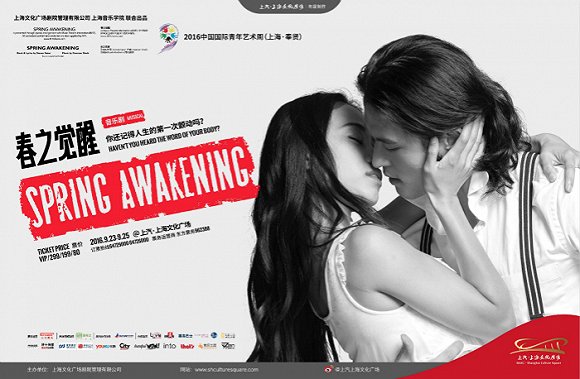
"This winter seems longer than in previous years. I sat alone in front of the window, looking at the trees outside the window, thinking about the restless, green years of youth..."
On the stage of the Grand Theater of Shanghai Repulse Bay Cultural and Art Center, script writer Frank Wedekind sat on a sofa chair and expressed his feelings to more than 900 viewers. As he narrated, the audience was taken into the German winter of 1891. The characters in his play "Spring Awakening" walked out of the script one by one, stood in the light, and sang their own stories.
The heroine Wendla is a simple and innocent girl who has been living a carefree life like her good friends Martha, Thea and Anna. Until puberty, she discovered changes in her body and was full of doubts, but could not get answers from her mother. Girls are ignorant and longing for sex and love.
The lives of boys Melchior, Moritz, Otto, Georg, Ernst and Hänschen of their own age are not easy either. In school, they receive old-fashioned dogmatic education and cannot resist the authority of teachers and books; in life, they have the pressure to enter higher education, the control of their parents, and the trouble of girls ignoring their admiration...
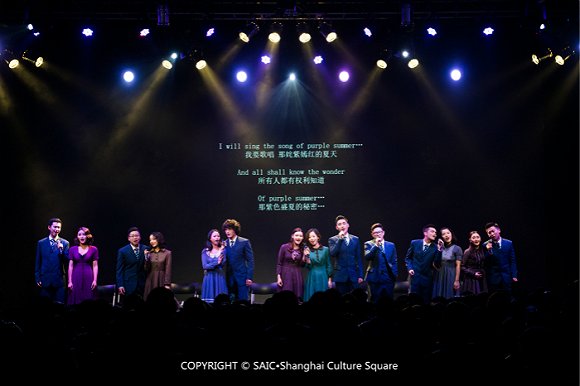
This is the second press conference of the Chinese version of the musical "Spring Awakening" held on the evening of September 7. The cast of "Spring Awakening" made their first collective appearance, performing the most classic passages in the play in advance in the form of a concert. The actors are dressed in late 19th century German costumes, but the songs they sing have a clear pop and rock style. In the contrast between the two, what the audience sees is the ignorance of boys and girls about sex and love, the rebellion of youthful spirit, and the repression of the normal social order. As the saying goes, "There is nothing new under the sun." These confusions, confusions, passions, and tenderness of youth are not unfamiliar even to Chinese audiences in the 21st century.
"Spring Awakening" was originally a script written by German playwright Frank Wedekind in 1891. It describes a group of teenagers' exploration of their own origins, their silent resistance to the rule-abiding society, their ignorance of nascent love, their impulses about the same sex and the opposite sex, and their expectations for the future during the conservative years in Germany.
The play was banned for a time because the script was too bold and avant-garde at the time. Lyricist Steven Sater and composer Duncan Sheik adapted the script into a musical. The music in the play is mostly rock style, expressing the exciting emotions of youth with great tension.
2006, "Spring""The Awakening" premiered off-Broadway and sold out at the box office for four consecutive months. The male and female protagonists were played by Jonathan Groff and Lea Michele, who would later become popular in the American drama "Glee". In December of the same year, "Spring Awakening" was transferred to the Eugene O'Neill Theater on Broadway and won eight Tony Awards, including Best Musical, Best Director, Best Screenplay, and Best Music, the highest stage award in 2007, becoming the biggest winner of the year. In addition, it won 4 New York Drama Critics Awards (Critics Awards), and its music album also won a Grammy Award.
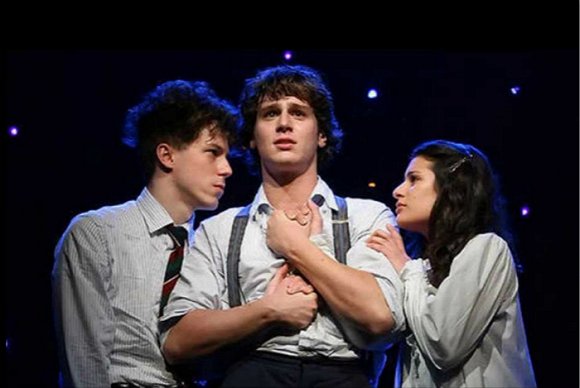
In the following years, "Spring Awakening" was successively performed in different languages and versions in Germany, France, Japan, South Korea, Argentina and other countries. In 2015, "Spring Awakening" was revived on Broadway, pioneering the participation of deaf-mute people in musicals. The New York Times theater critic hailed it as "one of the best musicals of the past 10 years."
The Chinese version of "Spring Awakening" is jointly produced by Shanghai Culture Square Theater Management Company and Shanghai Conservatory of Music. It is Shanghai Culture Square's first attempt at a full-length musical production after three years of Sino-British co-production of the "Broadway" musical series Jinxiu.
The Chinese version of "Spring Awakening" is co-directed by Bjorn Dobbelaere, the music director of the previous three "Broadway Shows", and his student Ling Qier. It is presented with Chinese dialogue and English arias. Preparations for the play began in September 2015, rehearsals began on August 15, and formal rehearsals will begin on September 15.
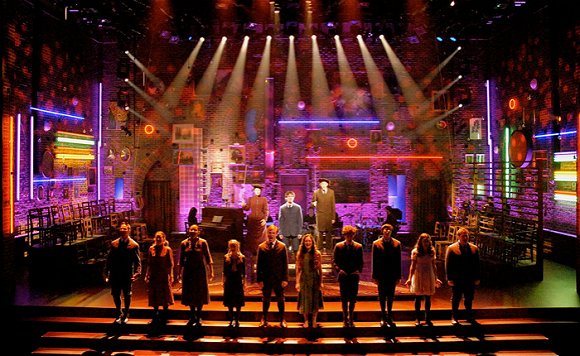
According to Fei Yuanhong, deputy general manager of Shanghai Culture Square Theater Management Co., Ltd. and producer of "Spring Awakening", because the Chinese side of the play only obtained the authorization for the script and music, the dance, lighting, scenery, costumes, props, makeup, etc. are all Chinese originals. Therefore, the stage presentation that is very different from other versions is also an important aspect of the Chinese version of "Spring Awakening". Fei Yuanhong said that this time the audience will watch the performance in a theater that looks like ruins.
The heroine of the Chinese version of "Spring Awakening" is played by Ding Zhenying. She graduated from the Musical Drama Department of Shanghai Conservatory of Music. She has participated in 450 performances of the 25th anniversary version of "Miss Saigon" in the West End of London. She later returned to China to participate in Chinese versions of musicals such as "Cats" and "Mamma Mia". Judging from the concert rehearsal scene, she is the most stable performer.
The male protagonist Liu Lingfei also graduated from the Musical Theater Department of Shanghai Conservatory of Music. He has starred in and played important roles in the Chinese versions of many musicals such as "Broadway to the End", "Dracula", and "Dangerous Games", and has many fans. As soon as he came on stage at the concert, the audience (especially the girls) screamed.
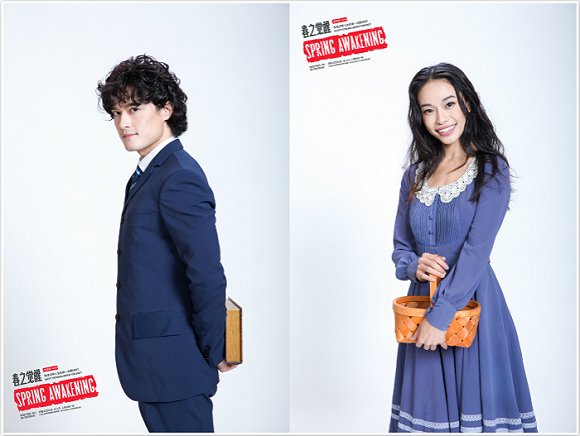
Except for the protagonist and adult characters, all other characters in the play are students at the Shanghai Conservatory of Music. Fei Yuanhong was very satisfied with the casting and believed that the effect achieved after just over two weeks of rehearsal exceeded expectations. Although the performance of the young actors at the concert is still far behind that of professional actors on Broadway in the United States, they are undoubtedly in the "progress of youth" and have personal feelings about the emotions of the characters in the play. It is really exciting to look forward to their performance in the official performance.
Regarding why he chose to introduce "Spring Awakening", Fei Yuanhong told Interface Culture that there were three reasons: first, the production difficulty was within control; second, obtaining copyright was not as difficult as for classic popular musicals such as "Mamma Mia" and "Cats"; third, the creative team was deeply moved by the music and script of "Spring Awakening".
However, it is worth noting that the "youth nostalgia trend" in the literary and art market is currently booming, and the introduction of "Spring Awakening" is more or less riding on this trend. To a certain extent, "Spring Awakening" has all the elements of a domestic youth film to attract attention: when boys and girls stumble into the adult world, rebellion sometimes becomes a huge destructive force, and dramas of suicide, abortion, and death are also staged in the play.
But when domestic youth films use this kind of "made in heaven and earth" to deliberately create dramatic conflicts, can "Spring Awakening" lay out flesh-and-blood characters between conflicting plots and tell the story of "cruel youth" well? From September 23rd to 25th, "Spring Awakening" will be officially staged at SAIC·Shanghai Cultural Plaza, and it will tell us the answer through actions.