
On August 29, the "Beijing News" published an exclusive two-page report "The Dream of a Bible-reading Young Sage Broken: The Cruel Experiment of Anti-System Education and the Industrial Chain of Bible-Reading Leader Wang Caigui", which started with the failure of anti-system education such as the "Bible-reading craze" and outlined an industrial chain of Bible-reading education led by Wang Caigui, which quickly aroused heated discussion in the public opinion.
Is "reading scriptures" a kind of Chinese education? What impact will it have on children? At present, what is the development situation of my country’s “Bible-reading” education? What social impact has it caused? Can the anti-establishment Bible reading movement really bring hope to our education?
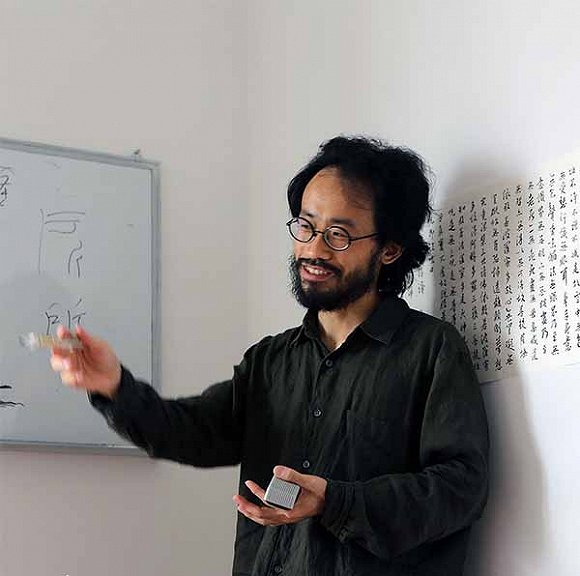
Ke Xiaogang, a professor at the School of Humanities at Tongji University and the dean of Tongji Fuxing Classical Academy, has been on the front line of "contemporary Confucian education" for several years. He believes that the current situation is precisely extreme institutionalization, rigidity and "examination-oriented". The Bible-reading movement is nothing more than a complete replacement of the content of basic education within the system with traditional cultural classics, and it is a classic that is not allowed to be explained, forced to be recited, has a locked meaning, and is rigid. The bible-reading movement itself may well be a manifestation of a disease of modernity. The "Confucian education" we pursue should be the tension, dialogue, critical construction and constructive criticism between "Confucianism" that is constantly renewing its virtues and "contemporary society" that is full of plasticity.
This article is a speech given by Ke Xiaogang at the first Shanghai Confucianism Conference. It has been abridged.
Confucianism has developed very rapidly in recent years, with many achievements and many problems. Meetings at this time are very timely, where you can summarize experiences, discuss problems, and look to the future. I think the Confucian academic community should introduce more criticism and self-criticism, be harmonious but different, and avoid local desires, so as to form a positive interaction, so as to achieve long-term and healthy development.
Last summer I participated in a workshop at the Institute of Social Studies of the University of Frankfurt. I mentioned that Confucianism has a very strong critical tradition since ancient times and is a constructive critical theory and practical wisdom. Today I would like to elaborate on some practical issues.
Today's revival of Confucianism is surrounded by too much hostility and misunderstanding, and is full of difficulties. Any minor deviations and mistakes in Confucian circles may be deliberately exaggerated and become obstacles to the revival of Confucianism. However, this is also a kind of urging.
Under the watchful eye, the best way to revive Confucianism is not to brag about each other and hide shortcomings, nor to undermine each other or criticize maliciously. Instead, we must carry forward the tradition of benign self-criticism of "harmony without difference" and "correct mistakes", strengthen self-discipline, and ask for corrections if there are problems first, so that we can better face external criticism.
If there is anything that the Confucian community cannot criticize itself and outsiders point it out, we should accept it with an open mind. Change it, if you don't have it, encourage it, if you have a debate, speak it, if you don't speak it, you can be silent, and everyone should follow the good path.
one
Confucian education in contemporary society
The topic I want to talk about today is "Confucian education in contemporary society." This title can be read in two ways: one is "Confucian education in contemporary society" and the other is "Confucian education in contemporary society." The former is the pronunciation of nouns, and the latter is the pronunciation of verbs.
The reading of nouns is a static way of thinking, understanding "Confucianism" as a set of ready-made traditional cultural dogmas, and understanding "contemporary society" as a set of fixed structural forms. Therefore, this line of thinking will inevitably understand "education" as "propaganda" and "indoctrination", that is, "instilling a set of ready-made values into a social fixed form."
On the contrary, the pronunciation of verbs is based on the idea of "generation theory". It first understands "education" as a verb, as the growth process of life and the formation process of society. Therefore, for this kind of thinking, "Confucianism" is not a ready-made !important;">Rigid system, but a dynamic life culture open to historical experience and future possibilities. "Contemporary society" is not a rigid structural form, but a "generated thing" full of possibility and plasticity.
Based on the above two readings, "Confucian education in contemporary society" can have three possible standpoints.
One foothold is the solidified "contemporary society", and the other foothold is the ready-made "Confucianism". Educational ideas based on these two points are nominal and static ideas. In essence, they may not be real education, but just propaganda and indoctrination, regardless of whether their stance is to cater to contemporary society or to criticize contemporary society, regardless of the differences in their forms of propaganda and indoctrination (this point will be analyzed in detail later).
The third possible starting point is "education" as a verb of life knowledge. In this sense, education is not just a "professional field", but the fundamental ontology and politics of "people as people" and "society as society".
In this sense, "education"; Starting from this, "Confucian education" can return to its life education in the sense of "human development", thus forming a beneficial tension with the "tool training" of contemporary society (including modern national citizen training and modern enterprise workforce training, etc.), participating in the construction of contemporary society through a critical educational practice, and helping modern society improve the quality of "tool training".
In this sense, we may say that the so-called "Confucian education in contemporary society" is the tension, dialogue, critical construction and constructive criticism between "Confucianism" which is constantly improving its virtues and "contemporary society" which is full of plasticity.
This process itself is the process of self-education of Confucianism and Confucian scholars, as well as the process of temperament changes in contemporary society. As a result, education is no longer understood as an instrumental training method (even if the training content is "Confucian values"), but as a common growth of "teaching and mutual learning" between the educator and the educated.
Starting from the static idea of noun reading, "Confucian education in contemporary society" may be divided into four forms: traditional cultural education in the basic education system, the anti-system children's Bible reading movement, traditional cultural education and research in universities within the system, and Chinese studies training for adult social students.
These four forms are combinations of adults and children inside and outside the system. Although these four forms are different in age and inside and outside the system, they share a highly consistent shortcoming: rigidity.
The Confucian factors in basic education and higher education within the system are gradually strengthening. However, the rigidity of the system has gone so deep into the bones that for the designers of institutional education, the so-called "Confucian education in contemporary society" does not mean a fundamental reflection and re-learning of "what is education", but only a change in teaching content or an increase in the proportion of Confucian classic texts.
As for the teaching methods, they still use a kind of "propaganda", "indoctrination" and "examination-oriented education" that are incompatible with true Confucian education and classical liberal arts education. Whether "Confucian education" first means self-education and self-improvement of "teaching the law", "learning the law" or even "living the law" has not entered the scope of the rigid system at all.
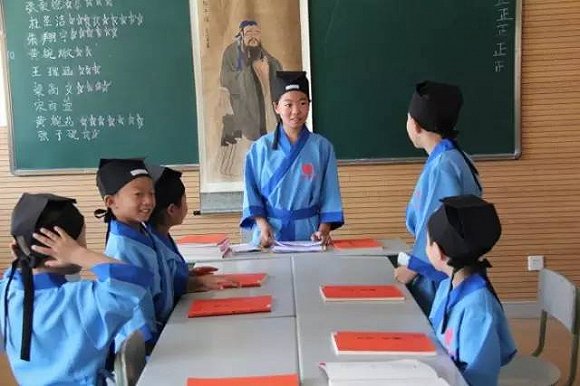
So, does the anti-establishment Bible-reading movement bring hope? Unfortunately, the current situation is extremely institutionalized, rigid and "examination-oriented". The Bible-reading movement is nothing more than a complete replacement of the content of basic education within the system with traditional cultural classics, and it is a classic that is not allowed to be explained, forced to be recited, has a locked meaning, and is rigid.
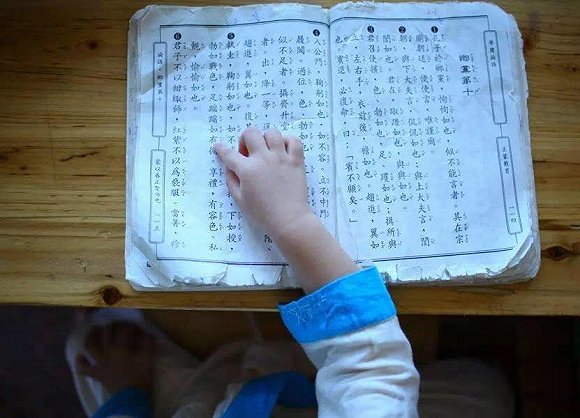
Anti-systemic Bible reading not only failed to solve the problem of indoctrination in institutional education, but instead developed a more extreme and wild system.Absolute indoctrination method: full-time closed recitation, eight hours a day, for ten consecutive years, just recitation, no explanation allowed, no other courses.
The same is true for exam-oriented education. It is true that thousands of children who read the Bible no longer need to take the exams within the system, and they are no longer able to take the exams because they are out of school. However, they now have another way to "exam": recording a "book recitation" video one after another (a book memorized from beginning to end continuously is called a "book"), so that they can be promoted to an academy to listen to the "Bible Exegesis". After ten years of memorization (ages 3-13), Bao Ben recited more than a million words (strictly speaking, it is not more than a million words, but a million syllable combinations with locked meanings). Tens of millions of people crossed the single-plank bridge before they had the opportunity to listen to the scriptures: This is an "examination-oriented education" that is even more cruel than the "examination-oriented education" in the system.
So, what about the traditional Chinese education for adult social students outside the system? Is the situation a little more optimistic? There is really no coercion issue here, because adult students in society really want to make up for the traditional culture lessons and are very motivated. However, what kind of Confucian education has been provided by the “Guoxue craze” in recent years? Unfortunately, they are all uncritical consumption of Chinese culture that caters to contemporary needs. At this point, the Bible-reading movement appears to be more contemporary and critical, although they abuse criticism and extreme the "constructive critical spirit" inherent in Confucianism into a religious form of "anti-system movement."
Whether it is the adult Chinese culture craze that completely caters to contemporary society, or the radicalization of the Bible-reading movement that completely opposes contemporary society, they have failed to maintain a healthy tension and positive interaction between "Confucianism" and "contemporary society."
The craze for Chinese studies is based on the self-solidified "contemporary society" (the actual contemporary society is not as solidified as they imagined, but full of the possibility of changing temperament), using a chicken soup "Confucianism" to serve the cultural consumption tastes of contemporary people, losing the critical nature of Confucianism, and at the same time losing the true constructiveness of Confucianism Role; the Bible-reading movement is based on the self-rigid "Confucianism" (Confucianism itself is not a rigid and barbaric thing, but a lively life culture). It uses a highly institutionalized "Scripture-reading education" to criticize the contemporary education system and social values. It loses the constructiveness of Confucianism and also loses the true critical role of Confucianism.
Whether it loses its critical or constructive nature, it will lose the healthy tension between "Confucianism" and "contemporary society" and lose the true character of "Confucian education". A form of "Confucian education", whether it is based on the self-solidified "contemporary society" or on a self-constructed rigid "Confucianism", whether it is to "serve contemporary society" or "promote Confucianism"", will miss the true "Confucian education."
The true Confucianismitself is the knowledge of life growth, or in other words, the knowledge of education. Education in this sense is the "enlightenment" of the Meng hexagram in the "Book of Changes" called "the spring springs from under the mountain". It is the cultivation and change of temperament, the healthy tension between the old and the new, and the self-breakthrough and growth of life itself.
"Enlightenment education" is a teaching method that is considered from people's life growth experience and has a profound Taoist nature: it does not hope to promote certain ideas or train work skills through large-scale movements ("The villain will die in the sun") , but combine various possible specific forms, make the best use of the situation, and penetrate it subtly. "Don't be angry, don't start, don't be angry, don't send out."
two
Eight questions about the Bible reading movement
From the perspective of "enlightenment" educational ideas, the "Chinese Studies Craze" and "Scripture Reading Movement" that have become increasingly popular in recent years operate on the "social movement" track of the "trinity" of cultural revolution-commercial MLM-political propaganda, creating an increasingly simplified and replicable chain reading training model, as well as an increasingly mature "Chinese Studies cultural industry market."
These things seem to belong to "traditional culture", but in fact they have no classical character. They are completely subordinate to the modern lifestyle of "classical cultural consumption" and "Chicken Soup for the Soul of Chinese Studies". Their production and dissemination mechanisms are completely on the track of "enlightenment", "spectacle society" and "mass culture".
Of course, no matter how many problems there are, the "Chinese Studies craze" and the "Scripture Reading Movement" have been very successful in attracting a huge number of people to actively support traditional culture and enthusiastically study Confucian classics in this contemporary society where "quantity is the key to success". For the first time, traditional culture, which has been tortured and suppressed for a hundred years, has gained widespread public support. This is an epoch-making achievement and must be contributed to it.
At the same time, it goes without saying that the "Chinese Studies Craze" and the "Bible Reading Movement", as the initial development of the revival of traditional culture, have a very strong color of folk popular culture and even folk religion. Among the projects that have done relatively well, such as the famous Chinese studies program of a certain TV station, the problem is just that it is low-intelligence, entertainment-oriented, and chicken soup. Even if there are some intellectual errors, there are still some problems. It's harmless; but some poor projects, such as ignorant Bible reading and barbaric recitation that have become increasingly popular in recent years (full-time dedicated reading of the Bible, no explanation is allowed for ten years, only recitation, memorization for more than eight hours a day, and no reading of books other than classic white texts, including ancient commentaries), must be seriously reviewed.
Like many Confucian scholars, I have experienced a process of attitude change towards these "heats". At first I naturally had a sympathetic attitude. After more than a hundred years of repeated destruction, traditional cultural education has been interrupted several times, leaving very little. The few remaining ancient texts in education within the system are often castrated and disabled classics guided by the very arbitrary and arbitrary so-called "take the essence and discard the dross" policy, as well as one-sided explanations based on various modern biases. Students have the right to understand the true and comprehensive Chinese civilization.
In this historical context, the practice of advocating full-time faithful recitation of the original texts of classics constitutes an important supplement, making up for the shortcomings of institutional education. It also provides an option for students and parents who want to read complete classics that have not been castrated or distorted by modern people. It has made an indispensable contribution.
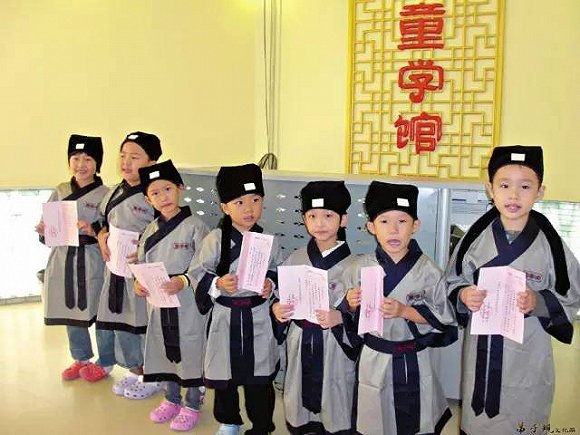
However, too much is never enough. When I came into contact with more and more Bible-reading teachers, parents and students on the front line of Confucian education, and learned about some actual situations, I discovered that there are many problems. The main issues are as follows:
1. Would it be good to study the Bible full-time and completely break away from the existing basic education system? Only read the Bible and other traditional culture without learning other courses such as mathematics and English? (Some schools have recitations of English classics, but they are conducted without teaching the letters. Students do not understand a single sentence of the English classics they are memorizing. The same is true for the recitation of Sanskrit classics.)
2. How to read the Bible? Is it okay to just recite the classics in plain text without reading the biographies, annotations, and essays?
3. Memorizing is a good method. It was effective in ancient times and is still effective today. However, do I need to memorize so much (Four Books, Book of Songs, Book of Documents, Three Rites, Three Chuanqiu, Yi Jing, Huangdi Neijing, Tao Te Ching, Zhuangzi, Complete Works of Shakespeare in English, etc.)? Is it necessary to "memorize a book from beginning to end in one go"? Is it necessary to one-sidedly exclude understanding in order to highlight the importance of recitation?
4.What exactly is "recitation"? Is "reciting a book by heart" without explanation at all truly "reciting"? Is "reciting the original texts of Shakespeare's plays" a real "recitation" without even knowing a single English letter or a sentence of English? Is memorizing meaningless syllable sequences “memorizing”?
5. Can recitation and understanding be completely separated? Can classic white texts and commentaries be separated? I just recited it for ten years (about 3-13 years old), and was not allowed to explain it. I only started to "explain" it after I was 13 years old. It was so mechanical.Is it reasonable to divide the stages of Bible reading? If there is no heuristic teaching, understanding and imagination training for ten years, but only mechanical recitation, even if the student can recite it backwards and forwards by the age of thirteen, will the student still have the ability to understand the classics, think about the classics, and develop the meaning of the classics? In particular, if these children have been reciting those meaningless syllables day after day in a closed environment for ten years, and are seriously out of touch with social reality, when they have the opportunity to begin to understand and interpret the classics, even if they still have the ability to understand and interpret, can they integrate the thinking of contemporary issues into their interpretation of the classics and do "living classics"? As for those Bible-reading graduates who have no intention of becoming scholars, the question is more troublesome: Can they effectively integrate into contemporary society?
6.Confucian classics are originally the knowledge of life, which is a lively knowledge of life that grew out of the history of ancient kings and the lives of sages. Should the learning method of Confucian classics adopt the conversational, heuristic, and situational teaching that abounds in The Analects? Is it the “enlightenment” teaching mentioned earlier? The "Bible Reading Plan" of "ten years of memorization and ten years of Bible exegesis" seems to be a resistance to modern institutional education, but in fact it is extreme modernization and crude institutionalization that is more rigid and mechanized than the modern education system.
7. Is the theoretical basis of the Bible-reading movement "education simplicity" credible? "Being a Bible reading teacher does not require education, and there is no need to explain, and no explanation is allowed. As long as you can press the repeater button and urge the children to recite, you are the best Bible reading teacher." "Reading the Bible is the simplest thing for children. There is no need to explain or read the annotations. You only need to read the classic white text a hundred or a thousand times until you can recite it. Just memorize it for ten years. After ten years, you will have memorized it all and then explain it." Are these widely circulated statements in the "Bible reading circle" credible?
8. Is the “omnipotent theory of Bible reading” widely popular in the Bible reading movement credible? "You don't need to learn mathematics. As long as you memorize the classics, you can learn all primary and secondary school mathematics in half a year." "You don't need to learn English. There is no need to teach letters, pronunciation, and grammar. You only need to memorize Shakespeare. You will be able to speak English when you go abroad in the future, and it is advanced English." "You don't need to learn so many courses, and you can go to school by memorizing the classics. "Tsinghua, Peking University, Harvard, Yale", "You don't need to learn anything, you just need to memorize the classics from childhood, no need to explain them. When you grow up, you will suddenly think of the classic sentences when you encounter things in your life, and you will naturally develop a gentleman's personality and even become a sage"... Are these basic teachings that are familiar in the "Bible Reading Circle" credible?
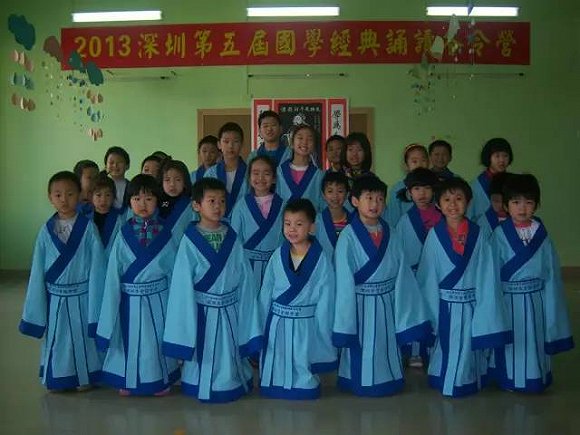
three
Recitation, simple replicability and the paradox of anti-modernity
Raising the above eight-point issues is not to undermine or find fault, nor is it to "judge education" or engage in "big criticism." Raising these questions is not so much asking someone to be difficult as it is self-reflection and self-criticism in the field of Confucian education. the Confucian community. They are raised just to spark discussion and promote development.
Since the abolition of the imperial examination in the late Qing Dynasty and the abolition of classics reading in the Republic of China, classics education has been in trouble. Today we are talking about Bible reading again. What should we do to promote healthy development? The Confucian academic community should encourage various explorations, and should also promptly summarize experiences and lessons, identify problems, self-criticize, and correct deviations.
Self-criticism in the Confucian world is not to defeat the reading of the Bible, but to help the reading of the Bible. If the Confucian community does not develop benign self-criticism, does not dare to self-reflect, and does not talk about problems when it is discovered, then when the problem becomes bigger, the government comes out to clamp down, and the media starts to crusade, the entire Confucian community will be affected, and the classics of sages will be misunderstood and slandered again. Wouldn’t we be Confucian sinners and rural villains? How can one be worthy of the name "Confucian scholar"?
The significance of reading the Bible goes without saying and the merits are immeasurable. But how to read the Bible is worth thinking about, practicing, summarizing experiences and lessons, and adjusting methods.
The key issue in the current Bible-reading movement focuses on "memorization." Time is limited, so I will only focus on the issue of "recitation". Reciting is undoubtedly a very effective method of learning classics. I have loved reciting classics since I was a child. I was born in a rural area during the late Cultural Revolution and almost grew up in a cultural desert. I hungrily recited any beautiful sentences I could find. My performance in Chinese and composition since childhood benefited from my inclination to recite.
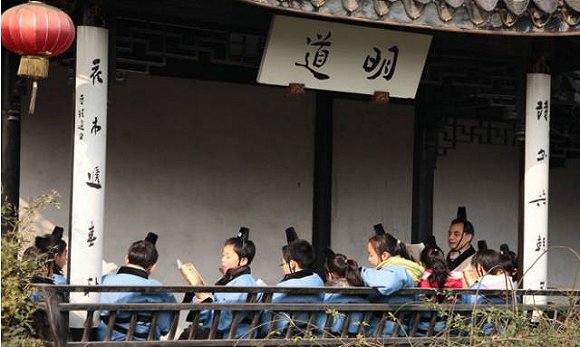
However, after coming into contact with some actual situations of the Bible reading movement, I began to think about a strange question that I had never thought about before: What exactly is memorization? This was not a problem originally, but the original teaching method of the Bible-reading movement forced me to think about such a strange problem.
I have heard some Bible-reading students "recite the classics." I found that these children not only did not understand the meaning of the sentences they were memorizing, but they could not even clearly read the sentences they themselves "recited". They will only repeat those specious syllables in a very fast and vague pronunciation. It is even difficult for you to distinguish whether they are "reciting" Chinese classics or English Shakespeare or Sanskrit Buddhist scriptures (the latter are also required to be recited, and the children are actually asked to "recite" without knowing the alphabet).
If you ask them to recite it slowly and clearly, they will not be able to recite a word. What’s more interesting is that if you mention the first sentence, he can quickly and vaguely "follow" to the last sentence, but if you randomly select a sentence from the classics that he "knows to memorize" and ask him what the second half of the sentence is,What, he couldn't answer.
So,it's not a recitation at all, but a kind of rockrap that is similar to the effects of ecstasy. I have memorized texts and English since I was a child, and I have also memorized Confucian and Taoist classics since college. Memorization is a great way to learn, but what those children rock out with an extremely fast and vague pronunciation of "doo-doo-doo" is nothing more than a meaningless combination of syllables that are forced to memorize.
This so-called "classic recitation" is repeated day after day, year after year. For ten years, the child is not allowed to read any other books or learn other courses until the child can "recite hundreds of thousands of words of classics" continuously in front of the camera (filming recitation videos is their test method). In fact, he is required to repeat hundreds of thousands of meaningless syllable combinations.
Because he did not understand the meaning of these syllable combinations, he was naturally unable to speak any of them clearly, let alone quote classic texts when needed in the future.
I have met some children who have "memorized hundreds of thousands of words of classics" in Bible reading schools. If they don't review those syllable combinations for a month, they'll forget them. Of course, the number of Bible reading students I have come into contact with is limited, and there may be better students, students who can really recite the classics clearly and clearly.
However, one can imagine what an overly utilitarian and extremely intense "recitation goal management" will do to a child. How many thousands of words can be memorized in one month, how many thousands of words can be memorized in one year, and how many thousands of words can be memorized in three years... Every time I memorize a book, I record it and save it in time as a proof of "book-to-book recitation".
Moreover, in these years, reciting the videos one by one has become the only learning goal. Today, thousands of Bible reading schools across urban and rural areas are counting down the days and nights, driving students to recite feverishly, with the clear goal of recording a video of reciting the Bible in order to qualify for admission to an academy to listen to the "Exegesis".
These students are required to chant sutras for more than eight hours a day (I have seen students suffering from asthma as a result), and they are generally in a very crazy state. I have been to such a Bible reading class, and its level of tension and meaninglessness far exceed the tactics of college entrance examination questions. Although the college entrance examination review questions are stressful, they are also slightly intellectually pleasurable. After all, the questions require thinking and understanding, and mechanical syllable recitation that does not allow understanding is completely meaningless.
For these Bible students, the rich implications of the classics are locked away. Let alone ten years, I am afraid that in three to five years, no matter how smart students are, they will become stupid, and no matter how much students who love classics will feel disgusted. By that time, I am afraid that if you explain the classics to him, he will not be able to understand it, or he will not be interested in listening.
Of course, students who are naturally studious will arouse a stronger desire for knowledge and want to find out what the meaning of those classic sentences that have been memorized for several years is? However, after years of stagnant intellectual development and closed reading of the Bible in isolation from the world, it is still not optimistic to what extent they can understand.
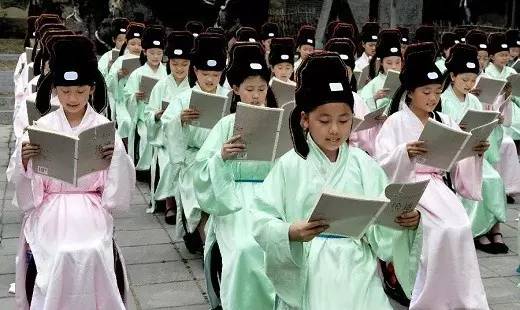
The first group of children who have been memorizing for many years are already receiving exegetical education and will graduate in a few years. According to the propaganda of the Bible-reading movement, a group of sages and classics masters will be born among them. The results of Bible-reading education are about to be announced, and thousands of students, parents and the public are waiting for the final surprise. Naturally, I also hope that a master will be born from it, who will inherit the unique knowledge for the past saints and create peace for all generations.
But what I am more worried about is that if the results are disappointing, those former enthusiastic supporters may be angered and turn to excessive criticism of the Bible-reading movement, or even deny the significance of Bible-reading. Coupled with the mass media deliberately attacking traditional culture, there may be a collapse effect, which will have a negative impact on the entire traditional culture revitalization cause. I have seen some Bible-reading parents begin to express anxiety about the results of the Bible-reading movement.
Religious development models always inevitably lead to changes in the faith of believers. Confucian education should not be based on this kind of religious propaganda and "enlightenment-enlightenment". The vigorous development of this religious form is definitely just a phenomenon in the early stage of the revival of traditional culture, and it will definitely return to peace and integrity in the future.
This method of teaching classics that looks like reciting but is not actually reciting is undoubtedly absurd and is not the traditional Confucian method of reading scriptures. I have seen in the preface of a classic recitation textbook, the editor clearly stated: The best Bible reading teacher is not a person, but a repeater, or a person who can press the power on/power off of the repeater. Why is such an obviously absurd "Bible-reading method" so popular across the country (a conservative estimate is that there are thousands of Bible-reading schools all over urban and rural areas)? This can only be attributed to the poor soil of traditional culture and the malformation of the educational ecology.
The birth of the Bible-reading movement is indeed out of reflection on modern social problems, especially the reaction against modern institutional education. But paradoxically, the Bible-reading movement itself is likely to be a manifestation of a disease of modernity.
The promoters of the Bible-reading movement repeatedly preached that reading the Bible is simple and requires no understanding, just recitation. This was probably due to the lack of teachers at first. But when they develop a simple and replicable chain model, simplification, quantification, and standardization become necessary business technologies for modern fast food companies. This case tells us how difficult a topic "Confucian education in contemporary society" is. All criticisms of modernity may lead to the opposite of their original intention.
For more than ten years, I myself have been exploring the practical possibility of practicing classical education in contemporary society. Daoli Academy and Tongji Fuxing Classical Academy are also full of problems and have more lessons than experience. One of the most basic points of realization is that the criticism of modernity should not adopt the usual modern forms of movement, revolution,or either-or radical forms. Instead, it should return to the classical character of taking advantage of the situation and exerting a subtle influence on it. Use a conservative attitude to do conservative things, and do not use a radical attitude to do conservative things.
"A gentleman secretly lives up to the sun, while a villain lives up to the sun." Thousands of years later, things that existed thousands of years ago still exist, and things that didn't exist thousands of years ago still don't exist. The radicalness and noise of modernity might as well be viewed as a play. The Bible-reading movement, as an anti-modernity modernity, also views it this way.
Four
"Enlightenment" and "Bao Meng": Confucian education that transforms contemporary society from within
So, I want to go back to the original topic: How is the education called "enlightenment" and "enlightenment" in the "Book of Changes" possible? "Enlightenment" means the exploration of paths that take advantage of the situation, and "Baomeng" means a constructive critical spirit. Not giving up the critical nature of Confucianism, maintaining a critical stance towards modernity, but not radically confronting and abandoning it, but entering it and transforming it from within, may be the future task of "Confucian education in contemporary society".
Citizen training in modern countries and workforce training in modern enterprises are basic and indissoluble goals of modern education. The criticality of Confucian education is not reflected in its opposition to modern citizen training and labor force training, but in its dissatisfaction with reducing education to purely instrumental training, thereby losing the basic attribute of "being a human being", and thus leading to the corruption of citizen training and the alienation of labor force training.
As a critical social construction practice in contemporary society, Confucian education in contemporary society is critical in its resistance to instrumental training, and its constructiveness is reflected in: through criticism of instrumental training, and through a subtle practical criticism that penetrates into the modern training system, it helps contemporary society upgrade "tool training" to "human education", thereby achieving better training results.
Only by cultivating "people" through Confucian education in contemporary society, can modern countries train truly free, self-responsible, virtuous citizens (the so-called "freedom" in modern times is not worthy of the freedom that truly belongs to people), not just low-quality "law-abiding citizens"; only by cultivating "people" through Confucian education in contemporary society, can modern enterprises find truly free and happy producers, not just "human resources that can create wealth."
By intervening in contemporary society with a critical attitude, Confucian education can better help contemporary society. Confucius said: "The gentleman is harmonious but different. "Confucianism has had this image since ancient times. In every era, Confucians are untimely critics. They help you, but do not please you. Criticize you, but love you.
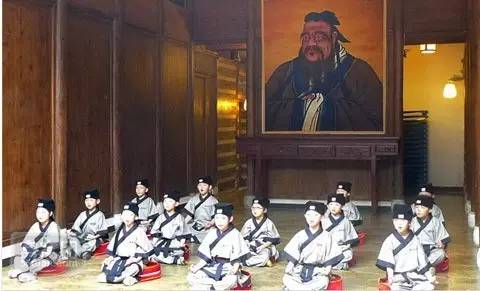
Therefore, Confucian education can and should remain critical of the modern education system that is full of shortcomings, but it is not appropriate to adopt a radical "conservative revolution" attitude like the Bible-reading movement, which seeks to completely break away from the modern national citizen training system and the labor force training system required by modern enterprises, and start anew in an isolated form to provide a fully closed, full-time pure classic recitation class.
The danger with this model is that Its original intention is to fight against modernity, but the result may become a kind of modernity, and it is a deformed modernity.
I believe that the advocates of the Bible-reading movement are sincere and enthusiastic Confucian sympathizers and educators with lofty aspirations, but I hope they will be more calm and rational, have more self-discipline, strengthen the supervision of Bible-reading schools and teachers, and stop advocating the irresponsible remarks of "educational simplicity" and "anyone can open a Bible-reading school, and anyone can be a Bible-reading teacher." They will not lower quality and insult elegance in pursuit of quantity expansion.
I believe that Confucian classics themselves have the ability to resist deformed modernization, but contemporary Confucians have the responsibility to see the dangerous possibilities. Especially when such a Bible-reading movement, which is firmly opposed to the modern education system, has thousands of followers and has become a large-scale social movement, I would rather risk saying the wrong thing to raise my concerns here.
I sincerely hope that my worries are unnecessary and that what I said today is completely wrong. If my worries are not unnecessary and there is merit in my speech, I hope that the Confucian academic community can shoulder the responsibilities that scholars should have and help the Bible-reading movement get out of chaos and get on the right track. It would be better if more scholars could take action, learn from the advocates of the Bible-reading movement, imitate their enthusiasm and courage to devote themselves to basic education, explore multiple possibilities, and contribute their knowledge to Confucian education in contemporary society.
For more than ten years, I have done many forms of exploration: reading groups (including online and offline), lectures, lectures, forums, workshops, large series of courses and small special courses (mainly the Thirteen Classics, covering classics, history, classics, selected readings, as well as calligraphy, painting, traditional Chinese medicine and other self-cultivation content), Chinese traditional culture teacher training classes, children's classical classes, classic research series publication, etc. Our students come from all walks of life, including adults and children, and all activities are for charity.
I always understand myself first as an ordinary reader and teacher, and secondly as a scholar and professor in the academy. "Ordinary" is social and human, "academic" is profession-specific. I never participate in the competition for academic resources in the college, but I don’t deliberately exclude the “system” either. I have always tried to do things within the system and outside the system, and to do things within the system outside the system. Confucius said, "With education, there is no distinction." Education should be an integrated undertaking.
It is the bounden duty of scholars to use, observe and criticize rationally and openly; it is the contemporary responsibility of Confucian scholar-officials to stand on the front line of social education and practice popular education. Social education conducted by academic scholars inevitably has its limitations. Therefore, I hereby urge my academic colleagues and the public to criticize and correct my practical exploration.
The observations and reflections I mentioned above on the issue of the Bible-reading movement are not to say that they are not doing well and I am doing well, but that I hope to arouse healthy interactions within and outside the system, as well as healthy self-criticism within the Confucian community. My observations and problem analysis of the Bible-reading movement are inevitably wrong, and my own social education practice is inevitably full of problems. My purpose in talking about the Bible-reading movement today is not to criticize others, but to remind myself.
Each of us is deeply involved in the dilemma of contemporary society. No oneCan simply get rid of the paradox of modernity caused by the "bad disease of attempted enlightenment". In a strange and paradoxical situation, unity is very important, and self-examination and mutual criticism may be the key to "suspended solution". The poem goes, "The appearance is beautiful, and the belt is hanging down with fear." Children are always innocent, open, and plastic. If Confucian education can untie the knot of modernity, the future will still be full of hope.
This article is reprinted from the official account Exploration and Contention Magazine
