
"Actually, my wish is to receive two hundred large bags of rice a year, and as an advisor to the general, vigorously advocate civilized founding of the country and drastic reform of various systems."
The person who said this was Yukichi Fukuzawa, who was visiting various European countries with the Japanese mission. On the ship to Europe, he revealed his ambition to his friends.
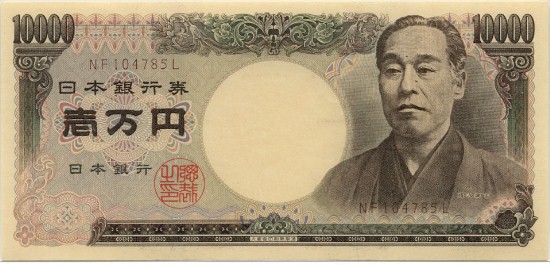
In fact, Fukuzawa Yukichi's ambitions were not high at the time, at least not commensurate with his subsequent status. In Japan, Fukuzawa Yukichi's name is a household name. His face is printed on the largest denomination of 10,000 yen. Sometimes people also directly call 10,000 yen "Fukuzawa Yukichi" or "Yukichi". Therefore, when someone counts the number of 10,000 yuan banknotes, they will count the number of people as 1 or 2 people.
Fukuzawa Yukichi was born in a low-level samurai family in Kyushu, Japan. At the age of 28, he came to Edo (later Tokyo) alone and founded Keio Gijuku (the predecessor of Keio University) to teach scientific knowledge and spread Western civilization. In 1860, he visited the United States on the first Japanese ship across the Pacific, which was an eye-opener. After returning to Japan, he was employed by the Ministry of Foreign Affairs of the shogunate, mainly responsible for translating diplomatic documents.
In Japan at that time, the decision-making power of the country was in the hands of the shogunate, and the emperor was only a nominal supreme ruler. Fukuzawa Yukichi has always advocated opening up to the outside world. He hopes that the shogunate can promote Japan to become civilized and become a civilized country on par with European and American countries.
However, Fukuzawa Yukichi became increasingly disappointed because the shogunate officials were all conservative elements and had no open-door and liberal ideas at all. Yukichi Fukuzawa once creatively translated "competition" as "competition" in an economics book. However, the financial officials of the shogunate thought that the word "competition" was not good, but they could not find a replacement word, so they had to blacken the word "competition" before showing it to the shogunate bosses.
Any autocratic regime becomes more sensitive, suspicious, cruel and unjust as it reaches the later stages of its rule. An official wrote in a letter at home that "the current situation in the country is worrying, and everything needs to be done by a wise king and wise ministers." He was reported by a secret agent that he did not see the shogun in his eyes and intended to rebel, so he was forced to commit suicide.
Therefore, Fukuzawa Yukichi no longer had hope in the shogunate. In 1867, he went to the United States with the shogunate delegation. On the way, he said to his friends: "No matter what, we must overthrow the shogunate... This government has been corrupted to the extreme. Let's not talk about this matter, just take the fight against the foreigners as an example. As a government authority, I have no choice but to advocate the founding theory, but In fact, the shogunate is the headquarters of the anti-barbarian theory. Looking at the fort at Shinagawa Port, the shogunate thinks that the county fort is too small and is currently being renovated. In addition, Katsurin Taro went to Hyogo to build a white round fort with a stove. Isn’t this for the purpose of resisting the barbarians? This kind of government will collapse. ”
My friend agreed with his point of view, but also raised doubts, "You are right. But we were able to take a boat to the United States with the funds of the shogunate. Aren't everything you eat and wear the shogunate's stuff? We eat him and wear him, but we have to knock him down. Wouldn't we feel guilty?" In a word, isn't Fukuzawa Yukichi's behavior "eating and smashing the pot"?
&"It doesn't matter," Fukuzawa Yukichi replied, "You and I were hired by the shogunate not because we are great, but because we can understand foreign languages." Just like a leather worker is classed as a pariah simply because of his profession, and you and I are like leather boot repairers. The high officials of the shogunate did not want to do such dirty work (leather industry), but fortunately there was a leather businessman, so they asked him to repair leather slippers. We are employed by the shogunate, just like leather slipper repairmen entering and leaving the shogunate's yamen. We don't need to be polite at all, just knock it down. ”
It can be seen that Fukuzawa Yukichi does not care about the so-called "smashing the pot theory". He knows very well that what he eats is his own food, not the government's favor. He particularly emphasized the independence of each citizen and opposed personal dependence on the government. What is even more commendable is that this Japanese intellectual in the mid-19th century had absorbed Western social contract theory and proposed that the power of the people and the government should be relatively balanced, and for this purpose, free and independent citizens should be cultivated. In his book "Encouraging Learning", he emphasized that "the freedom and independence of one person is related to the freedom and independence of the country." 80 years later, Hu Shi of China also said something similar, "Fighting for your personal freedom is fighting for freedom for the country! Fighting for your own personality is fighting for personality for the country!" A country of freedom and equality cannot be built by a group of slaves! ”
Fukuzawa Yukichi clearly distinguished the government from the country. He said, “As far as the people’s responsibilities are concerned, there is no reason to just leave state affairs to the government and sit back and watch. As long as a person has the nationality of a country, he has the right to eat and live freely in that country; as long as he has his rights, he must also have his obligations. ”
Although he favored overthrowing the government of the day, Fukuzawa Yukichi himself was not a revolutionary. Before the Meiji Restoration, Fukuzawa Yukichi did not participate in the movement to overthrow the shogunate, but settled down to translate works and cultivate talents. After the shogunate was overthrown, the Restoration government invited Fukuzawa Yukichi to serve as a government official, but he also declined.
The official who came to persuade the driver said, "The government will not let you work in vain. If you serve the country, the government will praise you well." "Fukuzawa Yukichi replied: "I don't know why I need praise. Isn’t it normal, something everyone should do? The coachman pulls the cart, the tofu shop sells tofu, and the scholar reads, all doing their duty. If the government wants to praise you for doing your job, then it should start with the tofu shop next door. ”
In his later years, Fukuzawa Yukichi was pleased to see that thRough opening up to the outside world and reforming internal affairs internally, Japan had become the first constitutional country in Asia. National independence, government power is restricted by the constitution, and the relationship between citizens and the government, and the government and the country is guaranteed by the constitution.
Fukuzawa Yukichi never served in the government in his life, but his role was greater than that of many powerful politicians. He is known as "the father of modern education in Japan" and "Japan's Tolstoy", whose ideas have played an irreplaceable role in promoting Japan’s modernization.
In "Fukuo's Autobiography" written in his later years, Fukuzawa Yukichi repeatedly emphasized, "The independence of a country comes from the self-reliance of its citizens. If the whole country brings the evil nature of slaves from ancient times, how can the country be maintained?... You must lead by example, not care about what others think, go your own way, never rely on the government, nor ask for help from officials."
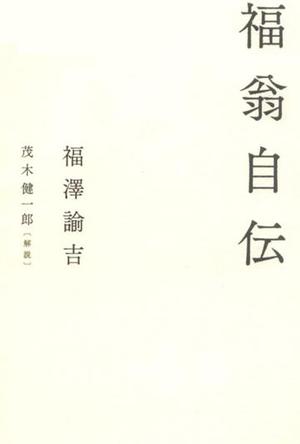
Interestingly, Fukuzawa Yukichi also mentioned China in this book, believing that China would have hope only by overthrowing the Manchu Qing government. So, once the Manchu government is overthrown, will China be as successful as the Meiji Restoration? Fukuzawa Yukichi's answer was, "No one can guarantee it. However, for the sake of the country's independence, the Manchu government must be overthrown no matter what. Is what the Chinese want a government of the country or a country of the government? I think the Chinese themselves know it very well."
This is really a historically penetrating question. Isn’t this the key issue that China has been trying to solve for more than a hundred years?
