
Editor's note: We seem to have become accustomed to the feeling of being overwhelmed by Apple's press conferences and new models, whether they are novel, admirable, following suit or disdainful. In any case, the iPhone has revolutionized the way mobile phones are used and the aesthetics of electronic products, and has also subverted the traditional computer industry. Marc Andreessen, founder of the American computer services company Netscape, lamented: "The iPhone and iPad actually put the Unix supercomputer into a shell suitable for consumer use. This is Apple's achievement, but no one discusses it because everyone focuses on the design." "The iPhone in your pocket One is actually the Cray XMP supercomputer that sold for US$10 million 20 years ago. The iPhone’s operating system, computing speed, and data storage capacity are comparable to the XMP, but the price is only US$600. This is Steve’s breakthrough. This is the essence of the iPhone.”
In early 2007, the iPhone came out, and this secret that had been hidden for three years by Apple was revealed. With possible problems with both the software and hardware, Jobs anxiously showed people the appearance and functions of the iPhone for the first time at the Macintosh Expo in San Francisco. The demonstration process went very smoothly. However, many people have already seen that there is a big problem with this phone. Some people even said that "the first generation iPhone was a waste", but Jobs was not aware of it at the time...
Today, the iPhone is updated to its seventh generation, and the fifth anniversary of Steve Jobs’s death is approaching. It may be a good time to review the history of the iPhone. Brent, the author of "Becoming Steve Jobs", has covered Steve Jobs for 25 years for the "Wall Street Journal" and "Fortune" magazines. "The Economist" magazine said that "this book is the best book about Steve Jobs that can be found on the market." From it, we may get a glimpse of the unknown iPhone past events.
Not just an electronic device, more like a piece of jewelry
When Steve and Jony Ive began working on the iPhone project, their relationship was closer than any of his previous colleagues. “The reason our relationship is so close is that our collaboration goes beyond design in the traditional sense,” Ive said. “We look at the people, the environment, and the structures around us in very similar ways. Beauty is a concept that is symbolic and a testament to how far humanity has come in the past 15 years. Beauty represents progress, and even the machined surface on a screw represents a kind of beauty. We both think that way, so we get along very well. If I were just designing shapes for electronic devices, I wouldn’t be able to have this kind of relationship with him.Close relationship. It is unlikely that the CEO of such a large company would spend a lot of time on an exterior designer. ”
“To be honest, the most precious and impressive conversation between me and him was very abstract, elevating design to a philosophical level, and it is impossible to talk about it with others. If I were asked to talk about design philosophy to a group of engineers, I would definitely feel very uncomfortable. Although they are full of creativity, if you explain the philosophical meaning of the product they build, they will not listen at all. There were a few times when Steve and I started talking philosophically again, and I could see it in their eyes and they were like, 'Oh my god, what are these two doing again? ’”
“We also talk about very specific things. I would say to him, 'This is how I'm going to design the bracket. ’ He would take off his glasses and take a closer look, even small details like the inside of the machine or special screws. "Special screws are used inside the iPhone. When the iPhone came out in 2007, it looked more like a piece of jewelry than just an electronic device. Even by today's standards, the iPhone is still the most beautiful product created by Steve and Ive.
The iPhone is the result of the joint efforts of thousands of people, including Tony Fadell and Reg Christie, as well as employees at Foxconn factories in China. The inventions and engineering breakthroughs involved are countless, but without the close collaboration between two similar souls, Steve and Ive, the idea of the iPhone would never have been possible, let alone the actual product.
On January 9, 2007, the iPhone made its debut at the Macintosh Exhibition held at the Moscone Center in San Francisco. This move is very risky. The iPhone is not yet ready for sale. There are still many defects in the hardware and software. Although the individual components have been tested, the entire machine has not been tested. Every Apple product must undergo rigorous testing before being launched on the market. Engineers will test the phone according to the user's usage habits, such as quickly and freely switching between mobile phone, music playback mode and computing mode.
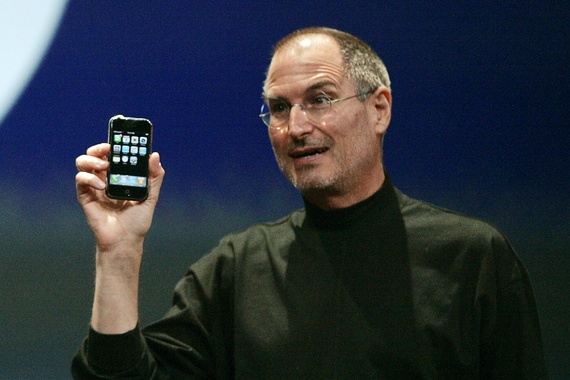
Steve never likes to "pre-introduce" products in this way (except for major operating system upgrades). Because the demonstration process is prone to problems, both software and screens may go wrong, and he is also worried that he may enter this highly competitive market prematurely. But Steve had three reasons to "pre-introduce" the iPhone. First, we need to show AT&T some results. AT&T had seen nothing for several years, no demos or prototypes, and there was a clause in the agreement that gave AT&T the right to pull out of the partnership if Apple couldn't make development progress. While AT&T is unlikely to quit, Steve can't take the chance. Second, just as Li· Crow said that Steve is the reincarnation of Barnum and likes to surprise the audience when introducing products. Although Apple has kept the iPhone secret for the past three years, he is not sure whether it can keep the secret in the next few months, because the iPhone will soon enter the testing phase for employees to try in daily life, and it will inevitably be discovered by others. He wanted to announce the news himself. Finally, the Macintosh show in January was the best stage for Steve to showcase. On the one hand, the forum was held by Apple; on the other hand, at the Consumer Electronics Show held at the same time in Las Vegas, other manufacturers also launched their own new devices, and Steve wanted to steal the limelight.
There was another reason why Steve decided to choose the best stage to debut the iPhone early: Steve and his team members knew that the iPhone was different, and they couldn't wait to show it to the world. Eddie Cue recalled, "The iPhone was a master product for Steve. He integrated all his experience and experience over the years into the product. This is the only time I brought my wife and children to the exhibition, and I told them, 'This may be the biggest exhibition in your life.' You can feel the unusualness of this exhibition."
Despite Steve's worries beforehand, the presentation went smoothly. Under Steve's demonstration, the multi-touch screen seemed to have magic. Swipe on the screen to scroll through the list, double-click on the URL to open the web page, everything seemed to be done in one go. The built-in Google Maps works better than a dedicated GPS (Global Positioning System). The presentation went well and the product was pleasing to the eye, but there was one problem that everyone discovered except Steve.
Jobs realized that the App Store made the iPhone complete
Peter Lewis is a commentator on the technology section of Fortune magazine. After Steve's speech, he arranged a brief private interview with Steve, and I went along. Steve looked relieved that the demo went so well, but he looked a little angry when Peter and I brought the conversation back to the question: Why doesn't Apple allow software developers to build software for the iPhone? After all, an iPhone is as powerful a computer device as a Macintosh or a regular PC, right? I mentioned that Google Maps and YouTube video software both prove that the iPhone can be "open" to third-party software developers. "We must participate in the development of software," Steve said, "so that we can know what software is out there." He then talked about his concerns that once third-party software audits are not managed properly, software viruses may be introduced into mobile phones. "Before opening up, we need to further understand the impact of software applications on the network," he added, "We don't want to create a monster." He also mentioned that if software developers want to develop software for the iPhone, they can design special web pages to complete tasks on the network server, while the phone only serves as a terminal.
Many people inside and outside Apple have asked Steve similar questions. John Doerr (John Doerr) is a managing partner of the famous venture capital firm Kleiner Perkins Caufield & Byers (KPCB). He and Steve live inIn the same neighborhood, the two later became friends because their daughters attended the same school in Palo Alto and their children sometimes boarded at each other's homes. Dole has never had any actual business dealings with Apple, but he knows all of Apple's top executives. A few months before the iPhone went on sale, Steve gave Dole one, and Dole asked the same question: Why not let third parties develop the software? "At the end of the conversation, I said to him, 'I don't agree with you,'" Dole recalled. "'If you decide to open up the iPhone, I can set up a fund to encourage people to develop software for the iPhone. I think it is a good business opportunity.' He replied, 'Well, if I change my mind, I will contact you.'"
After the iPhone was launched on June 29, 2007, the biggest problem encountered by consumers was not that there were too few software applications, but that AT&T's signal was too poor. For example, Steve gave Mike Slade two iPhones, but at Slade's home in Seattle, the two phones had no signal at all. Slade wrote an email to Steve complaining about this, and Steve immediately called AT&T's CEO. AT&T customer service staff rushed to Slade's home the next day, but they were unable to do anything. Only outside of Seattle could Slade's iPhone have a signal.
To make matters worse, in the Bay Area, AT&T's signal isn't as good as Verizon's. I-280, which connects San Francisco to San Jose, is a bumpy stretch of road. Electronics junkies who bought iPhones on the first day they were launched found that their calls frequently dropped while driving on the road. Cell phone signals are so poor in these areas, let alone the Internet.
In the first quarter after the iPhone was launched, a total of 1.5 million units were sold. In fact, the sales volume could be higher. Although the signal is not very good and there are few software applications, only a few such as Google Maps, the sales are still better than expected. Consumers originally expected the iPhone to support various functions such as video games, book reading, calculators, text editing, and financial forms, but none of these functions are available. Steve's former rival at Apple, Louis Casey, later went to work in a venture capital firm. He once said bluntly: "The first generation iPhone was a waste."
This time, Steve changed his mind even faster than the last time he switched from iMovie to iTunes. His delivery was inelegant, and according to Eddy Cue's recollection, his order was, "What the hell, just do what you say and leave me alone." In the fall of 2007, Doerr got a call, “and out of the blue Steve said, ‘We should talk, come to Cupertino, and talk about the fund.’ So I went and we put together some materials and set up a fund called the iFund. I told him the fund was going to raise $50 million, and Scott Forstall Forstall, who was in charge of the iPhone operating system, was there, and he said to me, ‘John, it’s only $50 million? You can definitely raise $100 million.’ So we settled on $100 million.”
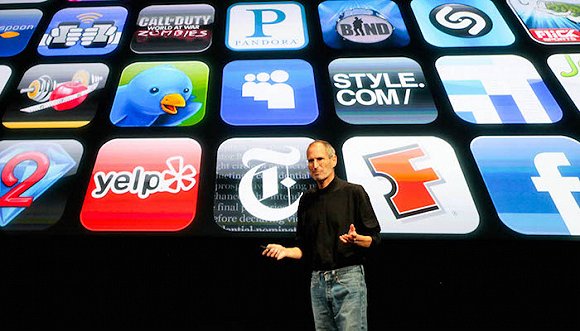
November, four months after the first-generation iPhone came out, Apple revealed that it would launch a software development kit for anyone who wanted to develop software for the iPhone. "Steve finally got it," Louis Casey said. "In an instant, Silicon Valley and the investment banking community were discussing this matter, and hundreds of small companies were vying for funds. Then Apple announced the opening of the App Store. Then it launched the iPhone 3G (the second-generation iPhone launched in July 2008, with faster microprocessors and smoother wireless networks). The iPhone was finally complete, with all the internal organs. Although it still needed to strengthen its muscles and bones, it was complete as a baby after all."
Jobs and the iPhone overturned the entire computer industry
Eight years after the Macintosh show in January 2007, iPhone sales exceeded 500 million units. Regardless of any standard—sales volume, profits, the number of international carriers selling the iPhone, and the number of software applications developed for the iPhone, the iPhone is the most successful and most profitable consumer electronics product in history. The sales volume of a product with a unit price of several hundred dollars can reach 500 million units. Are there any other products that can compete with the iPhone? Perhaps Procter & Gamble sold billions of tubes of toothpaste and Gillette sold billions of razor blades, but none can compare with the two-year iPhone contract period, during which each consumer spent nearly $1,000 on the iPhone.
When the iPhone first came out in the summer of 2007, there were still many products claiming to be smartphones on the market. For example, Palm Company's Tero mobile phone had been on the market for several years, and the BlackBerry mobile phone produced by the Canadian company Research in Motion was also selling well. These phones all have small keyboards, so the screens are not big. Although checking emails, checking calendars, and finding contacts are no problem, sales have been deteriorating, even though BlackBerry phones have survived for several years. The iPhone changed the game in the mobile phone industry forever, and Google knew this, so it spent 18 months developing Android, a clone of Apple's operating system used by Samsung, LG (Korea's LG), HTC and China's emerging mobile phone maker Xiaomi. A new competition has begun, with Apple in the lead. Although the sales of mobile phones using Android eventually exceeded those of the iPhone, they did not repeat the mistakes of the Macintosh, at least not yet.
Netscape co-founder Marc Andreessen later became a venture capitalist in Silicon Valley. He believed that the advent of the iPhone "reversed the two poles of Silicon Valley." In the past, the development of technology was driven by the military, large enterprises, etc., and only these well-funded entities could afford advanced components. But now the situation has changed, and the development of technology is driven by ordinary consumers. Anderson's bald head looks like a cannonBullets, speeches like machine guns blasting out views on the future. "The sales volume of the iPhone is so large that the scale effect it produces is huge," he said. "The sales volume of the iPhone has reached billions, and the supply chain of smartphones has become the supply chain of the entire computer industry. The components used by the iPhone [such as Corning's diamond glass, and the microprocessor designed by the British ARM Holding] have gradually occupied the entire computer industry. In the future, even the server market will be occupied by ARM, because the scale effect of the iPhone is too significant and other products cannot compete with it."
In other words, Steve revolutionized the entire computer industry. The iPhone represents the emergence of a new type of computing device that is more closely connected to consumers than the so-called personal computers of the past. "I don't think people fully realize the magnitude of what Apple has accomplished," Anderson said. "The Macintosh, the iPhone and the iPad were really Unix supercomputers packed into a consumer-friendly shell. That's Apple's achievement, but no one is talking about it because everyone is focusing on the design." He leaned forward and continued. Said, "The iPhone in your pocket is actually the Cray XMP supercomputer that sold for US$10 million 20 years ago. The iPhone's operating system, computing speed, and data storage capacity are comparable to the XMP, but the price is only US$600. This is Steve's breakthrough, and this is the essence of the iPhone."
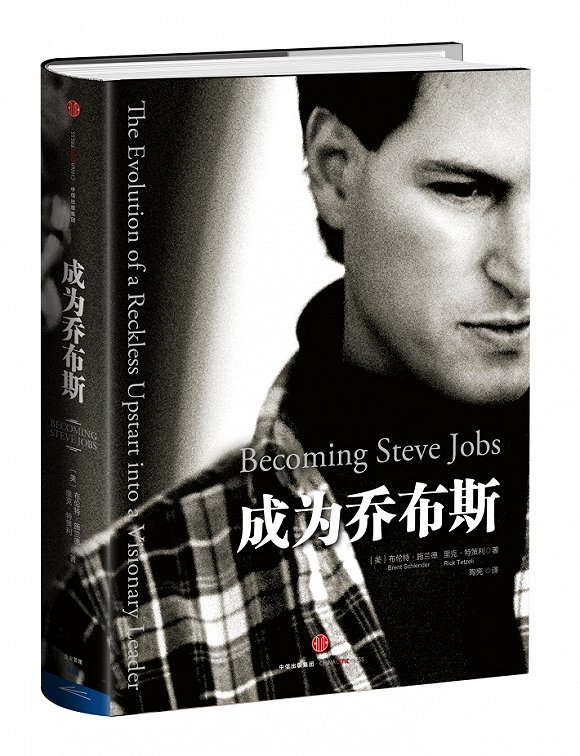
This article is excerpted from "Becoming Steve Jobs" (written by Brent Schlender et al., translated by Tao Liang, July 2016 edition of CITIC Publishing House). It is published with the authorization of the publisher. The subtitles were added by the editor and are abridged from the original text.
