Confucius VS Ran Qiu: "You can beat the drum and attack"
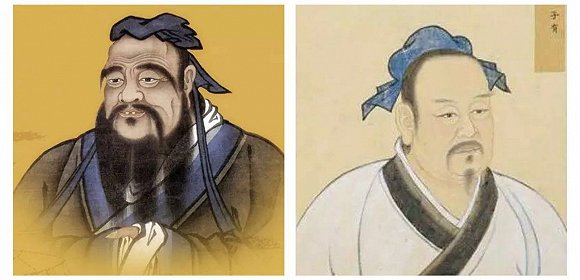
Ran Qiu, courtesy name Ziyou, commonly known as "Ran You", was one of the seventy-two sages of Confucius. He was versatile and especially good at financial management. When he served as the minister of the Ji family in the state of Lu, he helped the Ji family carry out land tax reforms and amass wealth. Therefore, he was severely criticized by Confucius, who even wanted to expel him from his school and sent his disciples to attack him by beating drums. Confucius said: "You are not my disciple. You can beat the drum and attack." In fact, before this, Confucius and Ran Qiu had differences.
In "The Analects of Confucius Yong Ye", there is such a dialogue:
Ran Qiu said: "If you don't teach the way of the Master, then you are not strong enough."
Confucius said: "Those who are not strong enough should give up in the middle way. Today's women paint."
Ran Qiu said: "It's not that I don't like the teacher's teachings, it's that I have a lot of heart and a lack of strength."
Confucius said: "Those who are not strong enough will give up halfway, but you are drawing a line of ground as a barrier and are not even willing to take a step."
Yu Yue VS Zhang Taiyan: "Being unfilial and unfaithful is not human"
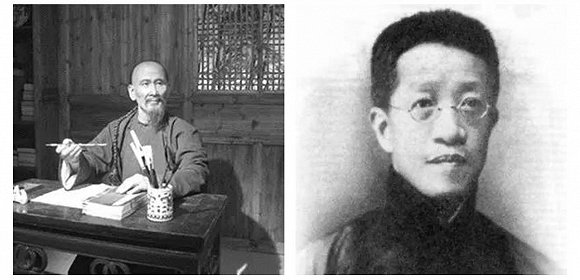
Yu Yue was the first Jinshi selected by Zeng Guofan, a famous minister of the Qing Dynasty. He was a son of a famous family and a master of Pu Xue. Zhang Taiyan studied under Yu Yue at the age of 16. Yu Yue admired Zhang Taiyan very much, but he saw that Zhang Taiyan did not follow the proper path of the imperial examination and was keen on reform. Yu Yue, who was worried about something happening to Zhang Taiyan, believed that loyalty to the emperor and patriotism was the most important thing, and he could not deviate from the right path. But Zhang Taiyan refused to listen. The reform failed, so he cut off his braids and started a revolution again.
In 1901, Zhang Taiyan, who had returned from Taiwan, went to visit Yu Yue. Unexpectedly, Yu Yue scolded Zhang Taiyan on the spot for being "unfilial and disloyal, and unhuman" for traveling to a foreign land. He also quoted the words of Confucius when he scolded Ran Qiu - - "They are not my disciples. It's okay for a boy to beat the drum and attack." Not to be outdone, Zhang Taiyan wrote the famous "Xie Benshi", bluntly pointing out that if Yu Yue clings to the old ideas, he will not be able to do well in learning.
Kang Youwei VS Liang Qichao: "Son of Disdain" and "Disobedient Disciple"
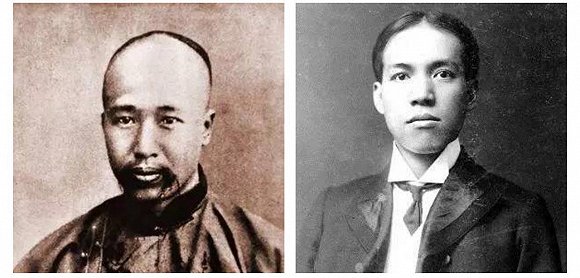
Kang Youwei was Liang Qichao’s academic and political mentor. Both of them were famous figures in modern Chinese history. Their grievances and resentments were closely related to the development process of modern history. Both of them had been forAfter the failure of the Reform Movement of 1898, both Liang Qichao and Kang Youwei fled to Japan. But since then, their political opinions have changed. Kang Youwei advocated royalism, while Liang Qichao advocated constitutional monarchy and ultimately revolution. Liang Qichao later parted ways with Kang Youwei because he supported Zhang Xun's restoration. Teachers and students refuted each other's views. In fact, the teacher-student relationship was in name only.
After the scandal of Zhang Xun's restoration broke out, Liang Qichao heard that Kang Youwei had done great work and sent out a telegram angrily denounced his husband as a "scholar who speaks loudly and shamelessly". Kang Youwei denounced "Liang Qichao" as an evil bird that eats his father and an evil beast that eats his mother. He also called him a "disdainful son" and a "disobedient person"!
Huang Yongyu VS Fan Zeng: "The desire is hard to satisfy", "The soul is ugly"
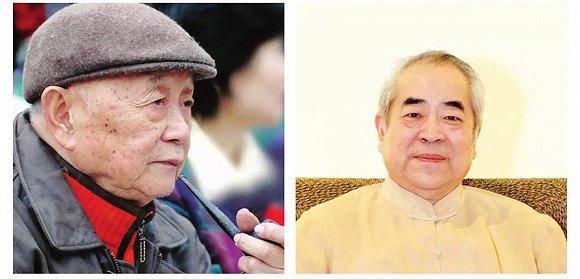
Student Fan Zeng criticized his teacher Huang Yongyu's paintings as "more than clever but not wise enough. They stay at the shallow level of wisdom in art without the so-called "wisdom" that goes deep into the nature of Buddhism. "His early woodcut works were extremely meticulous but lacked mellow connotation. He made good use of changes in knife skills but not good at using black and white contrast. He can't see the backs of masters such as Yan Han and Gu Yuan, and he cannot be ranked among the first-class printmakers."
As a student of Huang Yongyu, Fan Zeng actually drew a "dog head" for his teacher - a foreigner holding a dog with an Uncle Sam-style hat on his head, with Huang Yongyu written on it. This painting, which was extremely humiliating to the teacher, was published in a publicly published magazine at the time. Since then, Fan Zeng and Huang Yongyu have turned against each other. Many years have passed, and Fan Zeng still occasionally publishes articles to criticize Huang Yongyu, who is in his 80s. One of the widely circulated articles is "The Legend of the Grasshopper - A Portrait of Huang Yongyu".
In "The Story of the Grasshopper - A Portrait of Huang Yongyu", he said: First comment on Huang Yongyu's paintings: Chinese painting has not yet been introduced; second comment on Huang Yongyu's paintings: dull realism and wild deformation; third comment on Huang Yongyu's paintings: neither color nor lines... Huang Yongyu is ruthless and unjust, Huang Yongyu is political opportunist... Huang Yongyu uses all means to attack his colleagues... Huang Yongyu fights... Huang Yongyu has a hard time satisfying his desires... Huang Yongyu has an ugly soul...
Chen Yinke VS Wang Zhuo: "You are not my student, get out of here!" ”
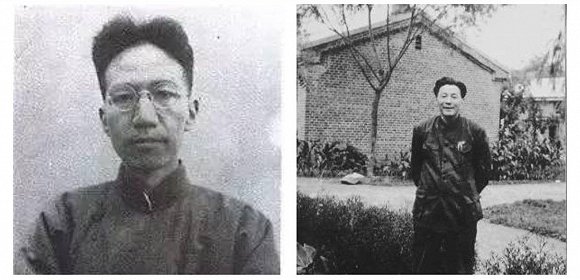
Wang Zhuan graduated from the History Department of Tsinghua University in 1938, and then followed Chen Yinke to conduct research on the history of the Sui and Tang Dynasties. For more than two years, he and Chen Yinke ate, drank and lived together. Precisely because of the deep teacher-student relationship between Wang Zhuo and Chen Yinke, the Institute of History established in 1953 wanted to invite Wang Zhuo and had already gone south to Guangzhou.When Chen Yinke went north to serve as the director of the Second Institute (Institute of Medieval Antiquities), he asked Wang Zhuan to become a lobbyist. Unexpectedly, not only was he in trouble, he was almost expelled from the school.
Hu Ji, a student of Wang Zhuan’s Department of History at Peking University, once wrote an article and revealed: “He volunteered to go. He thought he was sure to invite his husband to Beijing, but he smiled bitterly and said he didn’t expect to hit a wall.” Why did he hit a wall? The views expressed by Wang Zhuan are not accepted by Mr. Chen Yinke. At that time, Wang Zhuan was full of enthusiasm and ideals. In the process of persuading Mr. Chen, he may have been so domineering that he made Mr. Chen Yinke furious. Pointing at Wang Zhuo, he said: "You are not my student, get out of here!"
Later Wang tried to repair the relationship, and Chen Yinke replied: "I am by no means opposed to the current regime. I read the original text of Capital in Switzerland during the third year of Xuantong. But I think we cannot first save Marxist-Leninist insights and then study academics. The people I want to invite and the apprentices I want to bring must have free thinking and independent spirit. . If that’s not the case, you are not my student. I don’t know if you had the same views as me before, but it’s different now. You are no longer my student, so from what I say, you are my student. Otherwise, it will be the same if I want to be my disciple in the future.”
Zhou Zuoren VS Shen Qiwu: "Zhongshan Wolf"
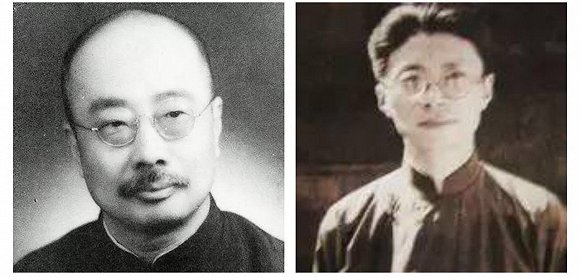
In the 1930s, Shen Qiwu and Zhou Zuoren had a close relationship. Shen Qiwu, Yu Pingbo, Fei Ming (Feng Wenbing) and Jiang Shaoyuan were called the four major disciples of Zhou Zuoren. In the 1933 edition of "Letters of Zhou Zuoren", there are 25 letters written by Zhou Zuoren to Shen Qiwu, which is the largest number, second only to the letters to Yu Pingbo.
However, as various things continued to happen, the two gradually became at odds with each other, so much so that Zhou Zuoren issued a "Declaration on Breaking the Door" in the "China Daily" on March 23, 1944: "Shen Yang is Shen Qiwu, who was taught by me in the past. Disciple, I have been with you for a long time. In recent years, I have behaved rudely and made wanton attacks. I should immediately declare that I will break the door and sever all public and private relations. If necessary, I will announce the details. "The so-called "break the door" is a Japanese term, which means "expelling the teacher."
As the relationship continued to deteriorate, Shen Qiwu published a poem against Zhou Zuoren in Issue 5 of "Chinese Literature", "You Also Need to Be Quiet," which reads:
Have you finished speaking
On your dull lips
The coldness of the autumn wind still lingers
I have no words
If silence is the greatest peace
I would like to be alone for a day of silence
You said I have changed, yes
I can't dream about you, just like
You can’t understand other people’s pain
Yes, I have changed
I can’t bear the burden because of you
I will close the path I should take
If you can still accept a little gift from me
I hope you deeply cherish this loyalty
Tomorrow the birds will sing above your headSong
Everything is silent tonight
It will be morning in no time
Please break up now
The world needs comfort
You also need to be quiet
Zhou Zuoren also had lingering hatred for Shen Qiwu, and later ridiculed him many times in articles, and called him the "Zhongshan Wolf" in articles such as "The Story of Encountering a Wolf" and "About Dongguo". Even in his later years, in his letter to Bao Yaoming, he still said that he and his two disciples, Yu Pingbo and Fei Ming, "though we did not correspond frequently, our friendship remains the same. There is another person who has long since broken off the friendship, namely Shen Qi Wusei. He was from Yenching University. Later, because of his collusion with the Japanese Literary Press Association, they accused me of being reactionary and a complete 'Zhongshan Wolf' because of my unwillingness to cooperate with the association."
Naipaul VS Paul Theroux: "I will go to Africa and ask a witch doctor to kill you"
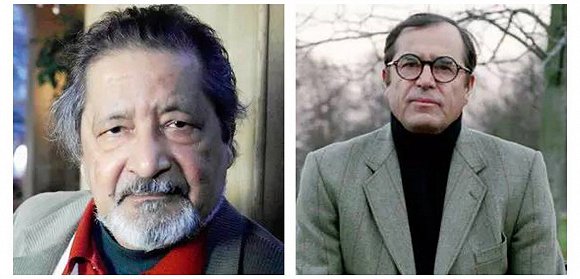
In 1966, Theroux, a young man, was teaching at the University of Uganda in Africa, and Naipaul was also a writer-in-residence at the university. The two got acquainted and began a 30-year friendship. Theroux was a junior and respected Naipaul as his teacher. After Mr. Nye returned to England, Theroux immediately went to London, where Naipaul introduced him to the local literary circle. But Naipaul soon complained that Theroux stayed too long and wrote him an expulsion letter. Unfortunately, Theroux did not understand what he meant. After he left, Naipaul said that he was really annoying, "I wrote him a letter of accusations, thinking that he would stop writing from me... I still couldn't believe it."
However, Naipaul did not refuse to have meals with Theroux from time to time - all of which were paid for by his apprentice. However, after Theroux became famous, their relationship became worse and worse. In 1996, Naipaul and Theroux were invited to participate in a discussion at the Hay Literary Festival. The two sat on the stage. Naipaul reportedly kept turning his head and refused to meet Theroux's eyes. The atmosphere was suffocating.
It is said that Naipaul gave Theroux a typical piece of harsh advice: "Put your tail between your legs and make do with it." When he was so hateful, he even said that he would go to Africa to ask a witch doctor to kill Theroux.
Freud VS Jung: Don’t think I don’t know your “patriricide motive”
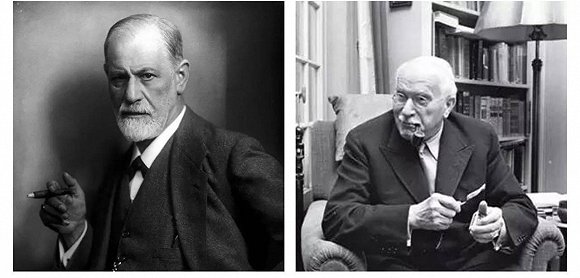
Jung, the founder of analytical psychology, was a disciple of Freud, the founder of the school of psychoanalysis. Starting in 1906, Jung began to send some of his papers to Freud. In 1907, Freud invited Jung to Vienna as a guest. The two hit it off and talked for thirteen hours. Thus began a personal and professional friendship that they would maintain for six years: their weeklyCorrespondence to exchange research and latest findings. In a letter to Jung, Freud (who was 19 years older than Jung) affectionately called Jung the "Crown Prince" of the realm of psychoanalysis and called Jung his "eldest son."
However, soon thereafter, obvious cracks appeared in the relationship between the two. Bilinsky said in "Jung and Freud" that when he visited Jung in 1957, Jung told him that an important reason for the deterioration of his relationship with Freud was that he inadvertently knew the "triangular relationship" between Freud and his wife and aunt, and that he could not accept Freud's attitude that his own rights and interests were more important than reality itself.
The rupture was overwhelming, marked by Freud's two famous "faintings." In 1909, on the eve of the two men's trip to the United States, Jung talked about the mummies unearthed in the swamp in front of Freud, and Freud suddenly fainted and fell to the ground. He suspected that Jung had a potential "patricidal motive" and wanted him to die. The second time was in Munich in 1912. The two attended a psychoanalysis meeting. During the heated discussion, Freud once again saw the "Oedipus complex" in Jung. He was worried that he would be betrayed, so he fainted directly at the dinner table.
At the end of 1912, the smell of gunpowder spread in the correspondence between the two; in 1913, they finally severed contact completely and parted ways. After leaving Freud, Jung suffered a midlife crisis. In October 1913, while traveling alone, he suddenly had a two-minute hallucination: a monstrous flood covered the northern low-lying areas from the North Sea to the Alps... Jung saw yellow rolling water, floating rubble and the deaths of thousands of people.
"The Autobiography of Jung" writes: I can still vividly recall what Freud said to me: Dear Jung, please promise me never to give up the theory of sexual desire. This is the most fundamental of all things. You know, we have to make it a dogma, an unshakable fortress. … What struck me first were the words “fortress” and “dogma”; for a dogma, that is, a thing believed without refutation, is established solely to suppress doubt once and for all. But this has nothing to do with scientific judgment anymore, but only with personal impulse. This is what went into the heart of our friendship.