
In the view of European and American intellectuals in the 1960s, it was the Third World that "brought the hope of revolution to the First World." At that time, Cuba and Vietnam were like the two bright sparks of the world's desire, "not only the victory of the revolution, but also the victory of David over Goliath, the victory of the weak against the powerful." Hobsbawm, both as a Marxist and as a historian, was particularly attracted to this area, most likely because he sensed that a range of political possibilities were brewing and that major historical questions remained open, all of which the military regime of the 1970s had struggled to shut down. Hobsbawm writes about the history of Latin America from the hopes of the left to the dictatorship of the gorillas.
Ten years before his death, Hobsbawm published an autobiography (lnteresting Times: A Twentieth Century Life, 2002; Chinese translation of "The Interesting 20th Century", 2016). In the book, he wrote: Latin America is the only place outside of Europe that he understands and where he feels a sense of belonging. He attributed this to the fact that in the Third World, only the Latin American languages he could master—the two main languages were Spanish and Portuguese. Of course, he was also attracted to Latin America's potential for social revolution.
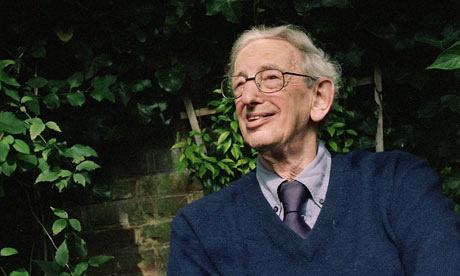
The most respected contemporary British historian said that as soon as he went to Latin America, he "turned to her forever" and "no one who discovered South America can resist its charm." Here, in addition to the strong sense of drama and bright colors that impact people's nerves, the Cuban Revolution in the late 1950s made the political pulse of the entire Latin America beat fiercely, and revolutionary sentiments rapidly fermented. It was a "laboratory of historical change...born to destroy traditional truths," Hobsbawm described. Fidel Castro was making great progress, but the United States failed in its attempt to overthrow his regime (the "Bay of Pigs Incident" in April 1961). This made "all intellectuals in Europe and the United States not immune to the 'bewitchment' of Latin America. On this continent, the lava of social revolution is so hot that it boils and bubbles." In their view, it was the Third World that "brought revolutionary hope to the First World in the 1960s." At that time, Cuba and Vietnam were like the two bright sparks of the world's desire, "not only the victory of the revolution, but also the victory of David (the future king of Israel) over Goliath (the Philistine giant warrior), the victory of the weak against the powerful."
The new book "Long Live the Revolution" is about Hobsbawm starting from the 1960s.The culmination of a continuing interest in and intellectual engagement with Latin America, this collection collects words he wrote over four decades: from brief reports on post-revolutionary Cuba, to reflections on national identity in the mid-1990s, from sober analysis of Salvador Allende's first year in power in Chile, to playful commentary on the music of Bossa Nova.
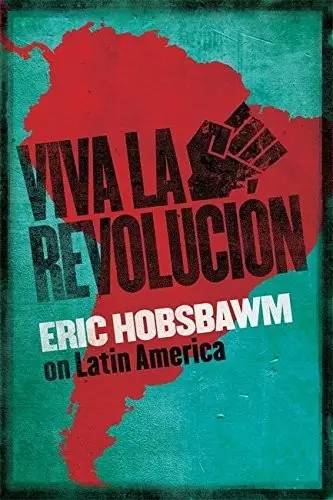
Viva la Revolucion: Hobsbawm on Latin America (Little, Brown, 2016)is the culmination of more than forty years of Hobsbawm’s sustained interest and intellectual engagement in Latin America.
Hobsbawm joined the German Communist Youth League in Berlin in 1931, joined the Communist Party in 1936, and became a member of the British Communist Party Historians Group in 1946. The Soviet invasion of Hungary in 1956 caused many members of the British Communist Party to desert the party. Although Hobsbawm also condemned the Soviet Union, he remained in the party.
His first visit to Cuba in 1960 recorded the new government's broad popular base. During subsequent travels, he translated and introduced the writings of Che Guevara (he began learning Spanish in the 1950s). Hobsbawm, however, wrote surprisingly little about Cuba, which was often at the heart of sympathetic concerns on the left throughout Latin America and elsewhere; indeed, he was sharply critical of those who sought to take up arms and emulate Cuba, arguing that the guerrilla methods that had been so successful on the island were not applicable to revolutions elsewhere.
From 1962 to 1963, Hobsbawm came to Latin America for the second time. In three months, he traveled throughout Brazil, Argentina, Chile, Peru, Bolivia and Colombia, trying to find the modern equivalent of the European "social bandits" (the so-called "vigilantes", a concept in his first book "Primitive Rebels") in the late 19th and early 20th centuries. In Peru and Colombia, he discovered something else: a rural countryside in the throes of rapid socioeconomic change, with a radical peasant movement poised to challenge the current national government. This also explains to a certain extent why these two countries occupy nearly half of the book "Long Live the Revolution".
When Hobsbawm visited Peru, it coincided with unrest in the southern highlands, and peasant unions launched a land occupation movement on plantations in the valley northwest of Cusco. A few years later he wrote a very scholarly article exploring the deeper historical processes at work. In his view, what is happening is the disintegration of "neo-feudalism": In this extremely unequal social order, the powerful landlord class not only extracts labor from tenant farmers, but also prohibits them from learning Spanish or even wearing shoes. And this “neo-feudal system” is not new – booming world demand for coffee produced in Peru created it at the end of the 19th century. The land occupation movements of the early 1960s sounded the death knell of this system. Although it was not until 1969, under the military regime of Juan Velasco Alvarado, that the secretIt was only then that Lu began to carry out nationwide land reform and abolish the old landlords.
Between 1968 and 1980, Hobsbawm wrote three articles about Peru's unusual "Revolutionary Government of the Armed Forces," a military regime that he argued was far less oppressive than many civilian regimes and far better than the bloody dictatorships that would later rule the region. In Hobsbawm's view, it represents the best hope for poor Peruvian farmers to turn around. “If a country ever needed and needs a revolution, this is it,” he wrote in 1970.
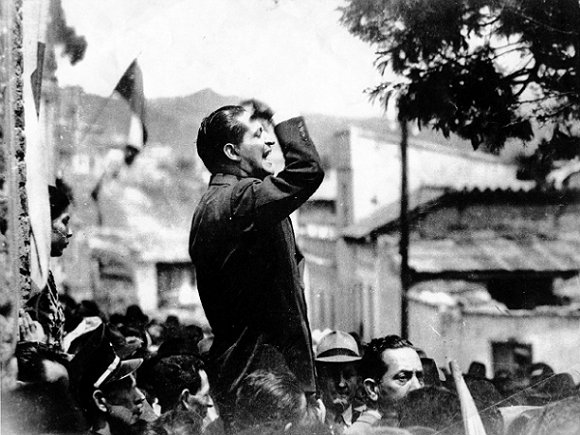
What fascinates Hobsbawm most about Colombia is the violence that has swept the country since 1948. In 1948, Jorge Eliezer Gaitan, a nationalist politician and leader of the left-wing Liberal Party, was assassinated in Bogota, ushering in a decade of "violent period" in Colombia, more accurately described as "a combination of civil war, guerrillas, looting and massacres." It mainly occurs in rural areas, and the opposition is not only between rich peasants and poor peasants, but also the rising middle peasants and their opponents. But the root cause, Hobsbawm believes, lies in the lack of a true national-level social revolution in Colombia. This is what has happened since the 1930s, when the Wall Street crisis dragged down governments throughout Latin America: many countries found themselves having to respond to at least part of the demands of the public, who "began to become subjects, not just objects of their countries' histories." With Gaitan's assassination, the country was divided and entered anarchy, and Colombia's hope of making great strides in equality was shattered. As Hobsbawm wrote in 1963: "Colombia paid the price of this failure by a group of people who died, were expelled, and suffered both physical and mental abuse."
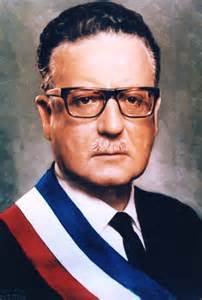
"Old Latin America is collapsing. Something completely new must take its place," he wrote in a 1963 article. But he writes more about the revolutions that did not happen: the revolutions that were blocked from Colombia, failed to materialize in Peru, and were thwarted elsewhere. Two articles from the early 1970s documented Allende's attempts at a peaceful transition to socialism—in the first, Hobsbawm described it as a "thrilling prospect," and in the second, Hobsbawm denounced the coup that slandered Allende as a "Chilean murderer" and removed him from power. (In his autobiography, he wrote that many people remember where they were when Kennedy was assassinated, while he remembers where he was when he received news of Allende's death.) Pinochet's seizure of power was just one of a series of military coups that swept the region and established dictatorial regimes backed by the United States. 1970By the mid-1990s, Latin America had entered what Hobsbawm called "the darkest period in its 20th century history."
This also reveals a characteristic of the anthology "Long Live the Revolution": most of the included articles were written between 1960 and 1974. This certainly makes sense: as a Marxist and as a historian, Hobsbawm was particularly attracted to this area, most likely out of a sense that a range of political possibilities were brewing and growing, and that major historical questions were still open for discussion, all of which the military regime of the 1970s had tried so hard to shut down. Yet this also means that much lies outside the scope of this book: the wars and genocides in Central America in the 1980s, and the left-wing “pink tide” that swept through Latin America in the 2000s, from Venezuela to Argentina, from Brazil to Nicaragua, and which Hobsbawm talks about elsewhere as a symbol that progressive politics is still alive.
While history has rumbled along today, with center-right governments winning or usurping power in Argentina, Brazil, Honduras and elsewhere, Hobsbawm's core concern remains relevant today: why, in a continent with so many stark inequalities, and therefore apparently ripe for revolution, no revolution occurred, or failed. These "anticipated and necessary revolutions in many countries did not happen but were strangled," Hobsbawm wrote in 2002, "especially by domestic weakness, division and incompetence. And they will not happen now."
This article is reprinted with permission from the public account "Wenhui Scholar"
