
“Heaven is just an adult’s huge fantasy of childhood”
——Freud
I remember that when I was in middle school, my Chinese teacher once assigned a composition and asked us to write a story about traveling to a certain era. A female classmate wrote that she traveled to the world of Andersen's "The Daughter of the Sea" and became the mermaid. At the end of the story, the mermaid took the dagger given to her by the witch, stabbed the prince and his new wife to death, and then jumped into the sea and turned into foam. Venus was born from this foam.
Although the teacher didn't seem to think highly of this story, it was circulated and praised by the whole class. Everyone thought it was wonderfully written.
Perhaps in the eyes of adults, it is cruel for a little girl to have murderous thoughts and not worthy of praise. However, for a girl who is at the age of longing to be loved and fantasizing about love, it is incomprehensible to sacrifice herself for love to fulfill a prince who does not love herself. It would be better to destroy everything happily, which is an acceptable plot.
It is said that Andersen once said painfully after being drunk that his fairy tales were not written for children. It is true that despairing films such as "The Daughter of the Sea" and "The Little Girl Who Loved Matches" are too sad for children and full of emotions that even adults may find difficult to bear. Not only Andersen, but also some so-called fairy tale masterpieces, such as the obscure "The Wizard of Oz" and the abstract "The Blue Bird". They are all philosophical symbols woven by adults who have gone through vicissitudes of life, but they have somehow become "children's books".
The strangest thing is "Peter Pan". Although the protagonists are all children, I don't understand how innocent children who have not been baptized by time can understand the meaning of it, and how can they understand the reason why Peter Pan chose never to grow up?
For children, the most attractive things in fairy tales are always simple and direct stories about the adventure of justice defeating evil and the prince and princess living happily together. For them, these white fairy tales dreamed up by adults are not nothing.What they can do is the hope they have for the future and the adult world. Therefore, children always hope to grow up quickly: as long as they grow up, they can become brave, go on great adventures in unknown worlds, and win the love of princes.
On the other hand, children have an obsession with killing that adults cannot accept.
There are many people who are afraid of small insects in adulthood. In childhood, they could treat various small animals cruelly, tearing off the wings of dragonflies, cutting off the bodies of earthworms, and doing such things as if they were playing without feeling anything. Even when treating peers who are the same as themselves, they often do not have the "humanity" that adults possess. Therefore, physical bullying incidents such as "girls were stripped naked and beaten" that have been frequently exposed in recent years mostly occur on campuses where minors gather. Afterwards, when the minor perpetrators were asked about their motives, they responded that they just thought it was "fun", "on a whim" or "unpleasant", but did not realize the serious harm their actions caused to the victims.
In a sense, there is no more cruel stage in a person's life than childhood. Newborns are the most primitive form of human beings. They have not undergone any moral education and have nothing in their consciousness except self-interested instincts.
In children's cognition, beheading, dismemberment, death, etc. do not seem to be such terrible things, and are not labeled as good or evil, but a form of play, or a way to make annoying things disappear - essentially the same as their desire to keep their favorite things (such as love and adventure), but just the opposite of the latter.
As the opposite of white fairy tales, black fairy tales about bloody killings, incest and adultery have existed like the dark side of human childhood since ancient times. Although with the evolution of civilization, adults with increasingly sophisticated moral concepts have made great efforts to purify the spiritual world of children, they are still passed down from generation to generation and are popular among teenagers.
For example, "Mother Goose Nursery Rhymes", a collection of children's songs that Westerners have been familiar with since childhood, contains some famous dark nursery rhymes.
Agatha Christie, the queen of detective novels, drew many inspirations from them and incorporated them into her cold murder stories, including "Ten Little Negroes", which describes how the victims died in her most famous island murder "No Survivor".
"Ten Little Black Men"
Ten little black men went out to eat, one choked to death and nine were left.
Nine little black people stayed up late, one overslept and there were eight left.
Eight little black people went to Devon to play, one said he wanted to stay, and there were seven left.
Seven little black men cut sticks, and one cut himself in half, leaving six.
Six little black men were playing with a honeycomb, and a wasp was staring at one of them, and there were five left.
Five little black men entered the court, one was left behind and there were four left.
Four little black men went to the beach, and a red shark swallowed one and there were three left.
Three little black men walked into the zoo, and a big bear snatched one away and left two.
Two little black people sat in the sun, one died of heat and only one remained.
A little black man felt so lonely that no one was left after he hanged himself.
Her one-act play "The Mousetrap": a closed murder case revolves around a very sinister nursery rhyme "Three Blind Mice".
"Three Blind Mice"
Three blind mice! See how they run!
They chased the farmer’s wife,
She cuts off their tails with a table knife.
Have you ever seen a scene like this?
Like three blind mice.
Also used in "Sing a Sixpenny Song" in "The Strange Case of Rye".
"Sing a Sixpenny Song"
Sing a sixpence song and fill the bag with rye;
Twenty-four black thrushes were baked in the pie!
When the pie is peeled off, the thrush begins to sing;
Isn’t that a very delicious meal to put on the king’s table?
The king was counting money in the counting room; the queen was eating honey bread in the living room.
The maid is drying clothes in the garden;
A black thrush flew over,
Pecked her nose away.
Some people may find it hard to believe, thinking that these are just extreme cases. Do children really grow up singing nursery rhymes like this? However, if you think carefully about your childhood, you will know that this is indeed the case.
For example, in my hometown, a limerick that every child would recite is "So-and-so's head, like a ball, kicked it to the Yellow Crane Tower..." If you just put in the name of a friend, it will be on your lips like the most common joke.
There is also "Two Tigers" that everyone knows by heart, which is completely terrifying to think about.
Two tigers, two tigers, run fast
One has no eyes, one has no ears,
So strange, so strange
When people sing this song countless times, they may not have thought about why tigers have no eyes and ears.
One theory is that it was aborted, and another is that it is a metaphor for the final outcome of an incestuous brother and sister. Anyway, no matter which one it is, it is definitely not a beautiful story.
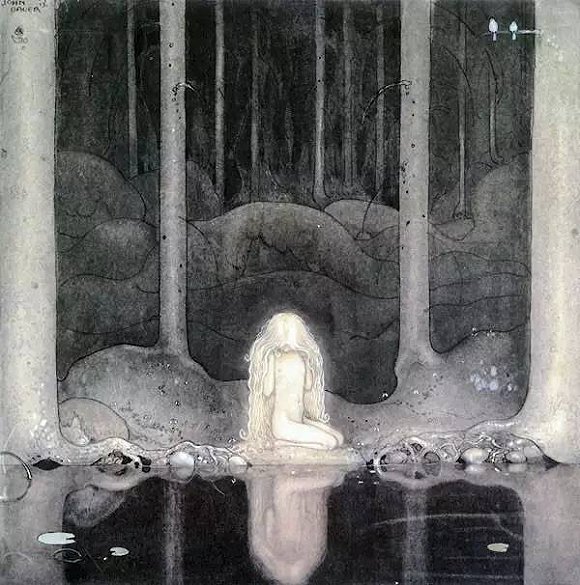
Even if it is not such an obviously black nursery rhyme, even the most beautiful fairy tales still have traces of barbarism - Cinderella's stepmother and sister were pecked out by birds in the end; the big bad wolf ate Little Red Riding Hood's grandmother and used her blood and flesh as bait; and the King of Hearts in "Alice in Wonderland" who frequently beheaded people.After...
The hidden shadows of white fairy tales and black nursery rhymes are like sunshine and the blocked sunshine, growing up with children until morality, concepts and reality begin to constrain them. When they reach adulthood, when they recall their long-gone childhood, they have forgotten (or are not aware of) all its darkness and cruelty, and can only see the beautiful and hazy phantom like a white fairy tale.
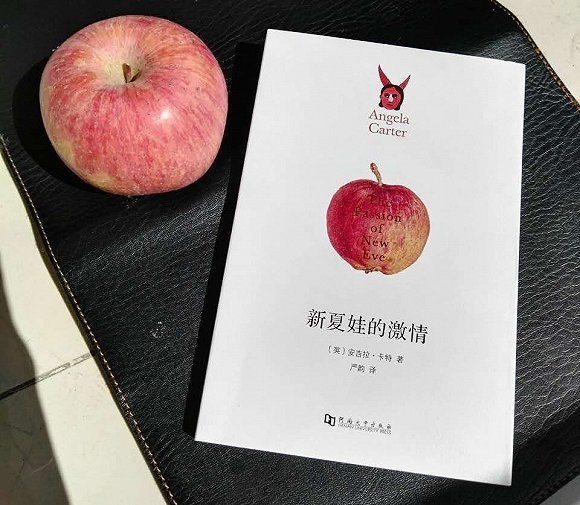
In fact, we already know in our hearts that white fairy tales will no longer exist in reality. In any case, it is impossible for someone like Dr. Dolittle to come to him and take him to explore the vast sea; there will also be no handsome and golden prince to kiss the sleeping beauty. But the white fairy tale world makes us yearn for it more and more, because it is a paradise we can never go back to.
The dark nursery rhyme that makes people frightened and fascinated is an extreme portrayal of reality.
This article is reprinted with permission from the public account "Shanghe Zhuoyuan Culture"
