
Editor's note: School has started, and parents are earnestly urging their children to "study well." In addition to this, have you ever said "play well" to your children? In terms of nature, playing may be closer to children than learning. In a 1933 "Survey on Local Children's Games" report, the investigators made it clear: Adults believe that "stability" and "not running and not jumping" are valuable qualities for children, but in fact, "the non-running and not jumping that adults like corrodes my body." Compared with the "civilized games" such as gymnastics led by teachers in school, the investigators yearn for the so-called "barbaric games" outside the campus because they "have no specific rules, but naturally there are no fouls. Everyone is the protagonist of the activity and everyone is the instrument of the game." The investigators not only hope that the children can "run and jump freely", but also "hope that adults all over the world , all have to restore their childishness and ‘condescend’ to play with the children!” This survey report includes 28 kinds of local children’s games during the Republic of China, and is included in the book “Children’s Local Games of the Republic of China” (Fujian Education Press, July 2016), together with a 1926 survey report “Shandong Folk Entertainment Survey: Children’s Games”. On the first day of school, the editor has excerpted several passages from the book about the voices of investigators and gameplay from more than 80 years ago. Due to space limitations, it is not comprehensive. I would like to pay tribute to "childishness" with both children and older children.
(1) A stable child who neither runs nor jumps—a passage dedicated to adults
When I was about seven years old, I went with my mother to my aunt's house, which was far away and not often visited. A country boy who was not used to going out was sent to a family he had never been to. His timidity was really ridiculous: I couldn't sit well, and I couldn't stand well. It was even more inconvenient to use my hands, with no place to put them, and I could barely hold a few fingers in my mouth. If I want to be at home, I may have broken a few bricks of the kang, and I don't know how many wordless songs are sung in my throat. But at this time, I didn't turn into stone, I turned into wood. I clung to my mother tightly, not daring to move a step, even though I wanted to; I didn't dare to hum a word, even though I wanted to. Now that I want to see the stupid me from that time, I will definitely not admit that he is me. However, I never expected that adults like children who are as quiet as wooden chickens. My aunt with white hair gave me sincere praise and said: "This is such a stable child! He doesn't run around or jump around. He will definitely be promising when he grows up! Look, the second and fourth children are running around all day long, like little monkeys!"
Although I secretly laughed at her because she didn’t know that I was a living monkey at home, but she hinted that “stability” and “not running or jumping” are valuable qualities. From then on, when I met the elders, I always pretended to be "mature" and "stable", and every time I got a lot of praise. But today I wake up, sirThey like not running or jumping, which corrodes my body.
(2) Civilization Game
After entering school, I became a student. Our school is foreign. When we sing "Doremy..." we have to practice gymnastics and play games. The students said privately: In racing, you can train to become a scud, and you can travel thousands of miles in a day; in gymnastics, you can train your arms to have a thousand catties of strength to beat the Second Master Wu. So we ran and jumped wherever we wanted. After leaving school, they are so arrogant. What are those wild children who are not lucky enough to go to school? They don't shout "one, two, three" when they run, and they don't have any airs when they jump high. In short, they are barbaric, and the civilized ones are those of us who have attended school. But sometimes in the open field or on the grass, I see children who have not been taught by their teachers playing games, and their laughter can prove that they are much more interesting than our games. They have no specific rules, but naturally there are no fouls. Everyone among them is the protagonist of the activity, and everyone is a tool in the game. Compared with our civilized game - Mr.'s term - there seems to be a lot less unnecessary actions, so I really want to join their group. But for the sake of my status as a student and the reputation of the school, how could I be willing to play barbaric games with those wild children? So I'm just envious in my heart.
(3) Childishness
Speaking of which, maybe it’s because I have no future. The older I get, the more I like games. Seeing the children laughing and noisily doing their only job - games, I wish everyone could shrink down by a dozen years and join their games. When they run, my thighs move forward; when they jump, my heels lift up. Sometimes they won't give up and ask me to act in unison, which makes me feel that the joy of life is endless. Really, children's life is human life. He doesn't care whether the sun rises or sets, or whether the flowers bloom or fade. He just lives for the sake of life and plays for the sake of playing. I admire them and praise them, but the adults don't allow me to join their team. I once remembered that when I returned home during the holidays, my nephews would hide and seek under the moonlight, touching the blind children. I couldn't help but count myself among them. While I was dancing, my uncle came with a cane, glared at me, and scolded me: "You are so childish!" It was like "tapping his shin with the cane."
But then I thought that being "childish" was not a scolding of me, but a compliment. I think what the Chinese people lack most is their "childishness", which makes adults afraid to approach and children intimidated. In fact, they are all human beings, so why bother pretending to be so? With a little more childishness, his hypocrisy might be lessened. I hope that all adults in the world will regain their childishness and "condescend" to play with children!
(4) Game Survey
It seems that as for the topic, the Mustang still needs to run. Students studying in Japan have written letters saying that Japan desperately advocates the preservation of everything it owns. Competition is a good example. It is true that "a country must have its own way to build a country." He also said that there is an only copy of the Chinese book in Japan. There is a special collection of children's songs from the Chinese countryside in Japan. Games in the countryside were collected and improved in Japan and used as game teaching materials in schools.
This winter vacation, we traveled hundreds of miles.On the battlefield, all you see is nothing but sad faces. When I got home, the elders in the country complained about their sufferings. The news that the soldiers wanted carriages, horses, food, money, whatever, sealed the adults' brows tightly. But my nephews ignored him and continued to play hard after eating. Coincidentally, I am an idler who "doesn't know how expensive food and rice are when I'm not in the family", so I became close friends with them, either singing or running and jumping. I don't know why, but we all don't want to play the games taught in school, but would rather play some barbaric games of bell-ringing and lifting. Naturally, some people still call me "childish".
One day we were tired of playing and wanted to read and write. Suddenly I had the idea to record these wild games in the countryside...
1. Hide and seek (also known as hidden horse and tiger)
I think almost everyone has played the game of hide and seek. If it weren't for the severe cold and hot weather in winter and summer, let alone the change of weather with rough wind and rain. In the empty courtyard where three or five boys and girls were playing, they could be seen clamoring for hide-and-seek.
There is a person who is a searcher, they are called "Charmed". Keep the door agreed upon by everyone, either a stone, a tree, or... as a "sitter". This obsessed boy blindfolded and felt that the other children had hidden them, and then he shouted, "Are you done yet?" which meant asking, "Are you ready?" He could not catch them unless he heard the response of "Yes, are you?"
Where are these people hiding? It depends on each person's talent. Some are in the carport and some are on the woodpile. You can go to the house at high places, and you can enter holes at low places. Some are far away from the "child care" and there is room for escape, and some are very close to the "child care" and there is the possibility of quick victory. When "Charmed" discovered their hiding place, they desperately wanted to touch "Shill". Once touched, they were safe. So the "fascinated" side desperately protects the "sitter", and the other side wants to touch them. Once he touches them, he has a substitute, and the game will start again. Some were well hidden and did not come out until they had a substitute. But how to choose "obsessed"? This is another draw method.
Appendix 1 Drawing Method 2: One person collects straw sticks of different lengths according to the number of people, holds them in his hand, or inserts them into the pile of soil, and draws them one by one. The shortest is "obsessed."
Appendix 2 In this game, it is most taboo to hide in your own home, because it is inconvenient for the "obsessed" to go to their home to look for him. Besides, the adults in the family always like to interfere with the children's running and jumping, so the children also enjoy it and do not want to approach the adults.
2. Collision
The children were older and wanted to show off their ability to run wild, so the two of them were about to collide. This is also done by boys and girls, women are not strong enough.
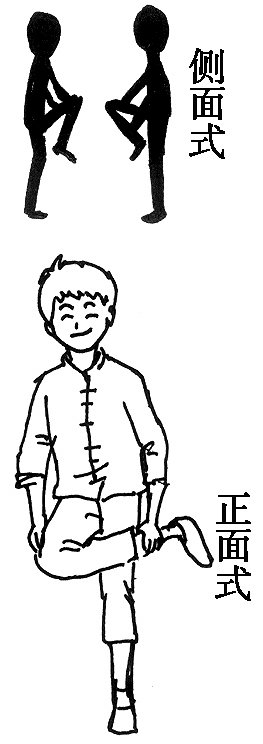
The two people each lifted a leg, the golden rooster was independent, and then bumped each other with the lifted knees. Those who are knocked down, or whose legs are knocked to the ground, are the quails that have left the circle and are defeated.
This game is a little more intense, and sometimes the hits really hurt. But there is still a lot of fun, what is the reason for this?
3. Turn the wrist (also known as nuclear wrist)
This is a competition between two people, also called arm wrestling. There is a lot to play with this one.
The two held hands and turned each other's hands vigorously together. Whoever has his hand turned to the sky is the winner. The back of one's hand was originally pointing toward the sky, and the other one turned him over hard. For even more disparity in strength, one needs to use two hands, or one and a half hands (that is, one hand with the back of the hand upward, and the other resting on the wrist with the back of the hand upward).
4. Horse Racing City
The autumn harvest is over, and the farmers have no work left. They bask in the sun during the day and tell stories at night. Children can't just relax for a moment. They play games during the day, and at night they have to learn about military preparation under the moonlight. Twenty or thirty people get together to play the game of "Horse Racing City".
Divide all the children who participate in this game into two large teams, standing twenty or thirty steps apart. In a large open space, each row holds hands tightly, thus forming two cities. So Platoon A started the Q&A together!
A: Pheasant Feather,
B: Horse Racing City.
A: Ma Chenggao,
B: Let me pick your troops.
A: Who to choose?
B: Pick X (specify any one).
X, who was picked up by Team B, charged hard at the city connected to Team B. If they want to break their alliance, X will still belong to Team A, otherwise he will be captured and surrender to Team B. Then they started singing "Pheasant Feathers..." But this time Team B sang first, and Team A picked someone. If this continues, the number of people will be counted at the end to determine victory or defeat.
Some of the lyrics of this game are like this: "Pheasant feathers, horse racing city, horse racing city is open, spread your chickens over here." "This means that the other party sends anyone at will to attack the city.
Part of the book excerpt is excerpted from "Rural Children's Games of the Republic of China" (Fujian Education Press, July 2016 edition), published with the authorization of the publisher.
