
90 years ago today, Shanghai Kaiming Bookstore officially opened. "It was not the intention to open a bookstore at the beginning, but it was promoted by friends; as a career, Kaiming's success is the result of the joint efforts of a group of like-minded friends," said Zhang Xichen, one of the founders of Kaiming Bookstore.
As time goes by, Kaiming Bookstore has been on the stage of history for nearly a century. At the beginning of this month, Shanghai Monsoon Bookstore launched an activity to search for bookstores of the Republic of China in Shanghai, and selected 12 bookstores of the Republic of China, including Kaiming Bookstore, as the targets of the search, aiming to enable participants to understand and review the history and character of bookstores of the Republic of China. What is the charm of the Republic of China Bookstore? What is its historical evolution like? How did Shanghai shape the form of bookstores in the Republic of China, and was it profoundly affected? On this unknown anniversary, let us find out.
Once upon a time, all paupers opened bookstores
Where are the old bookstores of the Republic of China now?
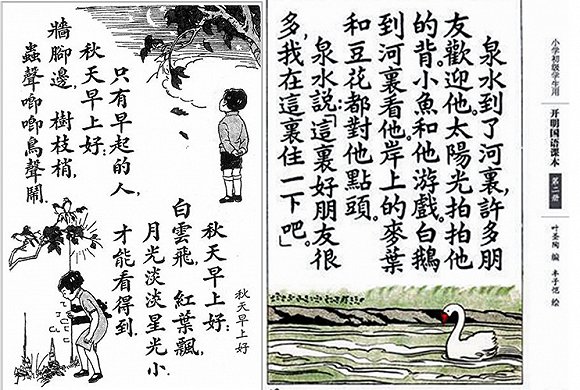
Kaiming Bookstore and its publishing organization are famous for publishing primary and secondary school textbooks and young people's books. Under the purpose of "creating a good cultural atmosphere, advocating new ideas and life trends, and supporting new writers", they have won the reputation of "Friends of Youth". However, the good times did not last long. After experiencing the suppression of cultural policies and the dangers of economic stagnation in the publishing industry, Kaiming Bookstore merged with China Youth Publishing House in 1953, ending its 27-year journey. During the textbook craze of the Republic of China in the past few years, the textbooks previously released by Kaiming Bookstore, such as "Kaiming Mandarin Textbook" compiled by Ye Shengtao and illustrated by Feng Zikai, are still well received by readers.
During the Republic of China, there were many bookstores like Kaiming Bookstore that went through ups and downs, such as Laiqingge, which specialized in the sale of ancient books, and the French salon-style True Beauty and Goodness Bookstore. They all had a place in the bookstore industry in the Republic of China, but eventually withdrew from the stage of history. According to statistics, there were 150 bookstores in Shanghai in 1911 and 261 in 1935; by 1946, this number became 273; in 1948, there were 608 bookstores in Shanghai. Over the past thirty years, the number of bookstores in Shanghai has been on a linear upward trend, far exceeding that in other regions. Yu Zilin, former editor-in-chief of Shanghai Bookstore, once jokingly said: "At that time, paupers also opened bookstores on Sima Road (Fuzhou Road)."
“At night on Fuzhou Road, when the shops are closed, a group of street stalls will appear, mostly selling books, but also selling other products. They all light a carbide lamp for lighting. This kind of lamp emits a smell, but will not be blown out by the wind.”Yu Zilin recalled the night scenery of Fuzhou Road in "Shanghai Cultural Street Old Dreams". During the Republic of China, Fuzhou Road and its surrounding sections were known as cultural streets in people's minds. There were many bookstores and most major publishing houses (such as the Commercial Press) gathered here. It was a unique cultural center in Shanghai. The history of Cultural Street and the Bookstore of the Republic of China was as exciting as the feasting and feasting at that time.
After 1842, Shanghai becameIn order to become a treaty port, foreign missionaries and merchants took the lead in opening libraries, publishing books and newspapers in Shanghai, and also used advanced printing technology to replace the ancient engraving method. Western learning spread eastward, and Shanghai quickly became the publishing base for Western translations and new textbooks, starting the process of China's modern publishing industry. At that time, Shanghai had become a foreign trade port and had concessions. The society was relatively stable, and the economy and culture were developing rapidly, which naturally promoted the development of the cultural and entertainment industries, including publishing. While people are singing and dancing every night, the number of bookstores is also increasing day by day.
In 1888, Suzhou's Saoye Shanfang and Lvyintang came to Shanghai to set up branches (Lvyintang's Shanghai store was named Wenrui Building). These two bookstores, which were engaged in engraving and printing books, began to adopt modern lithographic printing technology after arriving in Shanghai. They were the early private publishing industries in Shanghai and the first two bookstores opened on Fuzhou Road. In 1913, Laiqingge, a second-hand bookstore (specializing in ancient books) established by Yang Yunxi in Suzhou in 1886, also opened a branch in Shanghai. Together with China Bookstore, it became the only two second-hand bookstores at that time. Laiqingge is a bookstore where "in addition to business, there is also human connection." Zheng Zhenduo often comes here to read books and drink tea. He praises the owner Yang Shouqi: "He (referring to Yang Shouqi) can show you some books, but don't buy them. He left this book for someone. This kind of communication Love is not simple." Later, Laiqingge moved to Hankou Road due to rising land rents and other reasons. Together with more than a dozen other used bookstores, it created this unique ancient book street, and Fuzhou Road gradually became a bookstore street with a new cultural flavor.
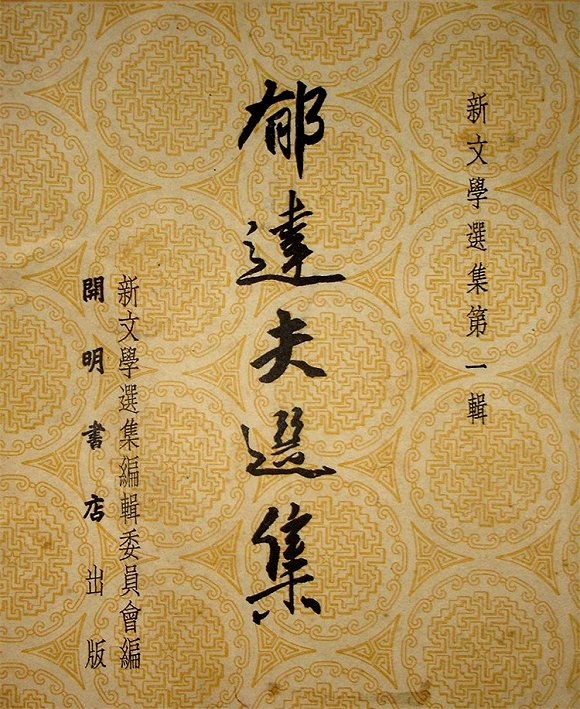
During the Republic of China, popular novels were extremely popular among readers. According to incomplete statistics, more than 2,300 novels were published across the country during the Republic of China. Zhengqi Bookstore on Shandong Road (Wangping Street) was best at publishing martial arts novels. After the May 4th Movement, the new book industry became popular, which was very different from the "Four Books and Five Classics" from binding to content. Kaiming Bookstore and Life Bookstore on Fuzhou Road are all bookstores belonging to the new book industry.
In the 1930s, department stores such as Xianshi emerged on Nanjing Road, which weakened the entertainment atmosphere of Fuzhou Road and strengthened the cultural atmosphere - the establishment of four high-rise buildings: the Commercial Press, Zhonghua Book Company, Dadong Book Company, and World Book Company , as well as the small and medium-sized bookstores that dot the streets and alleys of this area, making Fuzhou Road and its surrounding sections a cultural street famous overseas. This has led to the phenomenon of "poor people also open bookstores on Fuzhou Road" that sounds absurd, but may be true.
In addition to large bookstores, small bookstores with their own histories and characteristics are also worthy of attention. For example, Hezhong Bookstore, founded by Fang Jialong from Wuxi, entrusts a printing house to print in his personal capacity, and then sells books to make a small profit. This method of publishing and distributing books without opening a store is known as the "leather bag bookstore" in Shanghai. He once published Lu Xun's "Two Hearts Collection", which was banned by the Kuomintang, but was repeatedly banned and reprinted, and was praised by people.
On January 28, 1932, the Japanese army invaded Shanghai. Bookstores and publishing industries suffered huge losses. The Commercial Press’s printing press in ZhabeiThe brush factory, compilation office and Oriental Library were all reduced to ashes in the flames of war. When the Pacific War broke out in 1941, the Japanese army captured the concession. Eight companies including the Commercial Press and Zhonghua Book Company, as well as large and small bookstores in the section of Fuzhou Road from Henan Road in the east to Hubei Road in the west, suffered immeasurable losses under the iron heel of the Japanese army. Later, these bookstores closed during the socialist transformation in the 1950s. After the 1970s, the scene of numerous bookstores in Cultural Street was gone forever. Nowadays, there are only a few large bookstores left on Fuzhou Road and the surrounding areas, and a few door-to-door shops with the slogan "best-selling books at special prices."
Throughout the history of Shanghai’s bookstores and publishing industries in the Republic of China, the business development was diverse and tortuous, closely related to the economic and political environment at that time. At the same time, bookstores and publishing industries still have to rely on the market to "eat". As Yu Zilin said: "The formation of Bookstore Street did not happen overnight. Its starting point is book publishing, and its survival depends on the market."
"Love" is directly proportional to "knowledge",
Not directly proportional to the number of books purchased
During a visit to bookstores in the Republic of China this month, the slogan of Monsoon Book Garden included this sentence: "Readers have probably encountered a book by chance, and the texture of their lives has suddenly undergone some kind of drastic reorganization, and they have been lingering in this world of paper, words and thoughts ever since. The bookshelves that are filled day by day record time like paper rings." The words of nearly 100 words touched the hearts of many readers. After the event, Interface Culture conducted an exclusive interview with the event initiator of Monsoon Book Garden.
Interface Culture: What do you hope the participants will gain from visiting the Republic of China Bookstore?
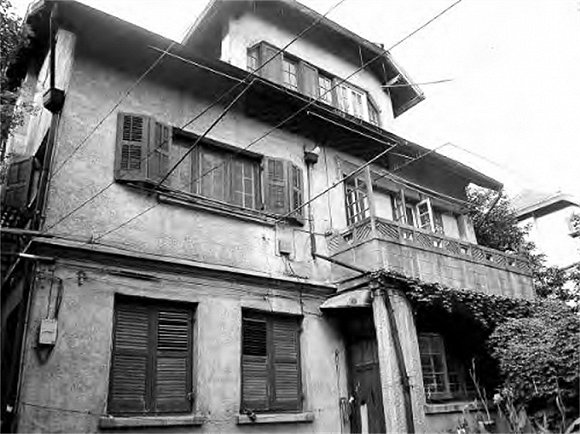
Monsoon Book Garden: This is an event that invites readers to participate together, adding a little fun to everyone's shopping. In fact, most of the used bookstores are gone even if you go to the old site. For example, there is a dilapidated house number on the wall, and you walk past it in a few steps, but if you know that this place used to be a bookstore, and many of the books you read as a child were originally introduced or published by this bookstore, you will stop here for a while and invest another cultural feeling in this city - "love" is only proportional to "knowledge" and never proportional to how much you bought, right? In other words, people who love books can express their love for books in this way.
Interface Culture: What are the reasons for choosing these twelve bookstores of the Republic of China?
Monsoon Bookstore: First, these bookstores all have stories, at least verifiable stories, or the people who run the bookstores are famous.For example, Crescent Bookstore was run by Xu Zhimo back then, or it sold good books and left a lot of relevant information; secondly, most of these twelve bookstores are relatively easy to find, concentrated on Fuzhou Road and Sichuan North Road, and can be found by just strolling down the street.
Interface Culture: You highlighted five bookstores including Zhenmeishishan Bookstore. How did you choose them?
Monsoon Bookstore: In addition to the rich information on these five bookstores, I also hope to use the characteristics of these five bookstores to show readers the full picture of Shanghai bookstores at that time. For example, Zeng Pu, the owner of Zhenmeishan, is an old literati. It is very interesting that an old literati runs a new bookstore. Furthermore, Lai Qingge is a representative of the old book industry. Selling ancient books was actually very prosperous in the Republic of China. For example, Kaiming Bookstore is a self-employed bookstore run by scholars themselves. It is a knowledge community in itself. How wonderful! We did not talk about the Commercial Press and Zhonghua Book Company, because these two bookstores (publishing houses) are well-known. We may want to show content that ordinary readers are not so familiar with. Moreover, the history of changes in these two bookstores is enough to write a book, and a WeChat post is too short.
Interface Culture: What do you think of the prevalence of used bookstores in Shanghai during the Republic of China?
Monsoon Book Garden: During the Republic of China, it may have coincided with the golden age of paper media and publishing industry. Low-cost printing technology, people's demand for information, and the spirit and pursuit of readers at a time when new and old cultures were changing, made the book industry grow wildly and thrive. Yan Bofei, the founder of Monsoon Book Garden, told us that behind the book market there is a market of ideas and opinions, so you can see the emergence and changes of people's ideas from this book market. Therefore, the prosperity of the book industry in the Republic of China is also the prosperity of ideas. Especially when old scholars are exposed to new knowledge, while our understanding is still there, the brilliance and thirst for knowledge that burst out when cultures collide are particularly fascinating. In addition, the prosperity of the book market has also enabled scholars to break away from the shackles of "learning well and becoming an official". Financial independence also makes it possible to be independent in thought.
Interface Culture: Due to various reasons, most used bookstores during the Republic of China have long ceased to exist. Do you feel it is a pity?
Monsoon Bookstore: Originally, bookstores were a low-profit industry, and there were not many opportunities to make big money even if they were hungry. Unless there is a monopoly on textbooks like today, huge profits can be made, but this loses the meaning of culture and is meaningless.
There are many reasons for the disappearance of used bookstores in the Republic of China. Some were public-private partnerships, and public-private partnerships were actually just talk. Just like the people in enlightened bookstores, they have been isolated and persecuted to some extent, which can be said to be the disintegration of this ideological market; some were poorly managed and closed down early. Today, with the decline of paper media, they are probably not much better. What is more pity is the used book industry. At that time, scholars would buy new and old books as long as they had money, but it seems that purchasing ancient books has become a very professional behavior now, unlike the grand occasion back then.
Interface Culture: Nowadays, new bookstores are becoming more and more complex. Bookstores are getting bigger and bigger, and they also integrate more functions such as coffee shops and even leisure shopping. What do you think of the changes in the form of bookstores? What are your expectations for the current bookstore industry?
Monsoon Bookstore: As for the changes in the bookstore business, it is all for survival, which is understandable. The question is, are we really reading, or do we just like the literary and artistic tone of reading? In the words of Yan Boxei, the founder of Monsoon Bookstore, the form of reading is becoming increasingly sophisticated, but are we really closer to the true meaning of reading? The revival of physical bookstores does not necessarily mean the revival of reading, but I know that the undercurrent of free thought has always been there, and given time, it will usher in a Renaissance for each of us.
