
It is said that Woody Allen wrote most of his writing while lying in bed. His bedroom has red walls and a pencil sketch of Marilyn Monroe above the fireplace. The table next to the double copper bed is covered with books. The table on the left is stacked with books he has recently read. So, what does Master Wu have to say about his own reading?
Interview begins
Interview | Woody Allen & Eric Lacks
Translation | Fu Yu Ji Yu
EL (Eric Lax, the same below): How did your interest in linguistics originate?
WA (Woody Allen, the same below):One of the advantages and disadvantages of being self-taught is actually a disadvantage to a greater extent, that is, you read a lot of books in order to receive a complete education. For self-taught people, there are staggering gaps between ordinary knowledge. So maybe I read a few books on semantics and linguistics, but it was very random. During your conversation with me, if you mention six subjects that I have studied, you will think that I am very knowledgeable. But if I suddenly mention something that every college student knows, I may have missed it due to self-study. Maybe it is still a very simple thing.
For example, my grammar is terrible. Really bad. Every time I submit an article to The New Yorker, it will be completely revised. They would always say, "You can't talk like that, it's not good English." (Film Editing) Sandy Morse was also always correcting my narration. When I showed him Saul Bellow's lines in "Zeliger," he said, "Can I change this? This is not grammatically correct." Actually, I didn't know grammar at all, but that was the basic knowledge taught in school. There are many more such things.
EL: Do you often read poetry?
WA:I’ve been re-reading a lot of poetry lately. I also have a lot of all-time favorites. If you had talked to me about poetry in the past few years, I would have said that poetry is like giving someone a piece of paper or a canvas, and he pours paint on it and says, "Okay, this is what Koonin and Kandinsky did, and I can do ten of these paintings in a day." He has no idea what's going on. You want to tell him, "That's not what they do. Just because you are pouring paint, you think they are pouring paint too, but they are not."
I have the same view on poetry. I have always loved poetry, but the more I learned about it, the more I realized the greatness of Yeats and the more I could appreciate him. I admire many poets, and I know everyone likes Eliot, and of course, in my opinion, he is a great urban poet. But in terms of what poetry can achieve, Yeats is simply amazing. I have always loved Emily Dickinson, William Carlos Williams, Robert Frost and E.E. Cummings. I also like Philip Larkin.
I feel like I could write poetry if I had a better education, because aComedy writers will have some background in poetry. You also have to consider the subtleties of the language, its musicality and rhythm. A missing syllable in a wisecrack can ruin the whole point. It's all about feel. Another time the editor would correct certain parts of my story, and I would say, "Don't you think if I add even one syllable, the whole joke would be over?"
Whether it’s a joke or a wisecrack, there’s some very subtle stuff, just like what you do in poetry. Relying on the harmony of words to express thoughts or feelings in a very concise way. These are all done unconsciously. For example, you say, "I'm not afraid of death, as long as I'm not there when the time comes." This simplified language method cannot express something with one more word or one less word. Maybe after giving it a try, I can find a better way to express my thoughts, but basically this is the most appropriate way to say it. This is not counted word by word. This is how poets create, not relying on counting to create rhythm, but relying on feeling.
EL: Didn’t you once say that it took you a long time to appreciate Shakespeare?
WA:I appreciate Shakespeare much more now than I did before. What strikes me as beautiful, truly remarkable, is his language, not his plays themselves. Those lines are so beautifully written. I don't think any of his comedies are funny, but the dialogue is so gorgeous, so gorgeous, you're completely won over. His plays themselves are clumsy and crowd-pleasing. His tragedy has some truly touching moments, but it's not constructed well at all. So the main reason why you are willing to watch him is the height of his language.
EL: Your films always make some philosophical jokes, such as in "Love and Death". Do you read a lot of philosophy?
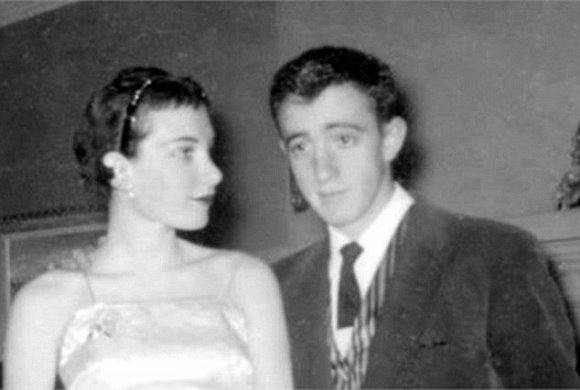
WA:I didn’t know I was interested in philosophy at first. I liked it right away, and Harleen was also learning it at the time, which kept me motivated. (Harleen Rosen, his first wife. The two married in 1956, when she was 17 and Woody was 20. They divorced in 1962.) Of course, I haven’t gone to college yet, but when I read my own books, I always unconsciously turn to philosophical things, which are particularly attractive to me. If I had had the opportunity to complete my education, maybe I would have gone to college to major in philosophy.
EL: What are your favorite philosophers to read?
WA:The most exciting thing was the German philosopher, but I was also very excited when I first read Plato. That kind of thing gives people artistic enjoyment, and Nietzsche does the same. I think Hegel is boring, but you have to grit your teeth and read it. In the end, you must admit that the most reliable philosophers are often those rationalistic and pragmatic philosophers. They are basically boring, but they are irrefutable. See the mostLater, Bertrand Russell made more sense and resonated with me more deeply, but he was not as exciting as Camus, Jean-Paul Sartre, or Nietzsche, who were extremely dramatic and explained the issues of life and death in shocking ways.
EL: What about German Expressionism?
WA:I was attracted to German Expressionism as a child. When I used to go to the Museum of Modern Art, I was always fascinated by the exhibitions of Kelchner, Schmidt Hotluff, and Nolde. I just connect with it, I love it.
EL: What do you think of literary criticism?
WA:I just finished reading George Steiner’s study of Dostoyevsky and Tolstoy ("A Comparative View of Tolstoy and Dostoyevsky: A Study from the Perspective of Old Criticism"), and re-read "The Idiot", which I am currently reading. Steiner's book is very good, but only some scholars can do this kind of comparative research. Steiner is one of them, and Isaiah Berlin is also one. These people are all great teachers. William Barrett's "Irrational Man" is also a classic. He can popularize a subject so that a brain-dead person like me can understand it.
EL: This is a bit too self-deprecating, but in your speech to Bob Hope at the Film Society of Lincoln Center, you said that after watching Hope and Crosby sit on the back of a camel and sing "It's like Webster's Dictionary, we also have sheepskin coats," "I knew immediately what I wanted to do in this life." This evaluation is very high, but to what extent is it true?
WA:That was when I was very young. I loved comedy as a kid and watched Bob Hope and Groucho Marx, who I grew up with. As a teenager, I learned to be like Hope, a joker with random witticisms. Later, when I grew up and became more educated - when I was about seventeen or eighteen, I wanted to go to the theater or do acting. My interest lies in writing dramas, and I want to write scripts for the theater, but I haven’t thought about writing comedies yet. At that time, I wanted to write something like Ibsen and Chekhov. I knew I had a talent for comedy because I was already making money writing comedy. My comedies continued to be successful, but I always wanted to make the leap to serious work. This has always been difficult for me, not to mention the fact that I simply don’t dare to throw away the things that have made me famous and rich and take the risk of writing dramas that may end up being nothing more than soap operas.
EL: Could it be understood that you view your superb ability to write comedy as a curse?
WA:I never felt like being successful in comedy was a curse. I think this is good because I can write some humorous things and also be an actor. These are all preparing me to achieve my highest ideal, which is to create some heavy and dramatic works - whether as a writer or a director. I never thought it was an unnecessary burden.
EL: You have written so many films, is it a challenge to name the characters? Some names come up again and again, like Hill, your aunt's name.
WA: People always ask me how I name my characters, and I always say that I tend to go with short names for ease of typing. I have used Louise many times because it is so easy to play. There will be a lot of Blint and Grey, it's always Mr. Blint, Mr. Grey. And Abel or Hill. I could never bear the name Priscilla or Murgatroyd.
EL: When did you come into contact with Chekhov and other “serious” writers?
WA: When I was about to graduate from high school, I started dating girls, but they thought I was uneducated. I thought those girls were so pretty: no makeup, silver jewelry, and leather bags. I would ask someone out, and she would say to me, "What I want to go to tonight is Andres Segovia's concert." I'd ask, "Who is that?" And she said again, "Andres Segovia." I had no idea what she was talking about. Or a girl said, "Have you read this Faulkner novel?" I said, "I read joke books. I've never read a book in my life. I don't know anything."
So in order to keep up with the girls, I have to read. I instantly fell in love with Hemingway and Faulkner, Fitzgerald to a lesser extent. Then I started reading plays. I remember when I first started writing comedies I said to Abby Burroughs (one of his in-laws, Woody's uncle, was married to Burroughs' aunt), "I really want to write a TV show."
He said, "You don't want to write TV series all your life, do you?"
I said, "Just write, why not?"
He said, "You should consider theater. If you are really talented and want to write comedy dialogue, you should go to theater."
I said, "Maybe movies are better. Don't everyone who does theater want to do movies?"
He said, "No, quite the opposite. All the screenwriters in California want to write a play for Broadway. They all think so."
At that time, film screenwriters were worthless, they were just unknown, and their works were cut up at will, but they were big names when they wrote dramas. So I also started going to see some dramas, and at that timeI'm 18 years old.
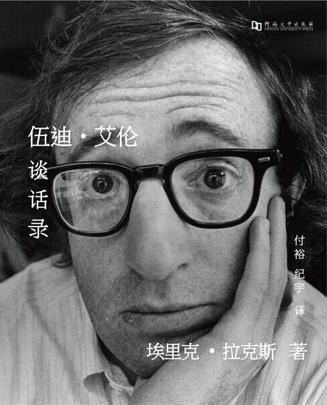
(US) Written by Eric Lacks Translated by Fu Yu and Ji Yu
Henan University Press 2016-9
