
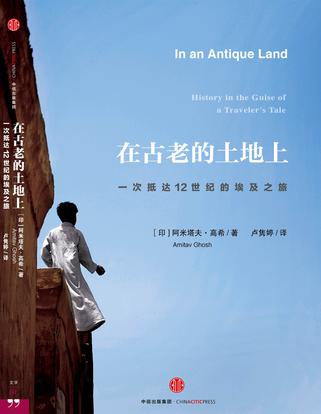
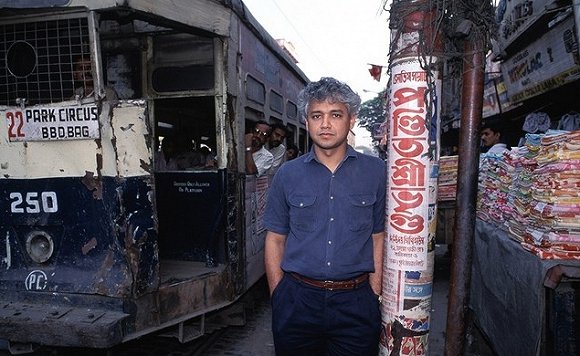
A head of white hair and black-rimmed glasses make Indian writer Amitav Ghosh look more like a scholar, and perhaps he is. After reading Ghosh's first non-fiction work "In the Ancient Land", historian Duara praised him as an "imaginative historian" and a "charming ethnographer".
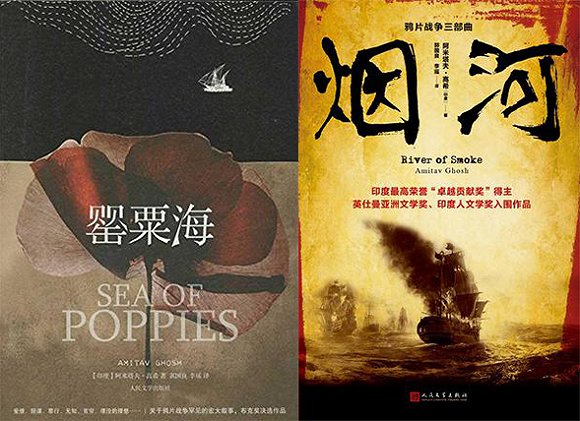
Ghosh was born in India. He is one of the most influential writers in the contemporary English literary world. He has won many international awards including the Medici Literary Prize in France, the Mahadhaya Academy Award, India's top literary award, and the Arthur C. Clarke Science Fiction Award in the United Kingdom. He was also shortlisted for the Booker Prize. Shen Dansen, associate professor of history at City University of New York, Baruch, said: "Fiction based on painstaking historical research is one of the most admirable features of Amitav Ghosh's works." This can be seen from his "Ibis" trilogy (also known as the "Opium War Trilogy"). The three works "Sea of Poppies", "River of Smoke" and "Sea of Fire" tell the story of the opium era. He used history as a clue to explore the historical interactions and connections between India and China through a large amount of information and on-the-spot investigations. He looked at the big history from the small figures and "reawakened a sense of moral, humanitarian and, most importantly, historical participation in public reading (without any preaching)."
During the Beijing International Book Fair (BIBF) in early September, Amitav Ghosh accepted an exclusive interview with Interface Culture. We had a conversation about his works, writing experience, Sino-Indian literary exchanges and religious conflicts in today's world.
Learning a language to write a book
Interface Culture: "In the Ancient Land" was published in Chinese 25 years later. Readers can discover considerable details of Egyptian history, and the description of the language is even more complicated and serious. What kind of investigation or writing efforts are behind this?
Ghoshi:My actual efforts far exceeded expectations. When I first wrote this book, I thought that the historical materials from the 12th century had been translated, but in fact they had not. So, I had to learn a whole new language, Judeo-Arabic, which was a really difficult foreign language and I spent a lot of time decoding it. It took me three years to write this book, and even longer preparations before that. This writing experience is very strange to me. I want to write it in the bookIn dealing with the stories and relationships of three extremely sensitive ethnic groups-Jews, Muslims and Indians, I have to keep it real and strive to be recognized and accepted by different readers.
Interface Culture: The book "In the Ancient Land" is an intertwining of time and space. One clue is your research experience in the Egyptian countryside in the 1980s, and the other clue is the experience of a Jewish businessman based on historical data from the 12th century. This book is somewhat difficult to define, part nonfiction writing, part anthropological field notes, and part historical novel.
Ghosh: Someone once said this to me, but this book is completely non-fiction writing, without any fictional content. It contains parts such as history, anthropological investigation, personal diaries and even journalist interviews. Some people say that the double spiral narrative structure of this book is very similar to the fictional style of a novel, but I think fiction refers to the content of a book, not its structure. The two parts of the book are completely different. How to make the story of ancient Egypt intersect with my observations of modern Egypt at a certain point is the most difficult part.
Interface Culture: This book is rich in details. In the narrative, you will trace the origin of a word and try to conduct a lengthy semantic analysis. Are you worried that this will affect its literary quality or disrupt the reader's reading rhythm?
Ghosh:I am not very worried about this. I am very interested in language itself, so the content of language itself is also a part of my writing. When this book was first published in 1992, it had almost no sales or reviews. The publisher said at the time that it was "like a stone sinking into the sea." However, 20 years later, this book is still being translated and read. Not only has it survived, it has also been translated into Arabic and Hebrew at the same time, and is accepted by readers in both cultural contexts.
Interface Culture: You must have been asked by many people about the influence of your anthropological background on your writing.
Ghoshi:Yes, many people have asked me this question. But I really can’t tell what kind of impact it has, because I also learnedHistory, working as a journalist, these backgrounds or experiences exist in my mind in different ways, and together they influence my writing. There are undoubtedly a lot of notable similarities between them, such as the need to walk around, do research, talk to people, and take some notes.
Today's religious conflicts are "new problems" created by the times
Interface Culture: In this book and other works, religious conflicts have always been a topic of concern and discussion for you. There are many antagonisms and misunderstandings between Hinduism, Islam, and Christianity. Do you think religious conflicts are part of or the final result of the "clash of civilizations theory"?
Ghosh:Actually, I do not agree at all with the famous "clash of civilizations theory" proposed by Samuel P. Huntington. This is a misunderstanding of the nature of the problem. Egypt is one of the counterexamples of the clash of civilizations theory. As an other from a foreign civilization, I can also establish friendship with local people who believe in Islam. Immigrants in India also get along well with local people. This to some extent shows that the theory of clash of civilizations is wrong. Of course, the book "In the Ancient Land" describes the relationship between Judaism, Hinduism, and Islam in that place. Even though they have misunderstandings with each other, they can coexist harmoniously.
Interface Culture: What do you think of religious conflicts in the world today? When people mention the Middle East and Islam, they immediately think of ISIS and terrorism. Has Islamic civilization been demonized to some extent?
Ghoshi:Perhaps this is the question I most want to explore in my book. In the past, when people spoke of such religious conflicts, they tended to think of them as "old" issues stemming from history, as old as the land itself. Is this true? In ancient times, Jews and Arabs, Hindus and Islamic believers could coexist and maintain lasting peace. So, don’t believe those who tell you that these religious conflicts come from history. The problem we face today is a very new problem arising from modern society.
Obviously, the problems that arise in Syria and Iraq stem directly from the US invasion. This is a choice made by the United States, and the disastrous consequences that a war can lead to are unimaginable for those of us who are outsiders. When a society experiences a terrible change or trauma, many strange and entirely new belief systems are quickly established. I can give an example from China to illustrate this issue. The First Opium War caused great harm to ChinaAfter a heavy defeat, the Taiping Heavenly Kingdom rose up, and their belief structure was also very strange. The Taiping Rebellion ultimately led to the deaths of 20 million Chinese, and wars are often the beginning of things far worse than themselves. In many ways, the Iraq War and the Opium War are very similar. For example, they both used nice-sounding banners such as "free trade" and "liberalism."
We can also see that the consequences of the war in Iraq are expanding and worsening day by day, and do not end with the end of the war, affecting Turkey and affecting Europe with the flow of refugees. However, we must also realize that this crisis is far more than a simple political dispute in the Middle East. Some larger events are also having an impact, such as global warming. From 2006 to 2008, Syria experienced a long and severe drought. In order to survive, a large number of farmers had to abandon their land and move to cities. The society was in chaos and the Syrian government failed to manage the situation effectively. All these factors are interconnected and interactive, and together they shape the new problems we face today.
Interface culture: You once wrote an article in the New Yorker's 9/11 commemoration issue, mentioning that your neighbor and friend Frank chose to stay in the World Trade Center to help others and unfortunately died on 9/11.
Ghosh:Yes, that experience was painful for us. I happened to be in New York when 9/11 happened. My daughter was 10 years old and it was her first day of school. She was right across from the World Trade Center in New York, and she saw the whole thing. When I rushed to pick her up, she only said one thing to me: "I saw it all happening."
I like Naipaul, but I disapprove of him in many aspects
Interface culture: Do you prefer reading or writing non-fiction or novels now?
Ghosh:I read a lot of non-fiction, but personally, I prefer writing novels. The experience of creating these two types of works is completely different. Although writing novels gives me more space to imagine and create, it is far more challenging than non-fiction writing. Writers have to think clearly about many things - what kind of story to tell, how to tell it, where the meaning and concept behind it should be, etc.
Interface culture: People often compare you to V.S. Naipaul.
Ghosh:Naipaul has indeed influenced me and my generation of contemporary Indian writers. When I was growing up, Naipaul was already very famous, so I read a lot of Naipaul's books as a teenager. Naipaul has a profound influence, but my creative style is completely different from his. We both write about India and our own travel experiences, but I disagree with his expression and understanding of India in many aspects, but it doesn’t matter, this does not affect my liking for him.
Interface Culture: Can you give an example of your disagreement with Naipaul?
Ghosh: Well, it’s been so long that I can’t remember any specific examples. But some of his representations of India or Islam do not seem to me to be true representations.
Interface Culture: You are writing about India in the United States. As a non-local writer, do you have identity issues when writing? Would you consider yourself a stateless person or an Indian? When people talk about your books, they emphasize your Indianness, like a label. A Chinese female writer living in the United States once said that she tried to write a novel without any Chinese characters as a sign of overcoming identity problems. Do you have similar thoughts?
Ghosh:Identity is not a problem for me, I am who I am, and I don’t think about it so much. I think if you are born in the United States or the Western world, identity can be a disturbing thing, but I was born in India and I don't care much about identity. I have a home in the United States and a home in India, and for me writing in both places is just moving from one desk to the other. I can accept labels given to me by publishers, reviewers or readers, because I am Indian.
Interface culture: There are especially many identity labels for authors from third world countries. Is this one of the characteristics of the post-colonial era?
Ghoshi: Maybe it is related, but I think the situation is becoming more and more complicated, and labels can no longer explain the problem. More and more Asian writers were born in the West, and under the environment of Western cultureGrowing up and learning to write, it is difficult to simply define him as an "Asian writer".
An interesting thing is that most American writers write for American readers, with a very concentrated readership, while many works by Indian or Chinese writers have a wider readership, have been translated into various languages, and spread under different cultural backgrounds.
Interface culture: Is there any difference between writers writing about India in India and writers writing about India in the United States?
Ghosi:Writing about the motherland in other places does give people a different perspective, but now this difference is getting smaller. Writers who write locally may often go abroad to live, and I will often return to China. I have a large Indian readership and it is very important to me that my works have had some impact on Indian society.
I think the most important difference is not where you write, but in which language you write - in Hindi or, as I do, in English. Unfortunately, Indian literary works are rarely translated into Chinese. There are many excellent works among them, which is a great pity.
Someone asked me why I chose to write in English, saying that it was the language of the colonizers and whether I was controlled by English. I found this question very interesting. Language is a tool used by people to express, and anyone can use it to express anything. Take the Chinese language in the 1940s, for example. The Communist Party used it, the Kuomintang used it, and overseas Chinese also used it—different people used the same language to speak their own words. People will not be controlled by language, we control language.
Asian literature must establish its own evaluation and communication system
Interface culture: There seems to be a lack of direct literary exchanges between China and India. Chinese readers often know an Indian writer and his works through a certain Western publication or a certain award. Chinese works published in India are also selected according to Western standards.
Ghosh: Indeed, this is very unfortunate. Asian literature needs to establish its own evaluation standards and systems that are different from those of the West. It is undeniable that language can be a big barrier. But I think publishing houses have an obligation to discover outstanding authors and works from other countries and translate them into their own countries. Trust between the publishing systems of various countries can promote this kind of literary exchange.
itsIn fact, Chinese movies are very popular in India. They have not been screened by the Western evaluation system, but arrived directly in India, such as kung fu movies and the like. Conversely, some Indian movies have also received good responses in China, such as "3 Idiots". I think literary exchanges can learn from movies. There is no need to go through the selection and evaluation of Western standards. The two countries can achieve direct literary exchanges. I have communicated with many Chinese publishers. I think popular literature from China and India, such as romance novels, fantasy novels and many other types of works, will definitely have a good market and response in the other country. We need to change our thinking. Works that have won awards in the West are not necessarily good works. China and India are interested in each other's culture. Good books from one country also have a readership in the other country. The movie "Three Idiots" received high ratings in China, but no one published the original book. This is a pity. I bet Chinese readers will like that book. Many commonalities between Chinese and Indian cultures in the book can arouse resonance, and this resonance is almost impossible to find in the Western world.
Interface culture: In recent years, Indian literature has been quite active in English literature or the entire world literature system, and many first-class writers and works have emerged.
Ghosh: It is true, and it is becoming more and more dynamic. More importantly, this is not only happening in the field of literature. In the past two decades, Indian culture has shown a general trend of creative explosion, including many fields such as television, movies and modern art. A large number of well-known scholars and thinkers have also appeared, such as Ashis Nandy, Homi Baba and so on. In fact, the same is true in China.Chinese-style artwork is very popular internationally, and Chinese writers have also won the Nobel Prize for Literature.
Interface culture: Although there is a fairly long border between China and India, there are very few cultural exchanges, at least much less than the cultural exchanges between South Korea, Japan and China.
Ghosi:This is a very strange thing, and I am also curious about the reason. (As an aside, South Korean culture is not popular in India.) We are also very unfamiliar with each other's history. Some Chinese readers told me that before reading "The Opium War Trilogy", they had never thought about where opium came from. In fact, Indians did not know that the opium used in the Opium War was grown in India and then transported to China. This seems to be a blank territory, and the participants in historical events themselves are not aware of it.
Interface Culture: How did the Opium War affect China and India?
Ghosh:In my opinion, the impact of the Opium War was quite far-reaching. For China, the Opium War was the beginning of China’s modern history and promoted the formation of modern China. To a certain extent, it was even the beginning of Asian modernization. For India, the situation is completely different. The opium-growing areas became very underdeveloped, partly because the cultivation of poppy had rendered the soil infertile. Poppy agriculture has had various destructive effects on all aspects of local society. Many of the negative effects are unknown to us now, but will gradually become apparent in the long-term historical process.
