
According to the Chinese zodiac, this year is the Year of the Monkey. Coincidentally, this year is also the 75th birthday of the famous curious monkey in American children's literature. Ronald Reagan may have loved The Man Who Made a Difference, in which Tarzan was made to laugh by the apes, but children will always love Curious George.
Margaret and Hans-August Ray created seven volumes of picture books around this curious little monkey and his friends. Since then, various sequels have been continuously updated, but when I was a child, I only knew the first three volumes. Curious George (1941), Curious George finds a job (1947), and Curious Geroge rides a bike (1952). By the time "Curious George gets a medal" came out in 1957, I had outgrown children's books and that's when I started reading Uncle Scochi comics and growing more and more interested in Superman comics. Decades later, I came to enjoy the next three sequels: Curious George flies a kite (1958), Curious George learns an alphabte (1963), and Curious Geroge goes to a hospital (1966). A year later, as I began reading the story of the mischievous little monkey over and over to my granddaughter, George looked like a gorilla to me.
Even now that I have entered my twilight years, I still clearly remember how happy I was when I devoured the first few Curious Monkeys books I found on the bookshelf. At that time, I particularly liked the unlucky puppies, chickens and rabbits in the serials, as well as the sand drawing record animation of "Dick and Jane".
But there is also a resourceful hero who is enviable and even wants to surpass him. Who wouldn't want to be Curious George than a good boy who is careful in his words and actions and obeys his teacher's instructions? Maybe George is just a monkey, but George's amazing achievements are all the dreams of a second grade elementary school student.
Nowadays, George's troubles may be criticized because he and his friends celebrate being mischievous and lazy, or because the picture books are all white, or because we smoke a lot of cigarettes in George's presence after a big meal. Today's parents and children will decide in the future whether these violate principles. We know that the creators of Monkey George are wise and kind, live modestly and speak out for what they believe in, including the civil rights movement.
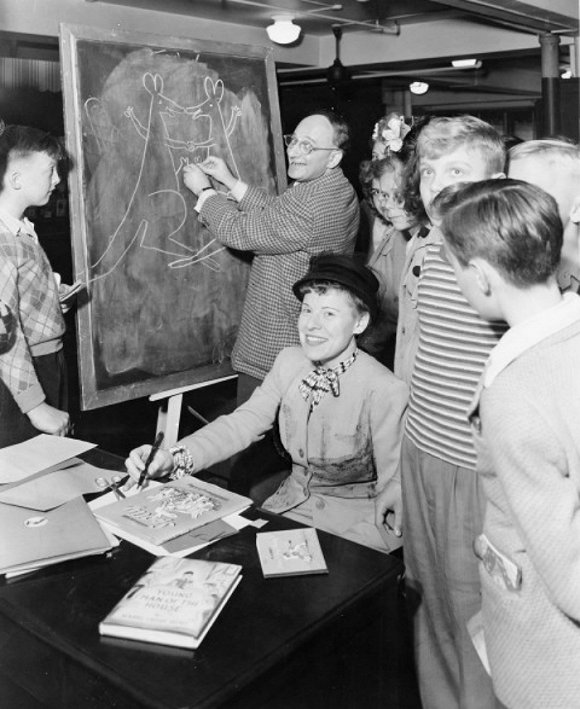
Hans August Reersbach (1898-1977), who was born into a German Jewish family, and his wife Margaret (1906-1996) lived in Brazil for a while when they were young, and they jointly established Brazil's first advertising agency. Before that, Hans sold bathtubs and kitchen sinks up and down the Amazon for more than a decade. In 1936At that time, the couple returned to Europe, and in the next four years they began to write stories and create picture books. In the original inspiration, George was actually named Fifi, which sounds funny. In various translations, he was sometimes called Zozo, Bingo and Coco.
When the Nazis occupied Paris in 1940, the Reersbachers fled on bicycles (with a draft of Curious George in hand), eventually arriving in the United States, where they shortened their surname to "Ray." Fortunately, the couple's British editor was working at the Mifulin Group at the time and wanted to receive their legendary story book as soon as possible.
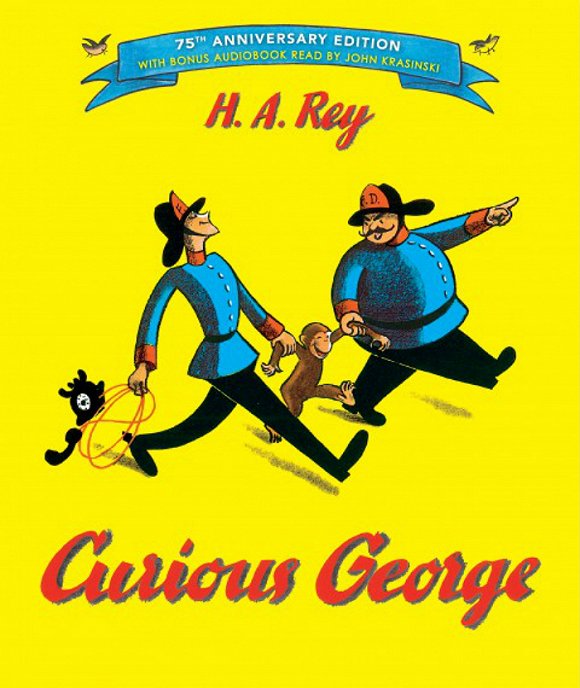
Unexpectedly, "Curious George" did not become an instant hit. Sales were bleak in the mid-1940s, and printing was almost out of print. But you can't bring down a good monkey who's a little too curious. At the end of the 20th century, more than 25 million copies of Curious Monkey's seven volumes were printed. His image jumped out of the book and became active on the big and small screens, as well as various peripherals. Now his reputation can rival "The Cat in the Hat". This week, Mi Fulin published the first commemorative edition of Curious Monkey, and also published a new edition of Louis Borden's 2010 "Journey to the Defense of Curious Monkey," Ray's autobiography, aimed at a younger generation of readers.
Indeed, it’s a little curious that these frivolous yet soothing creations have survived for so long. For example, one of the overrated sequels is Curious George Gets His Medal. There is a subtle foreshadowing at the beginning of the story, where the little monkey receives a letter. George just played the letter over, and like Chekhov's Gun, the letter appeared in the background for many pages, almost forgotten, until it reappeared in a dramatic turn. Before that, though, George had made a mess of things: knocking over a bottle of ink, flooding an entire room with water, going to a farmer's house to find a water pump, accidentally freeing a bunch of pigs from a pen, riding a cow, hiding in a drying line of laundry to evade pursuers, then hopping in a truck to visit the city's science museum, and finally screwing up an exhibit of dinosaur fossils while trying to pick coconuts from a fake coconut tree. At the critical junction, the man in the yellow hat held the soon-to-be-forgotten letter and helped the little friend avoid punishment. It turned out that the letter was from Professor Weisman inviting George to light the rocket, and then quickly parachute before rushing out of the earth. George seemed to suddenly become dizzy and was full of suspense. Can he escape in time? In the end, everything comes to a happy ending, with the little monkey winning an Olympic-style gold medal.
Marguerite and his wife used simple language to describe the turning points of the mountains, and they succeeded in doing this in all their creations. This is the real power that comes from works of art. Ray's watercolors are bright and cheerful; each scene shows action, often with people running, or is richly detailed. These pictures, whether close-up or panoramic, possess a refreshing and salutary charm that is difficult to describe and irresistible.
(Translation: Li Ruiyi)
