
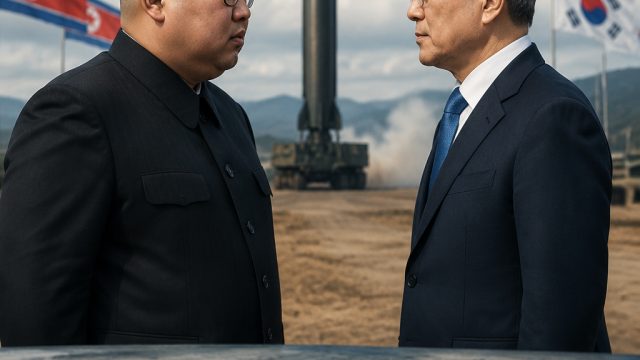
The Korean Peninsula remains a focal point of international attention, with recent developments stirring conversation and concern among analysts and policymakers alike. As tensions continue to fluctuate between North and South Korea, understanding the current landscape is crucial for grasping the potential implications for regional and global stability.
Current Status of North-South Relations
As of June 2026, the relationship between North and South Korea is marked by a complex interplay of military posturing and diplomatic overtures. Following a recent series of missile tests conducted by North Korea, the South has ramped up its defensive measures, prompting discussions about security strategies within allied nations.
Military Developments
- North Korea's missile tests have raised alarms in both Seoul and Washington.
- Joint military exercises between South Korea and the United States are being intensified as a countermeasure.
- Increased surveillance activities in the Yellow Sea indicate heightened tensions.
The Role of International Stakeholders
International stakeholders, particularly the United States, China, and Japan, play a pivotal role in shaping the dynamics of the Korean Peninsula. Recent reports highlight a shift in China’s approach towards North Korea, suggesting attempts to balance support with caution to avoid regional instability.
China's Strategic Interests
China's involvement is crucial as it seeks to maintain its influence in the region while managing its relationship with both Koreas:
- Support for North Korea's regime is viewed as a buffer against U.S. military presence.
- China's push for denuclearization talks reflects its desire for stability.
- Collaborative economic initiatives aim to improve ties with South Korea.
Diplomatic Efforts and Future Prospects
Currently, there are ongoing discussions surrounding potential diplomatic engagements aimed at reducing tensions. However, skepticism remains as previous talks have often stalled or resulted in minimal progress. The importance of sustained dialogue cannot be overstated, especially in light of the implications for regional security and economic collaboration.
Implications for Global Security
The repercussions of any escalation on the Korean Peninsula extend beyond the region, affecting global security dynamics:
- Increased military activities may lead to an arms race in East Asia.
- International markets could experience volatility in response to heightened tensions.
- The potential for humanitarian crises in North Korea could draw international responses.
Conclusion: The Importance of Awareness and Engagement
As we witness the unfolding events on the Korean Peninsula, it is imperative for the global community to remain informed and engaged. Understanding the motives and actions of all parties involved is essential for fostering peace and stability in this critical region. Continuous monitoring and dialogue are key, as the stakes are high not just for the Koreas, but for international relations as a whole.
