
I often make a warning in my mind before watching domestic literary and artistic films. If a director keeps explaining how this movie is in various interviews and road shows, how difficult it is for everyone, and how hard he works, and is afraid that the audience will not understand or know his master's lineage, he will mutter that this movie will probably be scrapped. "Yangtze River Pictures" is a bit like this. The film was shot very loosely, but the main creator was very tight when participating in activities and just explained. I thought, it’s broken again.
In order to prevent others from saying this, you movie critics are just a bunch of guys who watch media screenings and free movies, eat and drink them, and even yell after watching them. So I went to buy a ticket to watch "Yangtze River Pictures" alone on the weekend. While watching, I sighed with regret. The whole film seems to be very literary, but the weakest thing is literature. The main plot, sub-plots, fiction and reality, and the relationship between the characters are chaotic. It is fragmentary and incomplete and talks about itself. The characters are almost crazy, and the story is almost non-existent. A waste of film, a waste of Li Pingbin’s scroll-like photographic composition, and the majestic geography of the Yangtze River. Another failure in which the form is greater than the content. The master is photographed by an ordinary director. The master's advantages are more obvious, and the director's shortcomings are also more prominent.
I have a habit of watching movies. While watching a movie, I like to summarize a short resume of the characters in the movie, including their zodiac sign, birthplace, life background, personality origin, motivation, education level, mental status, etc. Most excellent movies can withstand such consideration. If you want to analyze the characters, you must draw a character relationship diagram. It is almost impossible to make a resume for the characters in "Yangtze River Diagram". The clues of these characters are broken, their lives are not grounded, they come and go without cause and effect, and their emotions are unpredictable, like wandering ghosts or undead.
To a certain extent, artists and creators are narcissistic. How to express narcissistic things into a consensus and resonance, and then form your own style, is very challenging. There are thousands of methods and techniques, and not many people can achieve it satisfactorily. "Yangtze River Pictures" is also narcissistic, so narcissistic that he has no friends. The director has no desire to explain the past of the characters, and only indulges in the atmosphere created by himself. Just like Qin Hao's inexplicable tears several times, which may have moved the director himself, but everyone doesn’t know why. In addition to reflecting the essence of straight men’s cancer, what else can sexual intercourse explain?
The Yangtze River is known as the Mother River because of its gentleness and affection, winding in the fertile south. Most of the film and television works that shoot the Yangtze River have a southern color, and are covered with metaphorical veils, releasing the moist poetry and desires of many people. In the 1980s, "Ba" "Mountain Night Rain", "The Mist of Goddess Peak", "Wushan Rain" and "Changing Face" in the 1990s, the division of Sichuan and Chongqing at the end of the century, the Three Gorges was gradually completed, and countless towns magically disappeared under the water, "Three Gorges Good Man", "Bing Ai" and "Drowning" were at the right time. "Yangtze River Picture" is obviously very ambitious. It wants a "magnificent scene" like "Along the River During the Qingming Festival", but the quality is not enough. The audience only sees scattered fragments.
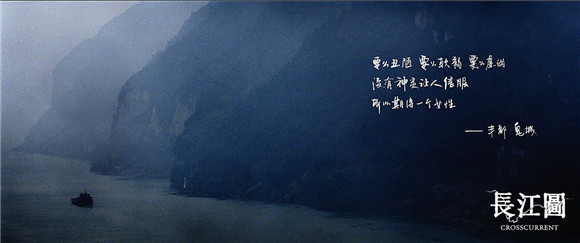
The director was caught up in a self-motivated grand narrative, and wanted to use small characters to explore the people and things that suddenly disappeared in an era, but was unable to do anything. He only completed the recording of the natural background of the Yangtze River, but did not complete the sketch of the spiritual living body of "people", so the story and characters are very awkward. The photography, art, and music are all on the right track, including the actors, but the screenwriting and directing skills are too poor. It could have been a masterpiece or a masterpiece, laying out a map of the fate and ups and downs of intellectuals in the 1980s. In the end, all I can say is "Alas." If a director controls a subject that he cannot handle well, the work he produces will be destructive narcissism and viral disaster.
The world is so unfair. Let’s just talk about creative people. Some people are very talented and work a little harder.He can become a famous director in no time, but he has many other things on his mind. He only treats movies as a plaything. He shoots casually, and people applaud him, but he is very playful and his heart is elsewhere. He may prefer eating, drinking and having fun than movies. Some people with average talent, like a stubborn potato, regard movies as their inner glory. They hold back their brute strength and always want to make a blockbuster success, but the works they produce are often terrible. "Yangtze River Pictures" is the latter.
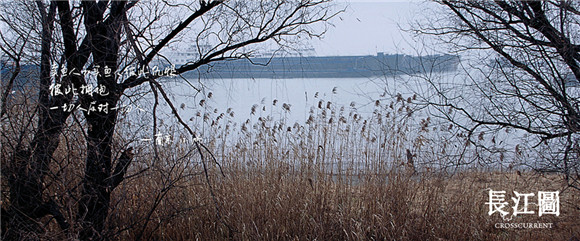
With the benefit of hindsight, let’s sort out the story of the movie. Given the current duration, what is the ideal correct way to open “Yangtze River Pictures”? In my imagination, it should be like this:
In the late 1980s, An Lu, a poetess who was burning in her heart, took Gao Chun's father's boat and sailed up the river. As time went by, ambiguous feelings developed secretly. Anlu wrote poems in his diary every day. The manic depression accumulated in his heart and he still couldn't solve it. He once wanted to go ashore to become a monk and practice purification of the six senses. However, it was difficult to make up his mind and his wandering heart was not extinguished. When his boyfriend came to find him, his feelings were overturned. Later, his boyfriend committed suicide in the hotel in despair. Anlu continued to boat upstream, and soon fell into a coma and jumped into the Yangtze River. Many years later, when Gao's father passed away, Gao Chun took over the ship and found a collection of diary poems. During the boat trip, he recited it every day and immersed himself in it.
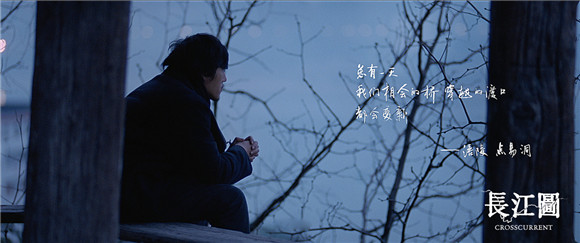
The story unfolds according to the above logic. The literary nature and the details of the characters' daily lives are more enriched and compact. The cliché of transporting nationally protected animals to gangs is removed.I dare not say how good it is, but at least the character relationships, levels, and era background are clear, and the audience has the patience to follow the characters to understand the symbolic backgrounds of the 1980s such as "Yangtze River Drifting", "River Tragedy", "Poet's Suicide", "Endangered White-tip Dolphin", etc., and they can glimpse the historical reasons behind the diary.
However, perhaps the masterpiece in the director's mind is not what it is now. Well, I just want to say that the eloquence of the director of "Yangtze River Pictures" is far greater than his film talent.
