
Text/Shuofang Editor/Chen Changye
The market fell into the ice cellar again, and domestic films were once again unable to save the market. Everyone is still reflecting on what happened to this year’s summer sales. Why did it suddenly stop increasing? Why does the market stop when ticket replenishment stops? Why do bad movies come one after another?
Some people say that it is the director who is not good enough and the screenwriter who is not good enough. Therefore, the glory of our domestic films in the first two years was whitewashed by ticket subsidy. In the end, we still cannot afford to support Adou. But as a practitioner who has personally experienced the craze in the past two or three years, I don’t think it is the directors who have caused the current situation – it is precisely that many of our directors are too diligent and comprehensive, which makes us ignore the lack of qualified characters behind the directors who should bear the responsibility.
Why is it that the director suddenly becomes a product manager? Whose absence makes the director work so hard?
Do you still remember that in the past two years, I kept advocating that directors should be product managers? Isn't it a bit contradictory for an artistic creator to have the so-called product manager mindset?
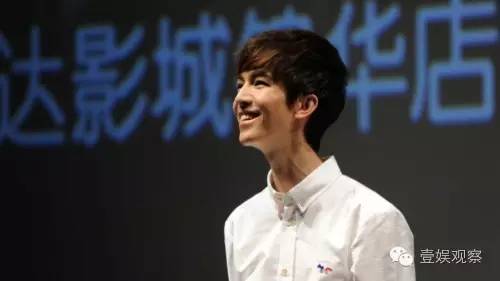
Because the film is the director's own child during the ten-month pregnancy, he couldn't bear the thought that the child would not be able to find a good job or a good wife when he grew up, so the director learned 10,000 skills and became a banker by trading stocks. The most incredible thing is that one of the basic tasks of directors now is to look at the market, always pay attention to the trend of films, similar products, and competing products in the same period. When answering questions from the media, they must talk about their expectations for the box office, participate in formulating publicity strategies, prepare materials, and may even have to endure the horror of being scolded to death for the film's promotional materials...
Are directors still reading novels? Do you have time to see the world? Can we still fall in love? Is there still time... to think?
No wonder everyone is saying that there is a shortage of directors - that's because the above-mentioned all-round excellent directors are too scarce - but this is not what the industry should be like. Looking at the entry in Baidu Encyclopedia, a director is the organizer and leader of film and television productions, and is a person who uses actors to express his own thoughts. He is the person in charge of bringing film and television literary scripts to the screen/screen. As the synthesizer of various artistic elements in film and television creation, the director's task is to organize and unite all the creative, technical and performing staff in the crew, give full play to their talents, and integrate everyone's creative work into one.
So, what does this have to do with product managers?
Looking carefully, the director looks more and more like a producer, and even an investor - isn't this an embarrassment to the industry?
What I want to say is, It is the shortage of qualified producers and qualified investors in the industry that has caused the shortage of so-called qualified directors, so that directors work too hard. Only a few lucky directors find suitable producers and investors, freeing them from the heavy work of others and completing their own work with all their heart.
Let’s start with the producer.
Without qualified professional producers, how can we talk about a producer-centered system?
We might as well go back to the beginning of the 21st century at the beginning of industrial reform. The production end of the Chinese film industry was faced with an either-or choice. Should it continue to follow the director-centered system learned from the Soviet Union, or should it start from scratch and adopt the producer-centered system followed by Hollywood commercial films?
More than ten years have passed, and I don’t know if you have noticed that the industry often shouts about the scarcity of screenwriters, directors, and actors. Few people have noticed that there is actually a serious shortage of professional film producers in the industry. The number of qualified producers is actually even more rare than the number of directors.
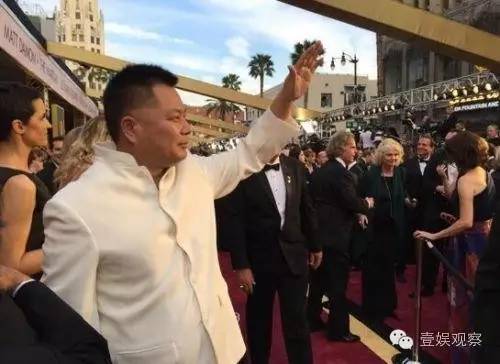
Indeed, everyone will mistakenly believe that the most indispensable thing in the domestic film industry is producers. If a Mancoff brand falls, five of them may be hit. But currently, in a large number of projects, investors also serve as producers, directors also serve as producers, or the director’s daughter-in-law also serves as producer. Some producers' professional skills are not up to par, and some producers are born with no right to speak - so, how can we talk about a "producer-centered system"?
So, what is a professional filmmaker?
Baidu Encyclopedia'sexplanation is basically accurate. A film producer is a producer of a film. He is involved in the work from the project selection stage or script development stage and is fully responsible:
1. Evaluation and determination of film topic development direction;
2. Selection, negotiation, communication and implementation of screenwriters, directors and starring actors;
3. Guide and assist directors and screenwriters in promoting script development and revision;
4. Formulation and control of budgets and plans;
5. Investment and financing structure combination; production structure combination; artistic creation structure combination;
6. Preliminary preparation, formation of a film crew, execution of filming and production, ensuring smooth and safe filming without overspending or overdue schedule;
7. Complete post-production and submission for review;
8. Production cost final accounting and financial review;
9. Assist investors to complete domestic and foreign publicity and issuance work, as well as domestic and foreignParticipate in exhibition awards and other work.
But true "professionalism" does not stop at these basic actions. Whether you understand creation, production, management, capital, andUnderstanding the market and the audience, being able to perform step by step in the above-mentioned work, and finally producing a qualified or even excellent film product are the dimensions of a producer's comprehensive capabilities. Therefore, the producer must be——
1. Have literary and philosophical foundation and heritage;
2. Have strong ability to communicate and interact with others;
3. Strong execution ability, able to use various methods to realize the set plan, or modify the plan according to local conditions and individual needs;
4. Be good at observation and summary, and have a unique forward-looking perspective on the market prospects in the next two to three years;
5. Have strong self-requirements and professional ethics.
Such a professional producer, through his or her unique experience, aesthetics and understanding of the market, helps the director make better creative choices and provides the director with comprehensive support, allowing him to present the film he has conceived to the maximum extent possible within a limited cost and period, and that is acceptable and recognized by the market; at the same time, he ensures the safety of investors' funds and maximizes investment returns through various combinations within the cycle.
Then, the producer gets a salary from it (or a share of the film's profits), and of course the regret or sense of accomplishment that prompts him to start over.
So how can our industry continue to have more professional filmmakers? It is basically difficult to cultivate producers with comprehensive capabilities by relying solely on professional studies in school.
On the one hand, the current domestic discipline construction cannot be closely connected with industry practice. For example, the film school's production management major has only just gotten rid of the question in recent years: "Do people who order box lunches need to open a major?" Although the ability training in many aspects has been taken into consideration in the setting of professional disciplines, backward teaching materials, lagging concepts, and lack of front-line practical experience among teachers are all embarrassing aspects of this discipline at present.
On the other hand, the cultivation of a producer's character, aura, structure, and vision can only be shaped by sharing the same fate with the industry. These qualities often determine whether a producer can form his own set of practical methodologies and unique film philosophy. Whether he can maintain his originality in the long-term social immersion and persist in a film dream that may even make him laugh at himself, determines whether a person can develop into a high-level professional film producer.
In the process of growing up as a professional film producer, the most important way is to cooperate with professional film investors and film directors and upgrade yourself through professional training.
So, what is a professional film investor?
The investor should be the one who checks and balances the power of the director and producer, so he must understand the film craft
The two most important tasks of a film investor are:
1. Raise funds;
2. Invest in projects (that is, invest in people).
Producers and directors decide what kind of film product will be produced, while investors decide which producer and director's project can receive investment and be launched.
The film industry is somewhat similar to agricultural cultivation, both planting in spring and harvesting in autumn - in fact, it is usually sowing in spring and harvesting in autumn. This process is the basic law and cannot be achieved overnight. Therefore, the consequences of the bad movies and the sluggish market of Chinese movies today must be the cause of the planting two years ago.
Let’s recall what happened two years ago?
A group of new investors have crossed over into the industry to invest in films and easily reaped returns, while a group of non-film practitioners have crossed over into the industry to become producers and directors and have easily achieved success. As a result, there were waves of investors following the trend - some projects were approved by investors with just a PPT and a one-sentence synopsis of the story. Some project investors did not consider whether the director was suitable for a certain type of project, thinking that anyone could make a movie. There are also some projects that looked at this year's hot topics and did not worry about the fleeting pop culture of the next year, boldly seeking solutions. As a result, a large wave of investors resolutely selected and funded a number of projects with inherent deficiencies.
In fact, investors who have been in the industry for two or three years should have already realized that the risks and entry barriers to movies are very high. Making big money from movies is not optimistic unless you are lucky.
The negative consequences that non-professional investors have brought to the industry are self-evident. Their shortcomings have suddenly brought the industry to a halt——
1. It is difficult for non-professional investors to establish a judgment mechanism for project investment returns:
Even if you learn to look at the genre and the main creators and starring actors, you will find after a few losses that you only know the basics - you can’t tell the inner qualities by looking at the genre. “The Hangover” is a comedy, but so is “Fragment”; you can’t tell the commercial prospects by looking at the main creators and starring actors. How big is the box office appeal of Zhang Hanyun and Angela Chang?
2. Non-professional investors lack bargaining power:
IP is a life-saving straw for non-professional investors to judge projects. However, for a so-called big IP, not to mention whether it has adaptation value, the entire project includes the original author, director, starring actors, producers, promoters, theater companies, and ticketing websites, and everyone needs to hold shares. The main investor company has less than one-third left, and friends and relatives can't even share it! Where can non-professional investors without competitive resources invest?
Non-professional investors who have no negotiating advantage and want to get the project will either lock in the IP at a high price; or encourage the filmmakers to pay premiums; or agree to a shockingly high profit sharing line; or simply form a gang to guarantee a minimum release, betting on the heartbeat; or try to game the financial model, playing the trick of the wool coming out of the pig.
Unexpectedly, after calculating the accounts, I found thatAt the box office, it seemed that the project was making money, but in the end, some people made money and others lost money - being able to divide the accounts may not necessarily mean that the profits will be shared.
As investors, of course, they are the only ones who really care about their own money. In fact, investors themselves have great power to select and check producers and directors. However, some investors are willing to transfer this right to others due to their lack of ability.or because of overwhelming confidence or passion, they interfere in the project even if they don’t understand it.
So where does the charm and value of a professional film investor reflect?
1. First of all, a professional film investor should be able to invest and control a film project.
At the beginning of the project, there must be an overall study and judgment of investment return and profit; therefore, the commercial placement, sponsorship, publicity, distribution, operation of derivatives, and even the final editing rights of the film are an integral part of the rights of professional film investors (of course, the director and producer need to cooperate in the specific work. But when it comes to the specific execution of each right, there should be a dedicated distributor and execution team, and the investor will make overall coordination decisions).
At the same time, professional film investors must strategically push the director to do everything possible to carve out a good work, and at the same time push the producer as much as possible to complete the work within the budget and planning cycle; and through overall planning for the market in advance, push and "torture" various publicity and marketing teams to generate endless inspiration, and use all emotional intelligence to work simultaneously with producers and directors to maximize the project's income and praise.
2. When participating in investment projects, professional film investors should make comprehensive judgments like Grandet.
Use your core competitiveness and industry advantages, comprehensively consider the resources and energy you are about to expend, negotiate cooperation conditions to the greatest extent, "shamelessly" explore the bottom line of both parties, and masterfully grasp the reasonable point of return on investment. If you evaluate that your investment risk is relatively high, no matter how big the IP or NB, you must give up.
Similarly, professional film investors should appear in the form of professional film investment companies. By formulating full-year or T+N year investment plans, rationally arranging funds, and carrying out project investment portfolios, they can achieve annual profits or even T+N annual average profits; professional film investment companies that develop and grow can balance the high risks of the film production investment sector by establishing various content and film-related sectors, achieve overall corporate profits, and at the same time gain more industry competitiveness and bargaining power, entering a positive cycle of development.
The starting point of professional film investors is to make good use of the capital in their hands, always looking for a dynamic balance point at both ends of the balance between producers and directors; the focus of professional film investors should be the future. They are the helmsmen of the film industry, making good use of capital to enable this sea area to be developed and expanded healthily.
Separation of three powers and mutual constraints: the cornerstone of the film industry
If there are more and more professional producers and investors, a new group of excellent directors will emerge in our industry. They will not have to hone their work abilities that have nothing to do with film creation, but can concentrate on bringing us an audio-visual feast, allowing us to be moved by the characters, stories and emotions contained in them.
If investors, producers and directors can perform their respective duties and work professionally, forming a tripartite relationship, this model of separation of powers will enable a project to enter a healthy cooperation & restriction relationship; if the entire industry is constructed with countless sets of such relationships, it can form a three-legged relationship.form a benign market system.
Then we can no longer talk about who is the center, and there is no need to force a person or a team to develop comprehensively beyond their own capabilities.
Films have always been collective labor. Imagine that one day when we make movies, there will be a professional in each of our positions to provide professional advice and perform professional work. What a beautiful tomorrow it will be.
