
The State Administration of Press, Publication, Radio, Film and Television has poured cold water on the booming live broadcast industry.
In the "Notice on Issues Concerning Strengthening the Management of Online Audiovisual Program Live Broadcasting Services" issued by the State Administration of Radio, Film and Television, the relevant regulations are reiterated and require online audiovisual program live broadcasting agencies to carry out live broadcasting services in accordance with the law. The rapidly developing live broadcast industry has become an area that the State Administration of Press, Publication, Radio, Film and Television has to work harder to control, just like the video websites of the past.

The State Administration of Press, Publication, Radio, Film and Television has poured cold water on the booming live broadcast industry.
In the "Notice on Issues Concerning Strengthening the Management of Online Audiovisual Program Live Broadcasting Services" issued by the State Administration of Radio, Film and Television, the relevant regulations are reiterated and require online audiovisual program live broadcasting agencies to carry out live broadcasting services in accordance with the law. The rapidly developing live broadcast industry has become an area that the State Administration of Press, Publication, Radio, Film and Television has to work harder to control, just like the video websites of the past.
"Three Voices" found that this round of regulation, which is called the "strictest" in the live broadcast industry, not only emphasizes the need for live broadcast platforms to "hold a license to work," but also emphasizes the supervision of live content with strong news attributes. Live broadcast platforms that focus on shows still have no clear regulations. Rather than saying that this is a cooling down of the entire live broadcast industry, it is better to say that this notice will help clarify the territorial scope of emerging live broadcast platforms and traditional video platforms, and include the live broadcast industry in foreign lands within the scope of supervision.
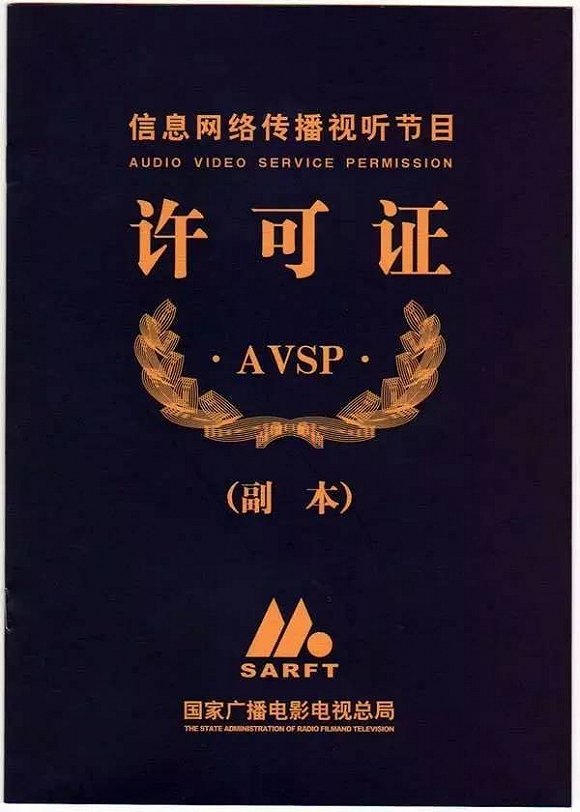
"Getting a job with a certificate" will increase the entry threshold
In the list of Internet audio-visual program service license holders provided by the State Administration of Radio, Film and Television (as of May 31, 2016), there are a total of 588 institutions. Among them, traditional media still occupy a relatively large share. For emerging live broadcast platforms, a few independent live broadcast platforms such as YY, Inke, Huya, and Yizbo have announced the "License" on their official websites in a "sideline" manner. Large video platforms such as Youku Tudou, iQiyi, and LeTV share the same "License" with their live broadcast platforms, while some smaller entrepreneurial live broadcast platforms do not have a "License."
For smaller live broadcast platforms and large live broadcast platforms such as Douyu, Huajiao, and Panda TV that have not announced the "License" on their official websites for the time being, the "License" will be a threshold to screen out competitors in advance. How high this threshold is depends on how strong the State Administration of Radio, Film and Television can enforce this time, and whether the way to obtain the "License" will be limited to companies applying for it themselves.
Judging from the past implementation efforts of the State Administration of Radio, Film and Television, the State Administration of Radio, Film and Television, which places more emphasis on regulatory responsibilities, needs to rely on cross-department collaboration to demonstrate its execution capabilities. As for the Android, IOS and other application markets that small live streaming platforms rely on to survive, the current supervision is not enough.
In addition, although the application conditions for the "License" are more stringent than the "Internet Culture Business License" of the Ministry of Culture, it requires a wholly state-owned or state-controlled unit and a registered capital of 10 million. But it is not a case where there is no curve to save the country. Before the name change, iQiyi onceIllegal shared a "License" with Baidu Video for nearly two years, and finally obtained a new audio-visual license through the acquisition of Beijing Xinlian Xinde Advertising Media Co., Ltd., which owned the "License". In addition, Station B also obtained the "License" by embracing SMG and becoming its subsidiary agency.

Live PGC content may be frustrated
For large live broadcast platforms, the "License" may not become the threshold that restricts their development. What will affect their development is most likely to be whether the "License" they obtained can obtain the two permissions related to the notice. This is also the most heavily discussed part of the notice issued by the State Administration of Radio, Film and Television. As a result, the content of the popular live broadcast platform PGC may be subject to more restrictions.
“First, those who conduct live video and audio broadcasts of major political, military, economic, social, cultural, sports and other activities and events through the Internet should hold the "Information Network Communication Audio-visual Program License" issued by the administrative department of press, publication, radio and television, and the licensed items are the fifth category of Internet audio-visual program services; second, those who conduct live video and audio broadcasts of general social group cultural activities, sports events and other organizational activities through the Internet should hold the "License" and the licensed items are the seventh category of second-category Internet audio-visual program services."
In the "Internet Audiovisual Program Service Business Classification Catalog (Trial)" released in 2010, the fifth item in the first category mentioned in this notice is: live video and audio broadcast services for major political, military, economic, social, cultural, sports and other activities and events. In the business definition, it refers to live video and audio services for major political, military, economic, social, cultural, sports and other activities or events through the Internet.

Similarly, the seventh item of the second category is: live video and audio broadcast services for general social group cultural activities, sports events and other organizational activities. In the business definition, it refers to the service of live video and audio broadcast to the public through the Internet for general social, group cultural activities, sports events, etc.
It is not difficult to see that the above two regulations are not unrelated to the columnization of live broadcast self-made programs. After the live broadcast platform is no longer satisfied with the simple show model, two different development directions have emerged. The first is to establish social and community relationships through live broadcast, and the second is to upgrade the content of the live broadcast platform and form columns of live broadcast programs through more self-made content. For the State Administration of Radio, Film and Television, the latter means, to some extent, more live content that is less controllable but highly influential, which cannot be tolerated.
The "License" for the six rooms of the old PC show did not include the two license items emphasized by the State Administration of Radio, Film and Television in the notice. After reviewing the "License" attachments published by iQiyi, Youku Tudou, LeTV and other websites, "Three Sounds" found that none of the above-mentioned websites have the fifth item of the first category and the seventh item of the second category that need to be met in the notice. The State Administration of Radio, Film and Television reiterated that these two contents do not seem to target traditional shows, that is, online performances.

"Institutions and individuals that do not meet the above conditions, including those that open Internet live broadcast rooms to carry out live broadcast business in the form of personal online performances but do not hold a "License", are not allowed to carry out video and audio live broadcast services of the above-listed activities and events through the Internet, nor are they allowed to use online live broadcast platforms (live broadcast rooms) to launch news, variety shows, sports, interviews, reviews and other types of audio-visual programs, and are not allowed to open audio-visual program live broadcast channels."
Such regulations mean that even if you have a "License", but without the above-mentioned permission items, the live broadcast platform cannot engage in live broadcast services of activities and events. Even if the anchor personally broadcasts events and activities in a show without a "license", it will also be prohibited.
The strategic implementation of major content-focused live broadcast platforms will be affected. Prior to this, various live broadcast platforms used to attract users' attention, in addition to hormone-stimulating beauties and handsome guys, it was the head PGC live content. Many live broadcast variety shows previously launched by live broadcast platforms, such as "1.3 Billion Decibel" launched by iQiyi, "Brother Hey Hey Hey" launched by Youku Tudou, as well as live broadcast content and strategies such as Youku Live Channel and NetEase's news live broadcast, are likely to be affected.

The Ministry of Culture began to rectify live broadcast platforms in April, and issued a notice in July to strengthen the management of online performances. The Ministry of Public Security also launched a nationwide special rectification work on online live broadcast platforms from July to October. The addition of the State Administration of Radio, Film and Television may make the regulatory efforts of various departments greater and establish a healthy ecology and order for the live broadcast industry.
At the same time, through the approval of the "License" and related license items, the State Administration of Radio, Film and Television will have greater influence and restrictions on the live broadcast platform. In addition to approval, live broadcast platforms will also be able to invite licensed institutions to "open Internet live broadcast rooms to carry out live broadcast business in the form of personal online performances" to avoid the risk of violations. While strengthening cooperation between live broadcast platforms and traditional media, they will also distinguish their respective functions.
Whether it pours cold water on the fire of live broadcasting or adds a handful of firewood, the notice issued by the State Administration of Radio, Film and Television is intended to kill two birds with one stone, regulating the market and controlling content. Its impact will be felt in the next few months. Perhaps this will be an opportunity for the live broadcast industry to end its barbaric growth, or it may be like a gust of wind that blows over and disappears.
(Text: Li Wei)
