
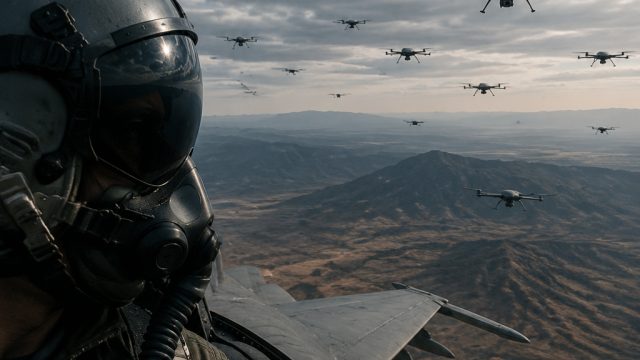
In a revealing account from the frontline of modern warfare, a U.S. pilot has shared his harrowing experience encountering swarms of Iranian drones. The implications of this encounter extend far beyond the skies, raising critical questions about military strategy and the future of aerial combat.
Understanding Drone Warfare: A New Battlefield
The pilot’s experience illustrates a significant shift in how conflicts are fought today. Drone technology has evolved dramatically, enabling nations like Iran to deploy coordinated drone swarms that move in unison, much like a school of fish or, as the pilot described, jellyfish. This ability to operate multiple drones simultaneously presents unique challenges for traditional aviation tactics.
The Tactics Behind Swarm Technology
Swarm tactics have been recognized as a game-changer in military strategy. Some key factors include:
- Coordination: Swarms can outmaneuver larger aircraft through their agile movements.
- Cost-Effectiveness: Drones are generally less expensive to produce and operate compared to manned aircraft.
- Psychological Impact: The sight of a large swarm can be intimidating and demoralizing for enemy forces.
The Pilot's Gripping Account
The U.S. pilot recounted the moment he first spotted the swarm, describing a scene that felt almost surreal. The drones, seemingly moving as one, posed immediate tactical threats. His descriptions lend insight into the pilots’ training and decision-making processes in high-pressure situations.
Immediate Reactions and Tactical Decisions
Faced with the daunting presence of the swarm, the pilot’s training kicked in. He had to assess:
- What defensive measures to employ against the swarm.
- The potential for collateral damage if engagement was initiated.
- Communication with ground control for backup and support.
This encounter underscores the importance of real-time decision-making and adaptability in modern military aviation.
Implications for Military Strategy and National Security
As drone technology continues to advance, the military implications are profound. The U.S. and its allies must rethink airspace security and counter-drone strategies. The pilot's encounter serves as a critical reminder that air superiority can no longer be taken for granted.
Future Strategies Against Drone Threats
To effectively counter drone swarms, military strategists might consider:
- Investing in advanced radar systems capable of detecting and tracking multiple drones.
- Developing electronic warfare capabilities to disrupt drone communications.
- Enhancing training programs for pilots to prepare for encounters with swarms.
Conclusion: A New Era of Aerial Combat
The chilling encounter between a U.S. pilot and Iranian drone swarms marks a pivotal moment in aerial warfare. As technology evolves, so too must the strategies employed by military forces around the world. The insights garnered from such experiences will be invaluable as nations grapple with the complexities of modern combat and national defense. Understanding this new normal is essential for maintaining air superiority and protecting national interests on a global scale.
