
In 1903, American writer Jack London became famous overnight with his novel "The Call of the Wild" (The Call of the Wild). In the same year, he also published another book, which recorded 84 days of his secret life among the poor in London's East End.
The People of the Abyss is an in-depth investigation into the poverty and suffering of the people. Edwardian Britain was prosperous, but the East End was not, despite the king's praise. A few years later, Jack London said: “Of all the books I wrote, The People of the Abyss is my favorite. No other book can match the amount of time I spent on it.”
This book is not the first to document the lives of poor people. The subject has fascinated journalists and reformers such as Friedrich Engels and Henry Mayhew, as well as Charles Dickens's Household Words. However, none of them reached the level of Jack London, who even changed his clothes to greasy rags to better blend into the living environment of the poor. His behavior inspired George Orwell 30 years later. Orwell also dressed himself as a tramp and sneaked into the slums of Paris and London.
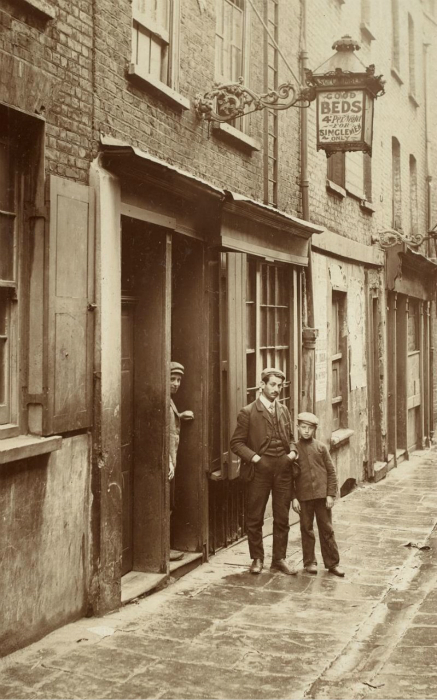
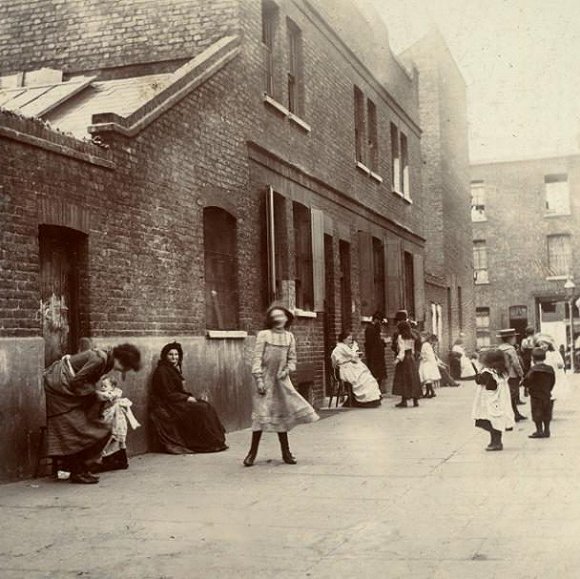
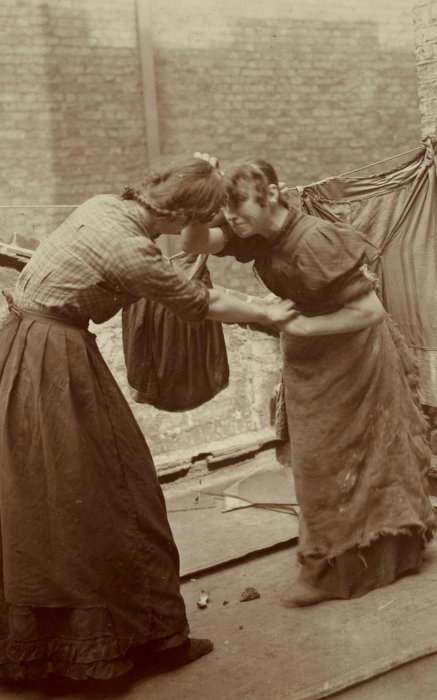
“I only want to believe what I see with my own eyes, not those who have not seen it with my own eyes, or those who have seen it with my own eyes but have not investigated and experienced it deeply,” Jack London wrote in the introduction. Previously, writing about the current state of Whitechapel was dominated by statistics (just some data about Whitechapel). However, the manuscript and photographs that Jack London submitted to his publishers are full of enthusiasm and worthy of reflection. The photos, taken by Jack London with his Kodak camera, give poverty an abstract, horrific face.
Jack London is a "greedy" photographer. From 1900 to 1916, he took more than 12,000 photographs - an incredible number for the era. And turning the London Photojournalism Collection into a new book is something that is rare even now.
"The Paths Men Take" tells three stories beyond the abyss: his experience as a war correspondent on the Japanese-Russian battlefield in 1904; 190In 1906, the San Francisco earthquake devastated his hometown of San Francisco; in 1907, he sailed across the South Pacific on that crappy ship. Since then, he has become one of the most highly paid and controversial American writers.
Jack London's original name was John Griffith London and he was born in San Francisco in 1876. Abandoned by his father, he was raised by his mother and stepfather (whose surname he took). He dropped out of school at 15 and climbed aboard freight cars to seek his fortune during the Klondike Gold Rush. By the age of 19 he had become a passionate socialist, familiar with the teachings of Charles Darwin and Karl Marx. Handsome and positive, he ("I am the most optimistic among optimists") never does anything halfway. When he planned to become a writer, he set himself a strict daily schedule. In 1990, Jack London was only 24 years old. That year, his first book "The Son of the Wolf" (The Son of the Wolf) was published. By the time he died at the age of 40, he had written more than 50 books.
The first chapter of "The Man in the Abyss" is about him trying to convince his friends: the police chief, the travel agent, the American ambassador and the confused taxi driver of his intention to integrate into London's East End. His tone is very relaxed, even a little funny:
“‘You don’t want to live there!’ everyone said, with a look of disapproval on their faces. ‘Why, it is said that human life is not valuable in that place.’
'This is exactly where I expected to find it... Here I am a stranger, and I want someone to tell me what he knows of the East End of London. ’
‘But we know nothing about the place, we only know its location, only that it is somewhere. ’ Then they waved their hands in the direction where the sun rarely rises. ”
As the writing process progressed, Jack London's tone became much harder, which is understandable. In Stepney (England) he witnessed “the endless slum of pauperism, rising from crossroads and alleyways toIt stretches straight to a very long and narrow street over there. In the market, shambling old men scoured the rubbish for rotting potatoes, beans and vegetables, while children crowded around like a swarm of flies, pushing and shoving over piles of rotting fruit.
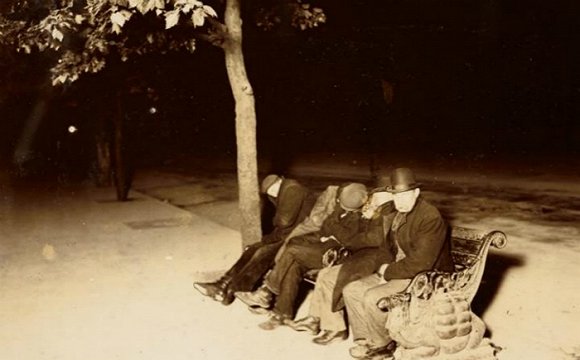
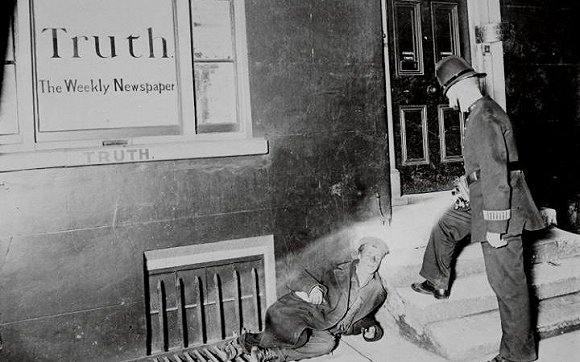
Jack London was shocked by the number of "old men, young men, all manner of men, and children" sleeping in the streets. “Some of them slept standing up and half slept on the stone steps in the most painful positions. Their red and swollen skin showed through the holes in their clothes. ”
He was fascinated by the dancing children, "Children's ability to find romance and beauty is extraordinary. Joy flows in their blood, and sometimes, underneath their dirty faces and clothes, there is surprising beauty. ”
But, Jack London went on to write, "The Pied Piper stole them all and they disappeared. No one has ever seen or heard anything from them again. In adults you cannot find them, you can only find stunted bodies, ugly faces and cold hearts. ”
Jack London eventually became a socialist, which he blamed on the corruption of the system. “As long as people are healthy and happy, I can see a bright future. But the government's mismanagement only left me with a pile of waste. ”
(Translation: Wang Yunqi)
