
To tell you that McDonald's has "the most popular food of all time," the company recently launched a series of quite shocking posters.
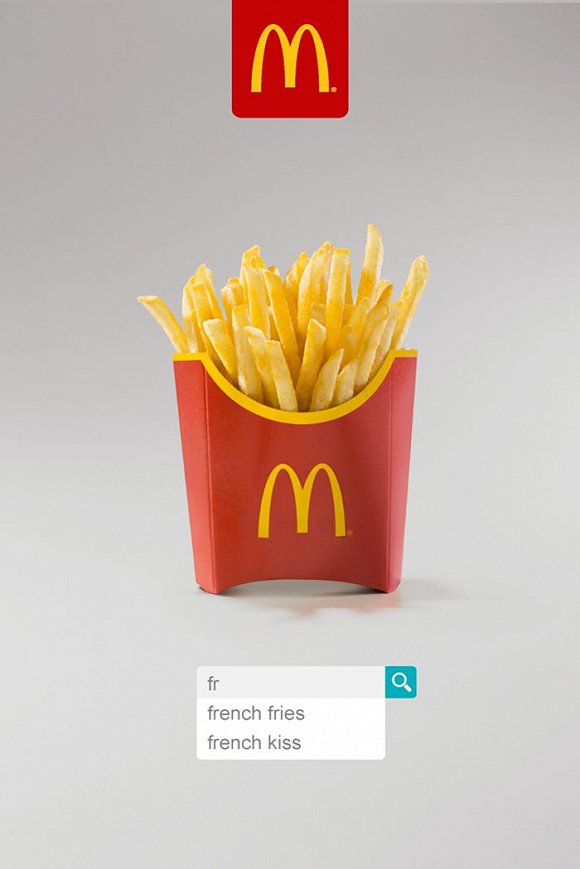
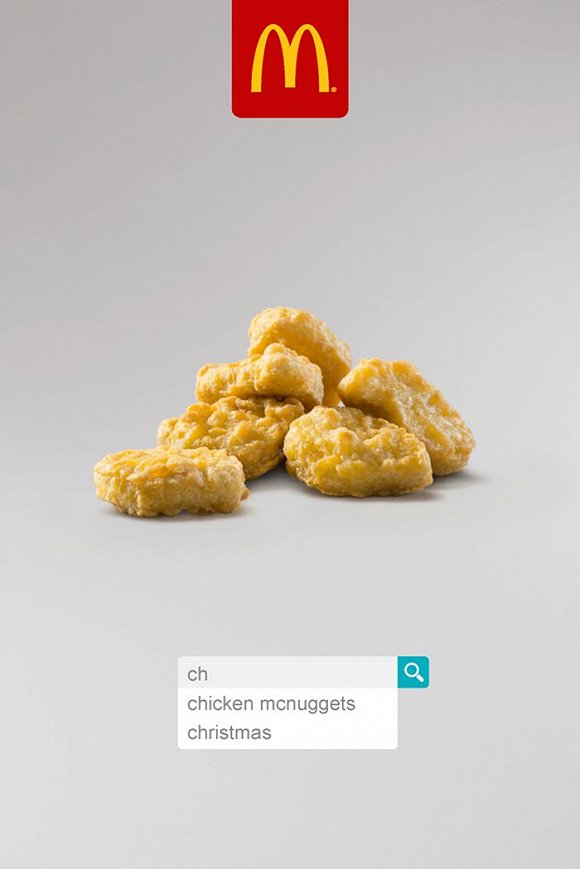
This set of ads for McDonald's designed by London-based Leo Burnett is very simple and straightforward: below the food is a search bar where people can enter a number of letters. As a result, the first automatic result of the search is always McDonald's food. For example, if you enter fr, the first thing that automatically pops up is French fries, which shows that people are more interested in French fries than French kiss.
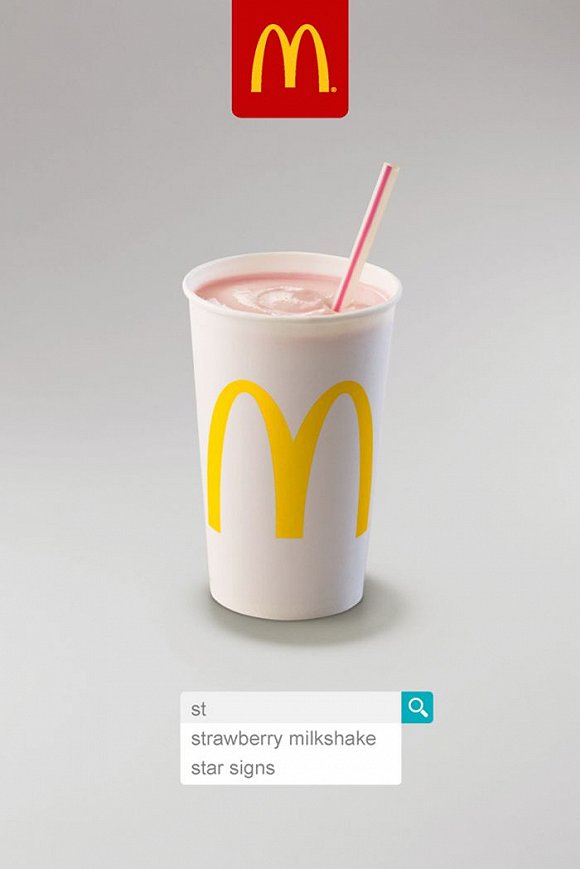
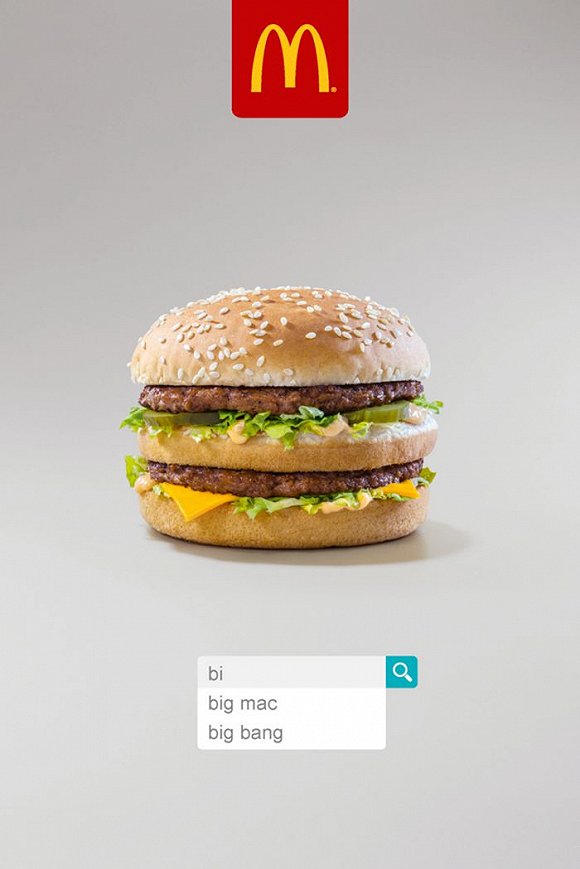
Other similar posters show that people are more interested in strawberry milkshakes than star signs, and that people are more interested in Big Macs than the Big Bang.
But if you think about it, this is a deceptive concept. People search for things like the Big Bang or constellations because they want to know something, not just because they like it. So why would people search for a food product that can now be purchased instantly within a few steps? Maybe just to look at food ingredients and see how unhealthy they are. Haha, this may be a completely different topic.
In fact, McDonald’s is not the first to use default search results for promotion. The most famous case is the "Automatic Search for the Truth" campaign launched by Ogilvy & Mather in Dubai in 2013 for UN Women. In this case, a search engine that overlays women's mouths automatically searches for reprehensible phrases such as "women can't," "women shouldn't," or "women should." The campaign gained virality in part because it was inspired by real-life search results.
Since that event, Google appears to have refused to display the full terms in search results, a response to the power of the AutoTruth movement. However, when you enter letters such as "st" or "fr", Google will still help you complete the entire vocabulary, making it easier for people to find the results they want. The words automatically populated by Google are often related to a person's past search history.
So, if this McDonald's poster is based on fact, it may just be because employees at the advertising agency Leo Burnett were too keen on searching for Big Macs and French fries. It's also likely true that advertising agencies are keen to search out everything about their clients.
But in any case, using search engines to discover the truth is a good attempt, and no one will actually pick up their mobile phones to check the authenticity of this matter.
(Translation: Wang Yinuo)
