
In early October last year, Cerruti 1881 announced Jason Basmajian as the new brand creative director, filling the vacancy caused by Aldo Maria Camillo, who announced his departure in May of the same year. At the 2016 autumn and winter preview held by the brand in Beijing last week, Jason Basmajian was also present - medium build, bald, with a light stubble on his face, wearing a light suit jacket and white sneakers, his eyes were gentle, and his tone of voice was also unusually calm and comfortable... Yes People who don't know him well may have a hard time believing that the man in front of him is an authentic American, and even his accent doesn't have much of a local accent: "I was born in Boston, then moved to Paris, then to London, and now back to Paris." Becomes Cerruti Before becoming the creative director of 1881, Jason Basmajian worked for brands such as Calvin Klein, Donna Karen, Brioni, Gieves & Hawkes (which, like Cerruti 1881, belongs to Trinity Holdings Limited). So although he is an American, he spent most of his life in Europe.
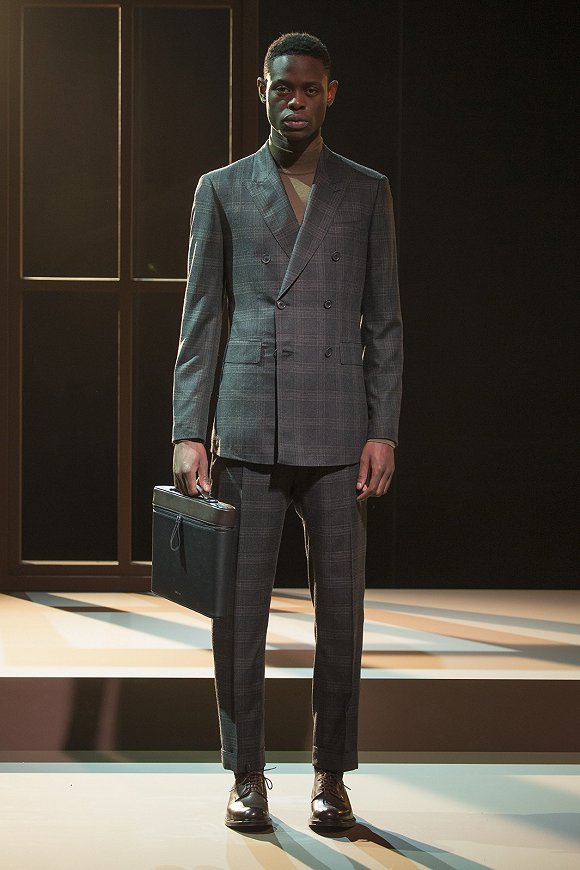
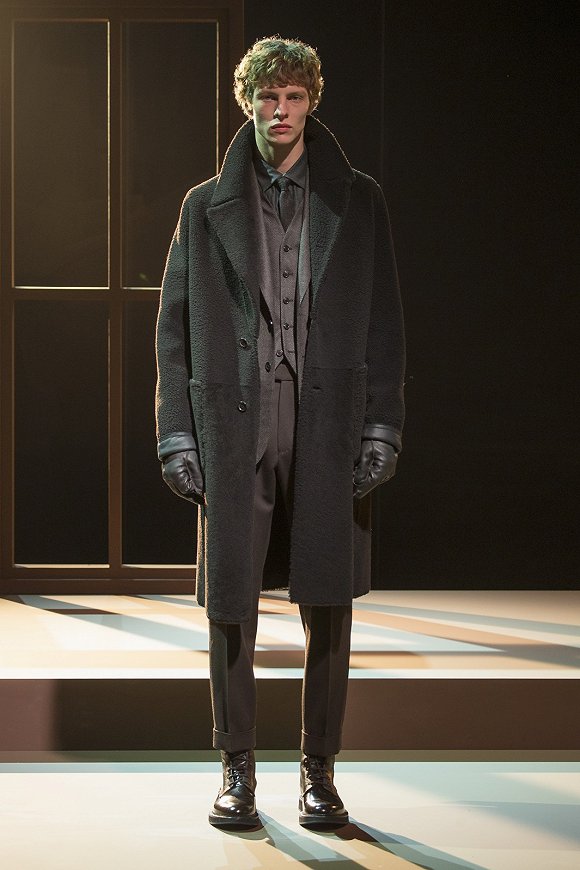
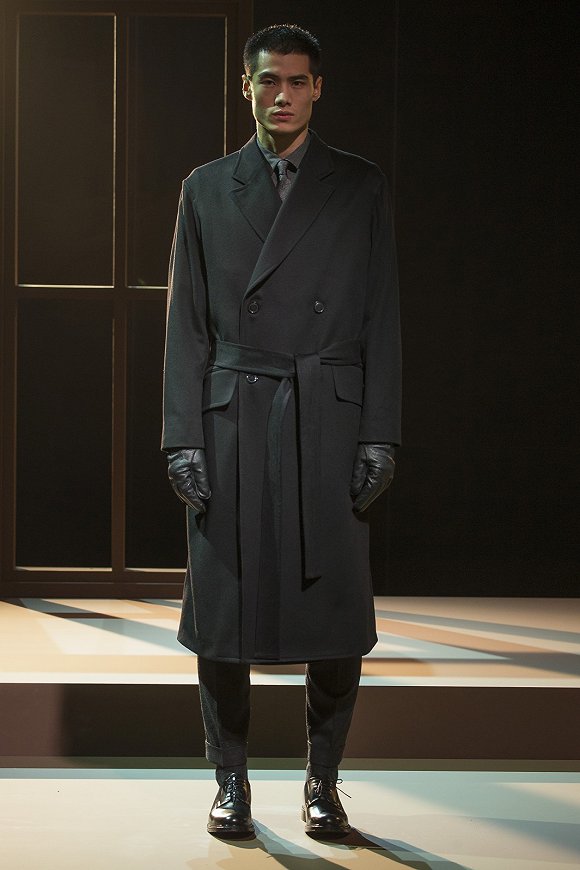
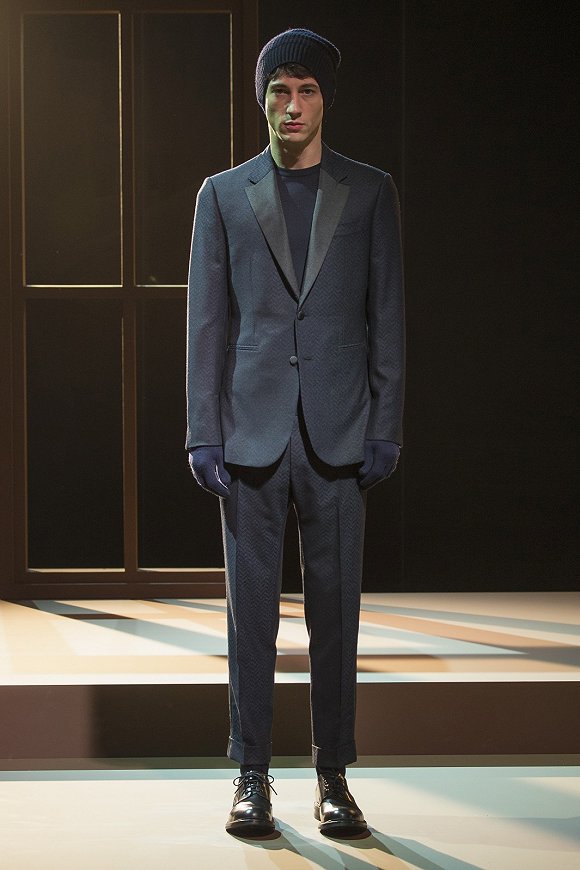
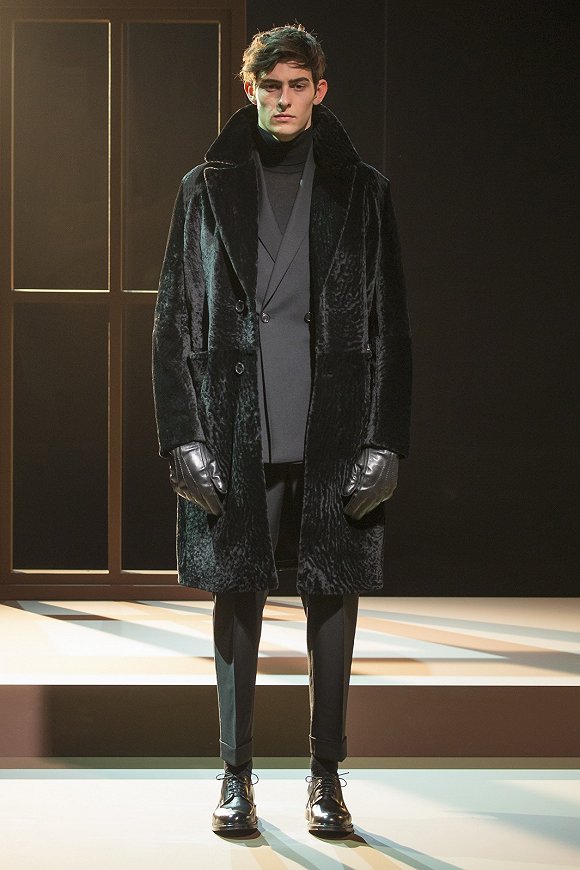
At the Paris Men's Fashion Week in January this year, Jason Basmajian's first series after taking the helm of Cerruti 1881 was unveiled to the world in the form of a static exhibition. Compared with the fashionable approach of his predecessor Aldo Maria Camillo, Jason Basmajian's Cerruti 1881 seemed less sharp: "I want to return to the core DNA of the brand, and I worked hard to understand Nino. Mr. Cerruti's original intention when he founded this brand". (Click on the video below to watch the Cerruti 1881 2016 autumn and winter men's wear series conference)
Mr. Nino Cerruti, the 86-year-old brand founder, was born in a textile and garment-making family in Italy. His grandfather Antonio Cerruti founded a fabric production factory called "Lanificio" F.lli Cerruti" in 1881. In the 1940s, his son Silvio Cerruti, who was also Nino Cerruti's father, took over the business and achieved great success. Today, the factory has long been well-known in the industry as a high-quality fabric producer. In 1951, Nino Cerruti succeeded his father who died young, and then founded the Cerruti 1881 brand in Paris in 1967, and quickly became one of the leaders in the fashion industry: from the 1960s to the 1990s, it was the golden age of Cerruti 1881, with Giorgio Before Armani founded his own brand, he was one of the designers under the brand; and the costumes of male protagonists in classic Hollywood movies such as "Basic Instinct", "Air Force One", and "Wall Street" were all produced by Cerruti 1881. Entering the 21st century, Cerruti 1881 has experienced changes in resale and ownership. With the release of the 2002 spring and summer series, Nino Cerruti announced his departure from the brand and devoted all his energy to the Lanificio F.lli Cerruti woolen mill. At the same time, it also continued to supply high-quality fabrics to Cerruti 1881. In the 2016 autumn and winter series, Lanificio The Cerruti workshop provides the brand with several specialized new fabrics.
"Without good fabrics, there is no good fashion." This is a famous saying from Mr. Nino Cerruti, and Jason Basmajian agrees with it: "Cerruti 1881 is a low-key brand. The 2016 autumn and winter series has a bit of sporty style and is very elegant at the same time." I’m fascinated by fabrics, fabrics, I think that’s the essence of menswear.”
As the conversation with Mr. Jason Basmajian deepens, it becomes more and more clear that he is a quiet person: "I like contemporary art very much, such as Sol LeWitt's (famous American conceptual art and minimalist artist), Frank The works of Stella (a famous American minimalist painter and graphic artist) and others, I also like to read - not from a tablet, but from paper books. I love stories; I also love cooking for my family and friends. I just came back from a trip to India. The embroidery, fabrics and scenery there are very charming...but in the face of the turmoil and changes in today's fashion industry, how can Cerruti 1881 stay calm in it? Let's listen to what Jason Basmajian has to say!
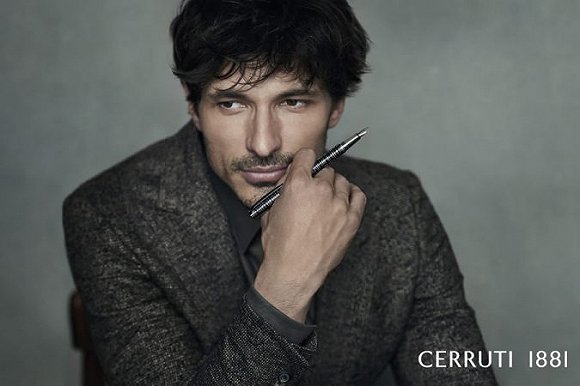
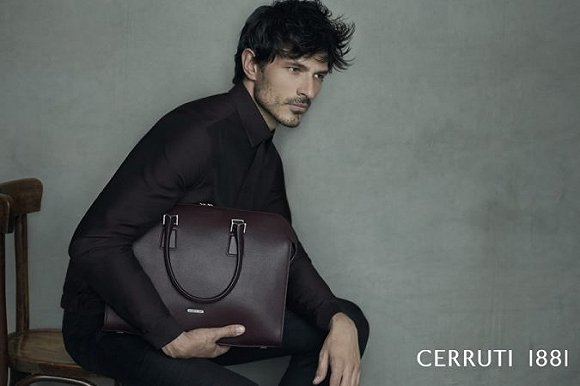
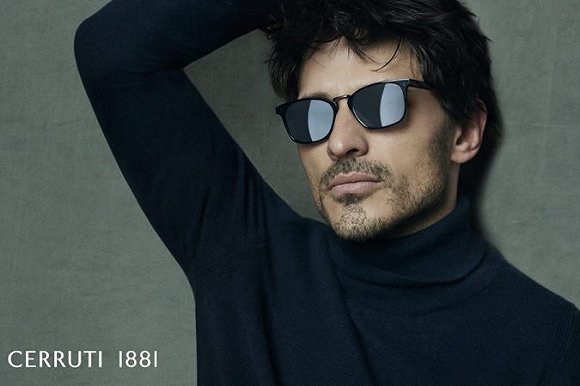
Interface: How would you describe the male image wearing Cerruti 1881? Do you have an ideal Cerruti 1881 man?
Jason Basmajian: I think men who wear Cerruti 1881 are the type who don’t like to show off, but at the same time they are particular about what they wear. I personally like the male model Andrés Velencoso in our 2016 autumn and winter advertising. His appearance and temperament are in line with Cerruti 1881 standards. He is a bit Italian and a bit mysterious, and he is not the type that is easily defined.
Interface: Do you have a fashion icon that you personally look up to?
Jason Basmajian: Compared with celebrities or celebrities, I prefer to observe passers-by in real life and walking on the streets. They inspire me more than celebrities. But I really like Hitchcock's movies. The male protagonists in them are always well-dressed. Sometimes I find these characters more attractive than the movies themselves.
Interface: You are an American, and you later worked and lived in many places in Europe for many years. How do you view the impact of Italy, the United Kingdom, and the United States on customized men's clothing?
Jason Basmajian: Italy emphasizes masculinity, the United States is relatively conservative and traditional, and the United Kingdom is more refined. I think Italian men are more free-spirited.
Interface: What do you think of Aldo Maria Camillo, former design director of Cerruti 1881?
Jason Basmajian: In my opinion, every creative director is given different directions and guidelines. I'm leading Cerruti 1881 my way now.
Interface: However, his works during his tenure are somewhat different from those after you took over. Many people say that he made Cerruti 1881 more fashionable and youthful. How do you define the concept of "younger"?
Jason Basmajian: "Rejuvenation" is about a person's attitude. I will not define the concept of "rejuvenation" simply by age, so in the new series, I will inject sportswear elements and blend them with traditional men's clothing styles.
Interface: Not long ago, companies such as J.P. Morgan announced that their employees no longer have to wear formal attire to work. In the face of street-style fashion, which is now very popular, Vogue reports also say that the appeal of traditional customized men's clothing seems to be declining. Some people even complain that traditional men's clothing is boring. What do you think of this problem?
Jason Basmajian: I think this is very good. Fashion always has to intersect with the current society. To a certain extent, it must reflect the trends of today's society, so this is why we have increased the proportion of sports jackets and sweaters in the new series. I'm afraid I don't agree with the statement that the appeal of traditional customized men's clothing is declining. Nowadays, suits are no longer just uniforms for work, because the way men wear suits has changed a lot. You can wear them with T-shirts, sportswear, boots... From this perspective, the rules of suits or customized men's clothing are no longer so rigid. You can still look attractive by wearing suits in different ways.
Interface: In addition to traditional style or custom-made menswear, what other designer brands do you like the most or would you like to try to buy?
Jason Basmajian: Dries Van Noten. I really like his use of color, prints, and embroidery. If I want to buy clothes from other designers, I will definitely buy them - I won't buy anything too street style.
Interface: Which season of his works impressed you the most?
Jason Basmajian: Basically every season has items that I like. I may not buy too many show items, but he is a good designer.
Interface: What do you think of the topic of show-now-buy-now? This seems very different from custom-made men's clothing. Especially since you've worked for Brioni and their new creative director, Justin O'Shea, has just released his debut collection, which is very much a show-now-buy-now model.
Jason Basmajian: It all depends on the company's strategy. You have to have sufficient preparation, manpower and material resources to produce those clothes and deliver them to stores around the world, but customized men's clothing is not a so-called "fashion", but a style that is not affected by time. At present, the entire fashion industry is moving too fast. I think it is necessary to be able to calmly wait for new styles. As for Justin O'Shea's work at Brioni, I still maintain what I said before. Every creative director has his own principles and strategies to abide by - to be honest, I didn't pay special attention to Brioni's new series. After all, this is only his first set of works, but Brioni is a brand that focuses on the clothing itself, and I think this is the key.
Interface: I heard that you don’t like Crocs slippers.
Jason Basmajian: Haha, it was a long time ago. A reporter asked me what shoes I like, and I said crocodile leather shoes. He was surprised and said that he didn't expect me to like Crocs (in English, "crocodile" and Cros are pronounced similarly), but in fact I don't like Crocs. I think they don't look very good, and they are not that comfortable to wear.
Interface: How do you think street style has impacted the fashion industry today?
Jason Basmajian: Generally speaking, I think men’s clothing is now as valued as women’s clothing. Nowadays, men have become more open-minded about dressing. Some people like experimental designs, while others like more traditional ones. From Gucci, Brioni to Cerruti, each brand has its own customer base. As I said before, fashion needs to be related to the current society. Street style is currently popular. It has the advantage of weakening the previous fashion rules and blurring the boundaries between them.
Interface: Another popular topic is the merging of men’s and women’s fashion week shows. What impact do you think this will have on Men’s Fashion Week?
Jason Basmajian: For brands that have both men's and women's clothing lines, there are practical considerations in merging men's and women's clothing shows, such as the cost of running a show, travel expenses for team members, etc., and they need to focus on the most high-profile series, so for super brands like Gucci and Burberry, I can understand the emergence of such a move. But for a pure menswear brand like Cerruti, I insist on holding a show during Men’s Fashion Week.
Interface: For your first collection after taking office, you chose to display it as a static exhibition instead of a traditional fashion show.
Jason Basmajian: The reason for this is because Cerruti now emphasizes details and fabrics, and the static exhibition method allows guests, media and customers to observe the clothes more intuitively. If displayed in the form of a fashion show, these details are often ignored - you can feel an atmosphere and an emotion from the fashion show, but it is difficult to focus on the details. Maybe we will choose to exhibit in a catwalk format in the future, but for now, the feedback we get is that guests enjoy this experience of getting up close and personal with the clothes.
