
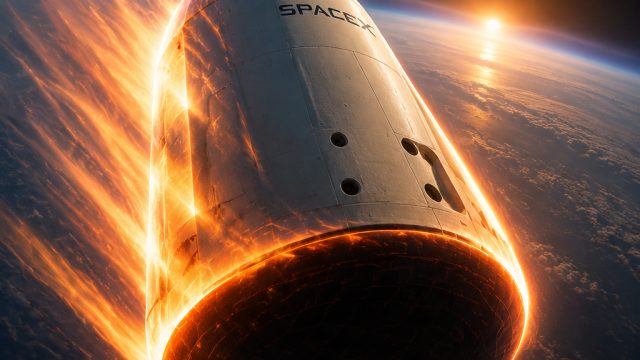
In a significant leap for space logistics, SpaceX has successfully launched the 'Starfall' mission, showcasing its latest reentry capsule technology. This innovative test flight, which took place early this morning atop a Falcon 9 rocket, aims to revolutionize the way cargo is delivered back to Earth from the cosmos. The implications of this mission are vast, potentially setting the stage for future commercial space activities and scientific research.
The Significance of 'Starfall'
The 'Starfall' mission marks a pivotal moment in SpaceX's ongoing efforts to enhance space travel and cargo delivery systems. As the demand for space-based infrastructure and research grows, the ability to safely and efficiently return cargo to Earth becomes increasingly critical.
Enhancing Reentry Technology
One of the primary objectives of the 'Starfall' mission is to demonstrate advanced reentry technology that can handle the stresses of atmospheric reentry. Unlike traditional methods, SpaceX's approach leverages innovative materials and engineering solutions that promise a safer, more reliable reentry process. This is vital for a variety of applications, including:
- Scientific experiments returning data or samples from space.
- Commercial cargo delivery for international space stations.
- Future missions targeting lunar or Martian exploration.
A Step Forward in Space Logistics
The successful launch of the 'Starfall' capsule signifies a step forward in the logistics of space cargo. With NASA and other agencies relying on private companies for resupply missions, SpaceX's advancements ensure that they remain at the forefront of this industry. The ability to return materials safely and efficiently not only enhances mission success rates but also supports the broader ecosystem of space exploration.
Real-World Implications
The advancements from the 'Starfall' mission are expected to have a ripple effect across various sectors, including:
- Aerospace Industry: Improved reentry technology may lead to cost reductions for satellite and cargo missions.
- Scientific Research: Enhanced sample return capabilities could accelerate research in astrobiology and planetary sciences.
- Commercial Space Ventures: With safer reentry, more companies may invest in space logistics, promoting innovation.
What's Next for SpaceX?
As SpaceX continues to refine its reentry capsule technology, the team emphasizes the importance of this mission as a building block for future ventures. The successful data collection from the 'Starfall' test will be analyzed extensively to inform subsequent designs and missions. This aligns with SpaceX's broader goals of sustainable human presence in outer space.
Future Prospects
Looking forward, SpaceX has plans to expand the capabilities of its reentry vehicles further. Innovations that stem from the 'Starfall' mission could enhance:
- Interplanetary Missions: Technologies developed may be utilized in missions beyond Earth orbit.
- Cargo Resupply: They could significantly improve resupply missions to the International Space Station and beyond.
- Commercial Partnerships: SpaceX may develop partnerships with telecommunications and technology companies for new payloads.
Conclusion
The launch of the 'Starfall' mission represents a crucial advancement in reentry technology, promising to streamline cargo delivery from space to Earth. With a focus on safety and efficiency, SpaceX is poised to play a pivotal role in the future of space exploration and logistics. As we stand on the brink of a new chapter in space travel, the successful outcomes of the 'Starfall' test could very well influence how humanity interacts with the cosmos for generations to come.
