
This article was originally published in The New York Times Review, translated by Lin Linjiu, and reprinted with permission from the WeChat public account "Penguin Books" (ID: penguinbooks).
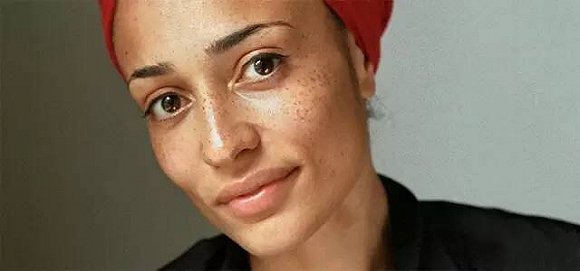
Zadie Smith (1975-) is one of the most influential writers in contemporary Britain, winner of the Orange Prize for Literature, and was selected as one of the "Top 20 Best Young Writers in Britain" by the famous British literary magazine "Granta" in 2003. He grew up in a multi-ethnic North London. His father is a white British man and his mother is of black Jamaican descent. Therefore, his works mostly focus on the theme of multi-ethnic mixing in the UK. Zaidi began writing poetry and short stories at the age of six. However, her childhood dream was not to be a writer, but to be a tap dancer. In middle school, Zaidi didn't seem to be the kind of good student with big ambitions. She spent most of her spare time reading and making friends, and also smoked marijuana. When she told her teacher that she wanted to apply to Cambridge, the teacher told her that the idea was ridiculous and unrealistic. However, she did get her wish and came to Cambridge University to study English literature. At King's College, Cambridge, she immersed herself in the world of novels all day long, learning writing techniques and aesthetic tastes from her favorite writers such as Forster, Salinger and Vonnegut. While in high school and college, she also made money by working as a jazz singer in bars. While studying at Cambridge, Zaidi met Nick Chatty Laird. Laird was studying poetry and editing poetry collections. The two got married in 2004. Zadie Smith is an idiosyncratic writer who likes to challenge orthodoxy. This character of hers has been revealed since she changed her name when she was young. Her original name was Sadie, but she changed it to Zadie on her own initiative when she was 14. In English, the S sound is softer, while the Z sound is louder, more individual, and more exotic. When everyone was applauding Chatty's debut novel "White Teeth", one person said "weirdly" that this work was written by a young and pretentious person, and "some fragments in the book are like overgrown weeds and cannot be read." This person is Zadie Smith herself. She is her own fiercest critic. She pointed out: "I have great ambitions to write a masterpiece, but I don't think it is that masterpiece." In 2002, in order to gain spiritual purity, she chose to leave the UK to study for a master's degree at Harvard University in the United States and continue writing. His major works include: "White Teeth", "The Autograph Man" and "On Beauty". These three works were shortlisted for the Booker Prize three times and each won many literary awards.
Fences: Brexit Diary
Many years later, I returned to the area of northwest London I was most familiar with. As I passed by the local kindergarten, I noticed something strange. Many of my old friends were students here before. Recently, due to a family illness, I need to go back to the UK to live for a year. This time I walked to this kindergarten to take my little daughter to register. This is a beautiful red brick Victorian building that was in "special construction" for a long time. We have a standard system for evaluating schools called Ofsted. The rating this school received before was almost the lowest for a public school. In the past, many parents would naturally feel nervous after reading such reviews, and planned to send their children elsewhere. Of course, there are still some people who think that the evaluation mechanism mostly relies on data, and they are willing to observe with their own eyes to discover some human aspects that the evaluation system does not see. It cannot be ruled out that there are still some people who have not read these online comments because their English is not very good or they do not use the Internet at home and have not heard of this system.
But my special case is that I have enough knowledge of this community from personal experience. My brother taught at this school for many years. In some after-school clubs for immigrant children, I also know the advantages of this school, how welcoming it is to diverse ethnic groups, this long tradition. Many of the people in these clubs have just arrived in this country. Now, just a year later, Ofsted’s official rating of the school has been revised to “good”. I also learned from some after-dinner conversations among neighbors that more and more relatively middle-class white families are beginning to consider moving to this neighborhood and sending their children to this school.
If this change continues, as it has in New York, then the white middle class will rapidly expand, and with it, entire neighborhoods will gentrify, and so-called school "dyke areas" will shrink dramatically, until one day everything becomes almost homogeneous, diversity disappears, and all ratings become numerical superlatives. But this has not happened in my familiar old neighborhood, and I believe it will never really happen - because of its long and proud historical tradition of diversity. It was also during this pass that I felt the same thing.
Some of my liberal tendencies may have been focusing elsewhere then: I noticed the fence. Because this old school in the Victorian era has been separated from the outside by some thin cast iron railings for a hundred years. And now, we discovered that some tall bamboo fences separate the school from the bar street, and some plants as high as six feet are clinging to these fences, enough to completely block the view of the children playing in the school stadium from the street outside. After returning home, I impulsively sent a rash email to several parents:
I returned to the UK yesterday, and as soon as I passed the school near my hometown, I saw the wooden "veil"o;—for lack of a better word—they surrounded the entire school. This makes me sad. I've lived in this neighborhood for forty years. Ten years ago I saw a high wall erected outside a Jewish school, and a few years ago another high wall was erected in front of a Muslim school. But I never thought I would see another one outside our school. I'm curious as to what happened, who arranged it, how it was decided, and are parents happy with it, or what is its purpose, officially, "safety"? "privacy"? Or some other reason?
Contrary to my headlong email full of liberal tendencies, I received a sensible and polite reply. "Privacy and anti-pollution" were the main reasons given, especially the problem of pollution, which is already "the most serious problem at the moment". This is something the school accepts and follows instructions from local authorities. There are lots of concrete buildings on the playground and lots of vegetation softening the look of the area, so in fact its new look doesn't strike parents as anything offensive and strange to passers-by. I reread my email and felt a twinge of shame at having sent it. What state of mind makes me so sensitive and pessimistic about this minor cosmetic change?
I am used to change: change is the principle here. The old language school on the hill became the largest Muslim school in Europe; the old synagogue became a mosque; the old Christian church is now a private apartment building. Waves of immigration and the accompanying waves of gentrification flow like buses through these streets. But in my eyes, I still think this local school is, to some extent, a symbol. If there's anything we've discovered to be true in Britain these days, it's that we, the British, can recognize the anomalies in our own behavior when we surrender to physical reality and transform it into symbols.
I see this little school as a peculiar symbol of a mixed system, where there are poor kids and rich kids—Muslims, Jews, Hindus, Sri Lankans, Protestants, Catholics, atheists, Marxists, Pilates fanatics, etc. Someone's children, all educated under the same roof, playing on the same playground, talking about their beliefs and even lack of beliefs - when I pass by like this and look at them, I suddenly feel a deep sense of relief that those things that were part of my childhood world have not completely disappeared. That yeshiva looks a little like Fort Knox these days. And the Muslim school wasn't far behind. So has our local primary school become a place like this: behind fences, isolated, private, paranoid, and occupied by all kinds of security concerns? Is it still an institution for the wider community?
Two days later, the UK voted to leave the EU. I was in Northern Ireland at the time, staying with my parents-in-law, a friendly, humble and conservative Northern Irish Protestant couple. Being with them, I felt for the first time that we ourselves were truly involved in the historical process.and political issues. The shock I felt in front of the fence at the school gate a few days ago was now relived in front of the huge TV screen. We watch as Britain builds a wall to cut itself off from Europe. It is almost unimaginable how great an impact this had on the children of Scotland and Ireland in the north and west.
There has been a lot of media coverage following the mess David Cameron and Boris Johnson have irresponsibly left behind, but if I were waking up in bed at home in London that day, I don’t think I would be giving Cameron and Boris my undivided attention. No, my first reaction is probably a lot of questions, what does this vote mean? What exactly does this mean? migrant? Unfair? Historic xenophobia? Or about national sovereignty? European bureaucracy? A revolution against neoliberalism? Class struggle?
But one thing that is very certain in Northern Ireland is that one thing is undoubtedly not about Northern Ireland itself, not at all, it is Northern Ireland itself, and this has witnessed how the violent behavior acquiesced by extreme solipsism has made a long-term cruel small country step by step into a destructive mortgage for the internal struggles of the Conservative Party. And Scotland! It's also hard to say. Logically speaking, these two well-educated men should have a very good understanding of their British history, but in order to satisfy their own professional ambitions, they were able to throw everything into danger with such complete recklessness. To me, their irredeemable crime was far more destructive than the interruption of the European entente that had existed for decades.
"Conservative" is no longer an appropriate word to describe these two men (the word at least implies a care and protection of heritage), "arsonist" is more appropriate. Both Michael Gove and Nigel Farage are genuine right-wing politicians with clear agendas that are the result of many years of professional work. The former has "absolute authority" with a Trojan horse vision, jumping up and down on the back of an empty symbol, an economic zone that is not controlled and restrained. The latter's resignation on June 4 appears to be a genuine obsession with combining the cages of racism with Britain's decision to build a wall to wall off Europe, which for the European mainstream calls into question not just the liberal movement but a host of issues - from climate change to gun control to deportations.
A referendum amplifies the worst aspects of an inherently imperfect system—democracy—raising a wide variety of dazzling questions from within a narrow gate. It has the appearance of becoming stronger - complete democracy! You can agree or refuse! But on a practical level, it leads to a dangerous misdirection and simplification. Even many people who voted for Brexit ended up feeling deeply that their vote did not truly reflect how they felt. There are various motivations for their decision, and many in the Remain stronghold are similarly divided.
Some of the reasons are hilariously contradictory. The mother of a friend described a conversation over the garden fence between her mother and a member of the north London left, in which she explained to my friend's mother why she had voted to leave - because she wanted to "get rid of the horrendous community."Disgusting Minister of Health! "Well, like so many people in this great country, I wanted more freedom, but the referendum ended up being like a useless hammer hammering away thousands of bent nails.
The first instinct of many left-wing Remain voters was that this was only about immigration. While that often leaves middle-class liberals confused, politically naïve, and trying to sentimentalize the working class, as the numbers climb and class and age collapse become apparent, a working-class populist revolution becomes increasingly clear. I spent the whole day phoning home, sending emails, trying to get in touch, and London—or at least the London I knew—was a huge shock that we had nowhere to house. "What did they do? "We ask each other, sometimes leaders, people we think and count on to know what they are doing, and sometimes ordinary people, people who don't know what they are doing.
Now I have the temerity to think it is something else entirely. Something was done, anything was done, in its early way, and the purpose was: an important characteristic of neoliberalism is that it makes people feel that nothing you do can change the status quo, which is usually a situation solved by coercion, but this vote provides a rare prize for capturing the noisy chaos in this system. But even the most optimistic left-wing interpretation—that this was a more or less intentionally violent response to the hardships of the previous neoliberal economic collapse—cannot deny that it was an outlet for commonplace racism, both through sport and through voting itself.
To these many anecdotes, I would like to add two observations from my mother, who was born in Jamaica. A week before the vote, a skinhead (a young racist who advocates violence) ran up to her and shouted "Germany above all else" (the original words were in German). My mother felt that this was like going back to the late 1970s. The day after the vote, a woman buying towels in Colborne High Street stood next to my mother and six or seven other people and announced to whomever she was looking for in a supercilious manner: "Well, you all have to go home now! ”
Boris, look what you did? Cameron, look what you did? There is something more unpleasant about this story of self-centered leaders who unthinkingly light the fuse, which is London-centrism, which seems equally real to me and raises another veil that will make us as blind as those Boris who were carried away by their career ambitions. The most striking shock to me as a result - and it seems to be shared by many other Londoners - is the possibility that we will be living under a veil that prevents us from seeing what our country has become. On the night I left London for Northern Ireland, I had a meal with an old friend of mine, a North London intellectual. In fact some, like Labor politician Andy Burnham, made a symbolic statement - he claimed that the Labor Party has become because of "too many Han people".Hampstead (a resident of northwest London) and too few Hull (a resident of northeast London) lost its base among the UK Independence Party. "Although the reality is that we have all long suffered the cost of being monopolized by Hamptons, led by bankers and Russian oligarchs. We have also considered Brexit. The same thing may have played out on every North London dinner table. But the fact is that none of us thought clearly, and none of us at a certain moment really thought and believed that this could happen. It was obviously wrong, and we felt completely right at the time - how could it be?
Having raised this question, we all turned to bemoaning the bizarre tendencies of this young left generation, trying to monitor or isolate some of the things they considered that seemed to us to be completely wrong: no programmatic plan, no safe space to retreat, and much more. Again, we are all "right" about this. But then, from the corner to the sofa, the smartest among us, now nursing a newborn, was waiting until we all stopped talking at length, before adding: “Well, that’s the habit they got from us. "We always want things to look right to us. Getting the issues right, that's the most important thing. I noticed this trend in the days after the results came out. I read countless articles about how proud Londoners were proud to claim that their multicultural and forward-thinking city looked different from the relatively insular and exclusive northern regions. Sounds about right. , I also hope it is true, but what I see with my own eyes is exactly the opposite. Because those who truly live in a multicultural environment are those who are educated in mixed environments or live in shared apartments. They are people who have had mixed cultures for a long time. But there are fewer and fewer people who want to believe this.
Because for many people in London these days, the multicultural and cross-class perspective they think they have in their lives is actually embodied by their own staff - especially nannies, cleaners - who serve them coffee, drive their cars, or a bunch of those Nigerian princes you meet in private schools. The painful truth is that walls have been built all over London, around schools, in neighborhoods and in the cracks of our lives. An obvious result ofBrexit is that it has finally exposed the great gaps that have been in British society for nearly thirty years - the rift between north and south, the rift between social classes, the rift between London and non-London, the rift between the rich and the poor in London, the rift between white, yellow and black. These are all so real that they need to be faced by each of us, not just those who voted "leave".
After the results were announced and everyone was in a state of hysterical sensitivity - not just myself - of course I want to stop now and talk about what I noticed about a young woman on the playground where my daughter was playing, which was under construction. Like me, she is a mother, but she is at least fifteen years younger than me. On the way home from the mountain, she kept walking in front of me.Realizing that she lived in the same government-subsidized housing complex that I had lived in as a child. The fundamental reason why I noticed her was that I found that my daughter liked her son. The next step is naturally to play house style love.
But I never took the next step, and neither did she. I didn't know how to intervene, what I felt was that she was somehow afraid and unhappy with me. Not because I’m black—I’ve seen her interact happily with other black mothers—but because I’m middle class. She had seen me open the gleaming door that faced her council house, just as I had seen her every day from the ornate window draperies as she entered the stairwell of the house. I remember those fraught episodes from my childhood when the situation was completely opposite. Did I dare to let a girl who lived in a big and nice house drive her car under our dilapidated government low-rent housing? Later, when we moved into that perfect luxury house just to the right of Willesden (a wealthy area of London), did I dare to visit my friends who were still living in a rough and run-down Kilburn house?
The answer is usually, yes. There's nothing unpleasant about it, it's not an awkward moment in a generic social-issues situation comedy, or a nonchalant glance at the edge of national tragedy—the answer is still, yes. At that time, we were still eager to try to challenge "risk", if "risk" is an appropriate word to describe entering other people's lives, this is not just symbolic, but real. But in the New England we were about to enter, it felt, at least to me, almost impossible. For her, too, I suppose. The gap between us is getting wider and wider.
I bought this tall, narrow house fifteen years ago, and it is now worth an astonishing amount of money. But I'm worried she might think I actually spent so much money to have it. The distance between her house and mine—even though the reality is only two hundred meters—is symbolically far greater than ever before. Our potential parent meeting is somewhere in this pit, never happening, just like I never dare to mention it.
The extremely unequal community culture, and then the violent cracks opened up to witness the collapse of the building. In this process, everyone feels the trauma from time, but perhaps no one will truly have nothing like the white working class, and will not even feel moral improvement, because no one can realize the location of the trauma and injury, and no one can get any comfort from this process; along with it, the left is completely ashamed of it. The right sees it all as a tool for personal ambition. Those inconvenient working-class revolutions that we are witnessing now are charged with stupidity - I cursed it myself, but when it happened - the longer you look at it, the more you realize that, on the other hand, it was marked by the touch and sensitivity of genius in that it intuited the weaknesses of hostile forces and powerfully exposed them. These middle class people left so happily for pursuing what is right! And so many working class people with little political rights have to be chosen by shocking and shameless mistakes.
We have always had a laughThe history of impoverishment, in the UK, is that we often "vote against their interests" in order to "cheat". But few neoliberals, or middle- and upper-class people, want to deceive themselves into living in their gilded London prisons. If you think this is an exaggeration, then you can go to Lower Notting Hill and see the top-notch privately hired security personnel who slowly patrol the surrounding streets day and night in their cars. Inside the £20 million house, they were nervous about the approach of people living in government housing at the other end of Portobello Road. Or go to the Savoy (note: a wealthy bar) and look at the list of retro cocktails. The cheapest ones are worth a hundred pounds (the most expensive one, like the Sazerac, is worth nearly 5,000 pounds). These are our strange times.
Of course the cocktail list is just another sign of stupidity, but it does speak to its time and place. This was the money madness associated with London at one point. The rest of us, most of us, look for any sign of beauty, harmony, and a happy life in such symbols (what kind of happy person needs to order a 5,000-pound cocktail)? At least, when you are this rich, you can comfortably fool yourself and tell yourself that you are happy, calling yourself "false consciousness" to use the common expression of North London Marxists. Consciousness—the rough and tumble people standing by—a perfect word to describe the state of the economically and socially disempowered in this country—are struggling, deeply unhappy, and they know it.
I fully believe that, leaving aside the true adherents of right-wing ideology and the high-minded left-wing opposition to the EU as an instrument of global capitalism, most of whom voted to leave, did so out of sheer anger, hurt and disappointment, and made some kind of judgment based on low emotions and gut feelings, "aided" by years of orchestrated political and media manipulation. As sad as I write this, in the hours after the vote, Google recorded big data on Britons searching for "what is the EU", making it difficult to deny that on that June 23, a large number of us were utterly shameful in exercising our democratic rights.
No matter how people voted, we need to listen to them, but ignorance of the referendum result should not be celebrated or defended insincerely. In addition to ignorance, it is also very wrong to make such a simple decision on such a serious matter without considering the consequences of this result on other people. This is for the sake of all sovereign nations, for you from north to west, not to mention the rest of Europe. But in terms of very low motivations alone, I don't find those who leave to be exceptional.
But we are loudly and rightly denouncing those who hold misguided racist attitudes, we are leading millions of people in asking "them" to leave "us" and give up their jobs, housing schemes, health care and national education resources, and we may also be looking at the attitudes we have allowed ourselves to have over the past nearly thirty years.People at this level gain careful guidance, ensuring that "them" and "us" never meet in any real situation after each situation, but keep everything in symbols. Wealthy London, whether red or blue, has always had the ability to pick and choose about the nature of its multicultural and cross-class relations, to teach the rest of the country a lesson in insularity, while building walls around itself and then making careful priorities. We may often pass "them" on the street, get into their cars, and eat their food in their conscience restaurants, but the fact is that most of the time, they are not in our schools, our communities, and they rarely even enter our houses-unless they come to do endless work for our endless kitchens. People elsewhere in the UK literally live cheek to chin with immigrants and suffer wage cuts because of these outsiders. They are literally struggling for their own resources, and under a "hard-nosed" government, it's all too easy to blame the hospital for your dissatisfaction with the immigrant family next door lying in a tight hospital bed. Or indirect bureaucracy in various ways, with stupid politicians telling you on TV why the NHS (National Health Service) doesn’t have enough money. In an environment of total hypocrisy and outright fraud, when everything around them is corrupt and venal, should the working class poor show themselves to be the "better people"? While everyone is building fences, isn't it true that only a true fool lives entirely in the open?
The news cycle is changing rapidly now, they feel the wheels are coming off, and there is a lot of talk about wanting a second referendum, which of course reinforces the basic view of many politically disenfranchised people, which is that we, the wealthy Remainers, have the right views and that our decisions will actually be taken into account. No, this is our bed, and it shows that we must rely on it. But when we send a school in England into a period of special construction, some of the more optimistic middle-class mums - myself included of course - will mutter to themselves over their post-breakfast coffee cups, "Well, special construction is a good thing, because at least now they're doing something about it." It's such a period of special construction in Britain - where the long-standing crisis has been revealed - that we'd be better off building from where we are than to pull another veil over it. The first thing that needs to be put on the agenda is - as any declining school knows - packing up and seeing what's left to fight for. The rights and protections possessed by the British people, no matter what, are endowed by an imperfect Europe, but they must not be replaced by the meaningless Faragian vision of British sovereignty. A crippled Saint George drags his stumps, picks up his sword, and limp forward to fight the dragon of the European Union and renegotiate. From a more fragile perspective, all our considerations over the years have been to get it in place.
When I started writing this article, Brexit leader Farage was seen wearing a pair of Union Jack shoes and enjoying his victory in a private garden with Rupert Murdoch, Alexander Lebedev (owner of Evening Standard and The Independent), and Liam Fox (who would later become the leader of the Conservative Party) - they were discussing public issues behind closed windows. When I was almost finished, Farage resigned and said, "I want to get back to my own life." In England, Nigels come and go, but Ruperts is permanent. (Translator's note: Nigels refers to spoilers like Nigel Lawson's and Nigel Farage, the two British Brexit leaders, and Ruperts refers to media traffickers like Murdoch). My life, and the lives of my British friends, is governed every moment by impeccable billionaires who own the newspapers and television media through which leaders like Farage can easily be hyped, while at the same time shaking up elections and dictating policy. Another useful lesson: the post-war agreement between the British government and the people was not guaranteed, and could be systematically clarified and ravaged by a small group of malicious actors. So free debates about citizenship, about the health protection system, the national education system, the ruined post-war public housing, now require a political party willing to renew these debates in this new era of capitalism, although whether the name of this party organization can still be "Labour" remains to be seen.
People who have recently migrated and immigrated to this country should have seen its ancestral heritage - housing, education, and health care - but there is no doubt that many people did not receive these benefits after arriving. But there are still many people who want to come here: they take their children to register in public schools here, bear British national taxes, and try to find a way out. It is indeed not a crime or a sin to seek a better life abroad. They may have fled their own countries due to war, and many of these problems are also caused by some of us. But whether we still know what a better life looks like in the UK and what is necessary to get what they need is something that now needs to be questioned.
As I traveled to France a few days after the vote to leave the European Union to teach students in my NYU Paris program, I suspected that some things were not going to change so quickly or so easily. After getting off the train, I walked straight to a hotel dinner table and sat down in front of one of my colleagues. The Bosnian-born writer Aleksandar Hemon ordered a drink and then spoke of Brexit with great exaggeration: "A complete disaster." Novelists are prone to exaggeration. Hemon sighed, smiled bitterly, and said: "No, it is just a disaster. War is a complete disaster." He once lived in Yugoslavia and witnessed the bloody collapse of the supreme authority. This is aThe sensitivity and propriety of those who have experienced it. For half a century, a European war of that magnitude was something Britain had avoided experiencing intimately, and Europe as a defense had been partly formed. Whether we will go deeper into the "path to disaster" depends on ourselves.
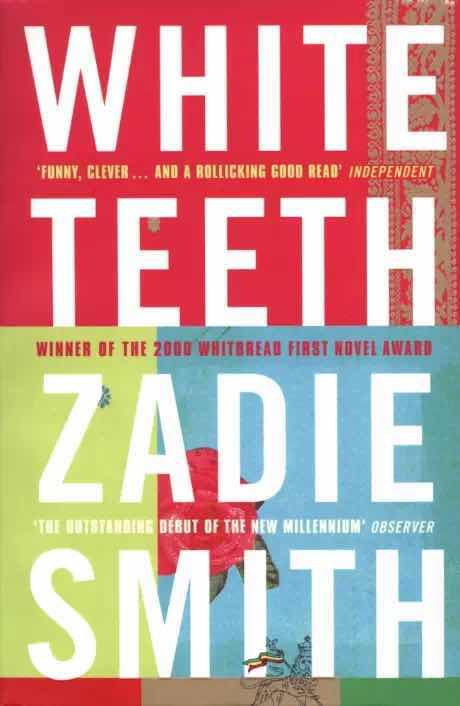
White Teeth by Zadie Smith
"White Teeth" Zadie Smith
Penguin 2001
In North London at the end of the century, three families. Two generations. A drama of absurdity, filled with all the colors and white teeth in the world. Incredible and absurd stories are quietly unfolding in the dazzling flash of the same white teeth...
"White Teeth" is Chatty's debut novel, published in 2000. With humorous writing style, it depicts a complex and vast post-colonial picture, a "portrait of Britain" at the end of the century. At the time of writing this book, Chatty was still studying at Cambridge University. With this book, she established her position in the literary world in one fell swoop and was regarded as the spokesperson for "race, youth, and women." After the publication of "White Teeth", the media marveled and readers applauded. Literary critics could not wait to hold a synonym dictionary to search for praise. Some said it was "full of wisdom and irony" and "brought people the joy of reading". Some praised it for its "master-level writing style, reminiscent of Charles Dickens". Some commented that it "has an epic scale and is an ambitious debut novel." "White Teeth" received rave reviews after its publication. It was selected into the New York Times's Top Ten Best Books and Time Magazine's Top Ten Best Books in 2000. It won the Commonwealth Writers Award for Best Debut, the Black Memorial Prize for Fiction, the Guardian Award for Best Debut, the Whitbright Award for Best Debut, the Betty Trask Award, and the Frankfurt E-book Award for Best Novel. (The book introduction comes from Douban)
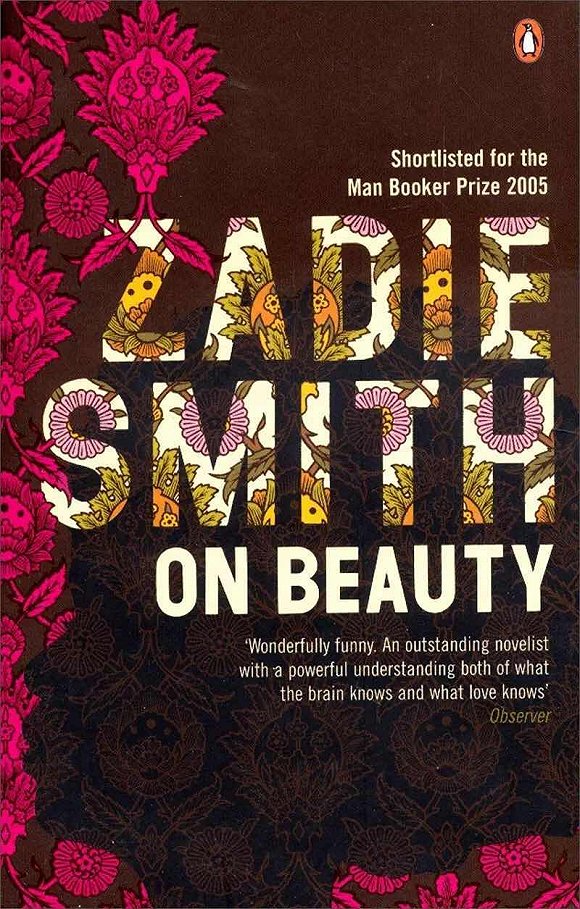
On Beauty by Zadie Smith
"Beauty" Zadie Smith
Penguin 2006
Winner of the 2006 Citrus Prize and finalist for the 2005 Booker Prize. The collapse of a marriage and the drama of two families. A tribute to the masterpiece of "Howards End". "Beauty" revolves around two families who also come from academia but uphold diametrically opposed values. The main scene is set in New England, and there are also parts.The plot takes place in London. Through a series of cultural wars and emotional entanglements on both sides of the ocean between the Belseys and the Kipps, the novel connects the fierce conceptual collisions in many aspects from family life, political stance to personal, academic and political fields. It places poor moral behavior in lofty idealism, trying to explain the meaning of love and beauty, and the various impacts that life may have on them. With the disintegration of the Belsey family, it reflects the confusion of our unstable era and goes straight to the core of the family. Facing the ruins of liberalism and the hypocrisy of right-wing conservatism, the love and beauty embodied in the friendship between the hostesses of the two families, Kiki Belsey and Karin Kipps, become another important theme of the novel. Although their husbands competed with each other in academic fields, their friendship transcended differences in class, politics, and religious views and became "the only bond." The novel's bold and noisy plot foreshadowing, its perfectly set-up witty or acerbic dialogue, and its penetrating portrayal of the absurd current situation in academia all reflect Zadie Smith's masterful control of grand, Forster-esque themes: friendship, marriage, social conflict, and the expression of artistic debate. In a way, this is a heroic attempt to give dignity and meaning to modern life through the medium of Bloomsbury writing. (The book introduction comes from Douban)
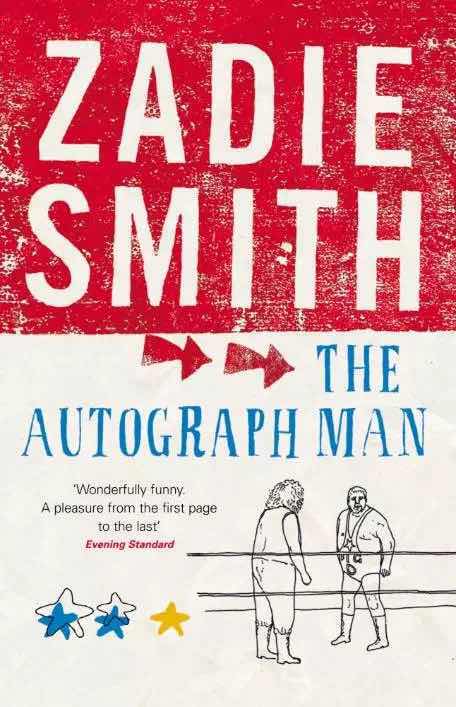
The Autograph Man by Zadie Smith
Autograph Collector Zadie Smith
Penguin 2003
This story describes a very unusual profession - an autograph collector who makes a living by collecting and selling celebrity signatures and items. The male protagonist, Lee Alex, is a Chinese Jew. He can definitely make a fortune in this profession in our era. Alex's job is to collect the signatures of celebrities and sell them to other people. Sometimes he is also responsible for forging them. In the process, he met all kinds of people who were pursuing fame and fortune, but no one could understand his inner world. What people admire are the movie characters played by superstars? We follow him as he explores urban life in London and New York. The first volume of the novel is titled each branch of the Jewish Kabbalah tree of life, explaining the identity and life situation of Alex, who is half-Chinese, and showing slices of his chaotic life before he went to New York to attend the "Annual Convention of Autograph Collectors". The novel uses the graphic design of the "Tree of Life" and the symbols of Kabbalah belief, such as "eternity", "brilliance", "beauty" and "love" to present Alex's interpersonal relationships and life encounters one by one. Those chaotic emotions and entanglements are systematically intertwined. The second volume is titled with each line of the Zen poem "Ten Cows", describing how he traveled all the way to the United States and really found the legendary movie star Katie, a Garbo-like beauty. He brought his idol back to England, but mistakenly reported that Katie was deadNews, in this way, the unique "living legend" in the world, who was announced to be dead but is actually still alive, is in his hands... (The book introduction comes from Douban)
Two works shortlisted for this year’s Booker Prize:
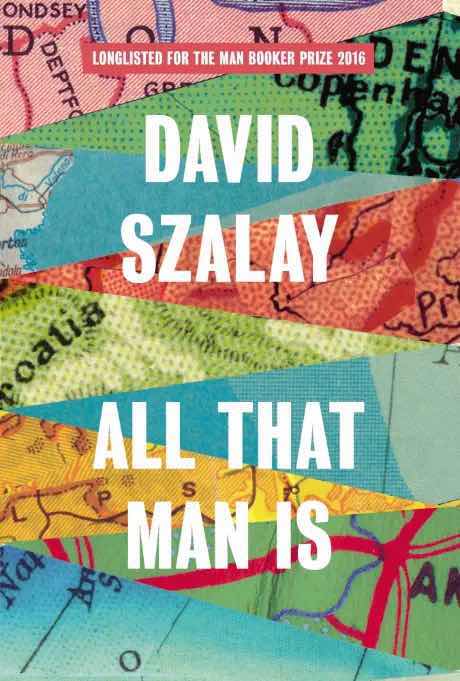
All That Man Is by David Szalay
"That's All Men Are" by David Sazaré
Penguin Jonathan Cape Series 2016
Through nine men with completely different living conditions, the problems facing Europe are analyzed. Everyone here is trying to escape their homes, struggling on the outskirts of Prague, an overdeveloped alpine estate near Belgium's motorcycle trails. It is in such a dark apartment - to experience what life means, from now to the future. The story collection has a dramatic circle, from the spring that represents youth to the winter that represents old age. The seemingly independent narratives finally merge into a complete picture, which vividly outlines the spiritual life of modern men in an increasingly globalized Europe. These nine individual stories form an ingenious collection of novels in which David Savare accurately writes about the embarrassing situation of mankind in the 21st century. It is dark, vicious, and has seemingly noisy humor, but it is truly touching. Profound spiritual thinking permeates its diverse characters, from the voiceless working class to the conceited college students, from the frustrated middle-aged to the Russian oligarchs. Everything is stable and cold. The characters in each chapter are older, darker, and more powerful than the last. Savaret has written a new kind of realist novel that retells today's Europe in shocking detail, intelligence, and devastation.
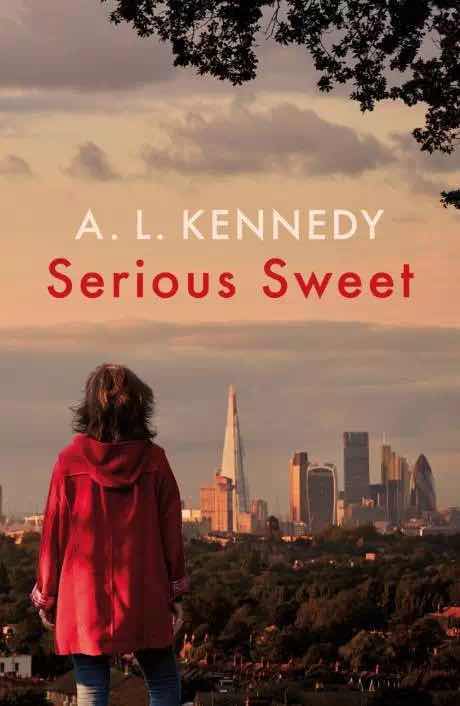
Serious Sweet A.L Kenndy
A.L. Kennedy "Earnestly Sweet"
Penguin Books Jonathan Cape Series 2016
It's a world where good people are always in bad places. Jon Sigurdsson is fifty-nine and divorced: an older public servant in Westminster who hates many of his colleagues and his embarrassing dealings with the government. He is also a man of conscience. Meg Williams is a bankrupt accountant, and her life is always filled with the rule "no two identical words can appear in the same sentence" and resumes being sent everywhere. sheForty-five years old, she is always drunk until she is shaking. She lives in Telegraph Hill near New Cross, south of London, where she can overlook the whole of London, which makes her feel safe. Jon always carries his cell phone, runs around the city like a marble, and has an insatiable habit of writing letters. He was a fringe figure who always leaked government secrets. Set in 2014, this is a novel about our time. Poignant, profound humor, beautiful writing. The novel is constructed on two levels of meaning. Destroyed people try to make some moral decisions in this immoral world: they are ready to sacrifice, and all they have left is loyalty and the chance to feel pain. As Jon and Meg travel through the serious yet sweet heart of London - where they have changed each other over the past 24 hours - they tell an unusual, unbearably touching love story about the current state of Britain, surveillance of public opinion, government and democracy in contemporary metropolitan London.
