
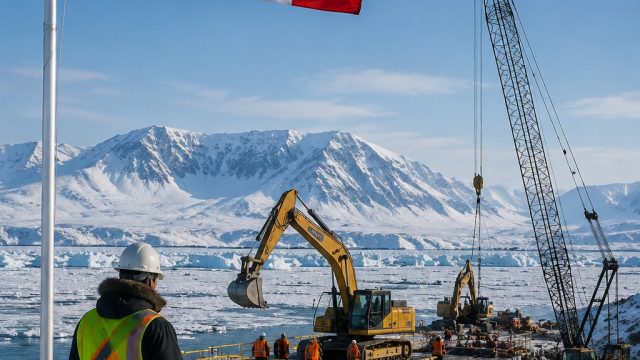
In a move that promises to reshape the economic landscape of Northern Canada, the federal government is set to announce critical infrastructure projects that could unlock significant opportunities for the region. The projects, primarily focused on enhancing road access in the Arctic, are designed to foster development and bolster the economy amid pressing environmental and social challenges. This announcement arrives at a crucial juncture, as the need for robust infrastructure in remote areas becomes increasingly apparent.
Key Infrastructure Projects Set for Announcement
Government sources indicate that the announcement will cover two pivotal road projects aimed at improving accessibility and stimulating economic growth. Specifically, the Grays Bay Road and Port project in Nunavut and the Mackenzie Valley Highway project in the Northwest Territories will be highlighted during a press conference in Yellowknife.
Grays Bay Road and Port Project
The Grays Bay project aims to construct a 230-kilometer all-season road connecting key regions within Nunavut and the Northwest Territories. This initiative is particularly noteworthy for its potential to unlock mining opportunities for critical minerals, which have garnered increasing attention due to their vital role in modern technologies.
- Facilitates transport of goods and resources.
- Enhances accessibility for local communities.
- Supports exploration and extraction of critical minerals.
Mackenzie Valley Highway Project
Equally important, the Mackenzie Valley Highway project promises to create an all-season route from Yellowknife to Inuvik. This development is expected to significantly reduce travel times and improve connectivity for residents, businesses, and essential services in the region.
- Improves logistics for businesses in the North.
- Boosts tourism potential in Arctic regions.
- Provides essential access for emergency services and supplies.
The Economic Implications of Infrastructure Development
The implications of these infrastructure projects extend beyond mere transportation. By enhancing access to remote areas, Canada is positioning itself to capitalize on the burgeoning demand for critical minerals. As global industries shift towards sustainable practices, there is a growing need for these resources, making the Arctic's vast mineral wealth increasingly valuable.
Moreover, improved infrastructure can lead to job creation, both during the construction phase and in the long term as industries develop around these newly accessible areas. This is crucial for local communities, where employment opportunities can be limited.
Community Involvement and Environmental Considerations
As these projects move forward, community involvement will be essential in addressing any environmental concerns. The government has reiterated its commitment to working with Indigenous groups and local stakeholders to ensure that development is conducted sustainably and respects traditional territories.
Conclusion: A Pivotal Moment for Arctic Development
Canada's upcoming announcement regarding Arctic infrastructure projects serves as a pivotal moment for the North, presenting both challenges and opportunities. As the nation looks to the future, these developments could lay the groundwork for a more integrated and prosperous Arctic region.
In a world increasingly focused on sustainable resource management and accessibility, these infrastructure initiatives stand out as a beacon of potential, promising not only to bolster the economy but to improve the quality of life for those living in some of the most remote regions of Canada.
